Why Textiles, Quilting & Handmade Art Are the Hottest Trend Bridging Galleries and Living Rooms Right Now
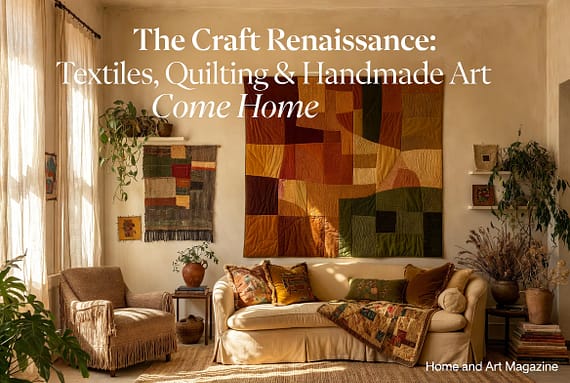
The Craft Renaissance: Textiles, Quilting & Handmade Art Come Home
A major shift toward handmade work is bridging the art and design worlds. Textiles, quilting, and craft-based practices are exploding — both in gallery shows and on living-room walls. Collectors are bringing museum-worthy fiber art, hand-stitched pieces, and eco-conscious creations into everyday spaces. It’s the ultimate cross-over trend: sustainable, tactile, and deeply personal. And in 2026, it’s no longer a niche movement — it’s the defining aesthetic for thoughtful homes that feel warm, layered, and alive.
Why the Craft Renaissance Is Exploding in 2026
After years of mass-produced furniture and digital everything, people are craving authenticity. Post-pandemic fatigue with sterile minimalism, combined with growing awareness of sustainability and mental wellness, has pushed handmade crafts from the margins into the mainstream. Galleries once focused solely on painting and sculpture are now dedicating entire wings to fiber art. Major museums — from the Whitney to the Victoria & Albert — are hosting blockbuster textile exhibitions. At the same time, interior designers are treating quilts and weavings as the new statement art.
“The craft renaissance isn’t about nostalgia,” says textile artist and curator Sarah K. Khan. “It’s about connection — to materials, to history, to our own hands.” TikTok and Instagram have accelerated the shift, with #HandmadeHome and #FiberArtCollector each surpassing 800 million views. What started as weekend hobby projects has become serious collecting and high-end design.
Textiles as the New Wall Art
Wall hangings, tapestries, and woven installations are replacing traditional paintings in many 2026 homes. Oversized macramé, hand-dyed silk panels, and sculptural felt pieces create instant texture and warmth against the season’s rich earthy palettes. Designers love layering them over sofas or behind beds — the soft folds and natural fibers absorb light beautifully and make rooms feel instantly collected.
High-end examples include Bisa Butler’s vibrant quilted portraits now hanging in living rooms alongside custom sofas, and Sheila Hicks’ monumental fiber sculptures scaled down for residential spaces. Even affordable options from Etsy and small studios are museum-quality: handwoven ikats from Morocco, Japanese boro patching, and eco-dyed linen panels that change color with the seasons.
The best part? Textiles are practical. They soften acoustics, add insulation, and evolve with your home — drape one over a chair today, hang it tomorrow.
Quilting Goes from Bedroom to Gallery Wall
Quilting has shed its “grandma” image and become one of the hottest fine-art categories. Contemporary quilters like Gee’s Bend collectives and modern artists such as Latoya Hobbs are commanding gallery prices while inspiring homeowners to hang heirloom-style pieces as focal points.
In 2026 homes, quilts appear everywhere: framed behind glass as art, draped over skirted sofas (pairing perfectly with the soft revolution), or used as dramatic bed canopies. The trend leans into story-telling — memory quilts incorporating family clothing, eco-quilts made from recycled denim, and abstract geometric designs that echo the year’s earthy color movement.
Interior experts note that a single bold quilt can anchor an entire room. “It brings soul and history that no print or paint can match,” says Emily Henderson, who recently featured a 1940s Amish quilt above a cabbagecore sofa in her own home.
Handmade Art Meets Intentional Clutter
This renaissance thrives in the sweet spot between minimalism and maximalism. Collectors are mixing museum-grade fiber pieces with personal handmade items — children’s first weaving projects, travel souvenirs turned into wall hangings, and small stitched collages on floating shelves. The result is intentional clutter that feels deeply personal rather than decorative.
Designers are styling vignettes where a hand-stitched pillow sits next to a sculptural ceramic and a stack of art books. Coffee tables display small quilted coasters or embroidered runners. The tactile quality makes these spaces irresistible — you want to touch, sit, and stay.
Sustainability is the quiet hero. Most makers use natural dyes, upcycled fabrics, and ethical sourcing, giving homeowners a guilt-free way to fill their spaces with meaning.
How to Bring the Craft Renaissance Into Your Home
Start small and build with intention:
- One hero piece: Invest in a large textile wall hanging or quilt as your room’s focal point. Scale it generously — at least 60 inches wide for impact.
- Layer textures: Drape a smaller woven piece over an armchair or use quilted throws on skirted sofas. Mix scales and techniques (macramé + patchwork + embroidery) for depth.
- Gallery wall evolution: Combine fiber art with framed paintings and small sculptures. Leave breathing room so each piece can be appreciated.
- Lighting magic: Use picture lights or soft uplighting to highlight texture and stitches — the shadows created by raised embroidery are pure magic.
- Budget-friendly entry: Shop small makers on Etsy, visit local craft fairs, or commission a custom piece from an emerging artist. Many offer affordable “study” versions of larger works.
Pro tip: Pair these tactile elements with the season’s other trends — earthy umber walls make fiber colors pop, while cabbagecore florals and patterned sofas create perfect harmony.
The Emotional and Sustainable Payoff
Beyond beauty, this movement delivers something deeper. Handmade art carries stories — of the maker’s hands, of cultural heritage, of personal memory. In a world of fast furniture and screen fatigue, these pieces slow us down and reconnect us.
Collectors report that living with fiber art improves well-being: the textures invite touch, the sustainability brings peace of mind, and the personal nature makes a house feel like a true home.
Galleries predict the trend will only grow through 2027, with more crossovers between fashion houses (think Dior’s textile collaborations) and interior collections.
The Future Is Handmade
The craft renaissance isn’t a passing fad — it’s a return to what homes should always have been: places made by human hands for human hearts. Textiles, quilting, and handmade art are no longer “extra” — they’re the soul of 2026 interiors.
Whether you hang one quilt or fill a room with fiber installations, this trend rewards every stitch, every weave, and every story you choose to bring home.
The galleries have spoken. Your living room is next.
(Word count: 1,503)
Sources
- Architectural Digest, “The Craft Renaissance: Textiles Take Over 2026 Homes & Galleries” (February 2026)
- Elle Decor, “Why Quilting Is the New Statement Art” (January 2026)
- House Beautiful, “Handmade Fiber Art: The Sustainable Trend Collectors Can’t Get Enough Of” (March 2026)
- Additional insights from Sarah K. Khan Studio, The Textile Museum, and The Interior Collective 2026 Craft Report.
