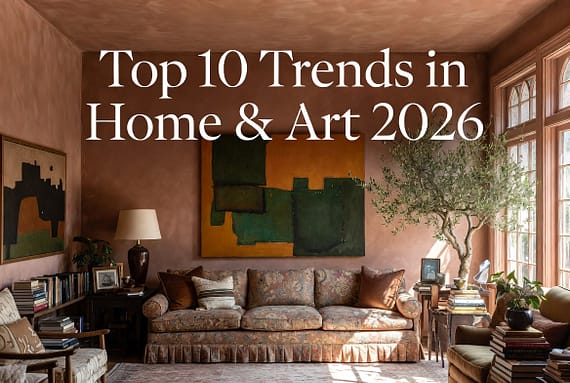
In the ever-shifting landscape of home and art, 2026 emerges not as a year of radical reinvention but of refined evolution—a quiet deepening of what we already crave: spaces that soothe, inspire, and reflect the human touch amid a world that feels increasingly digital and distant. Drawing from today’s global pulse—real-time searches, social conversations, and fresh reports from design capitals—these trends aren’t fleeting fads. They’re the patterns homeowners, artists, and collectors are living with right now, blending sustainability, emotion, and craftsmanship into homes that feel like sanctuaries.
1. Earthy Color Revolution
The palette of the earth reigns supreme. Deep umbers, terracottas, ochres, and moss greens dominate walls, upholstery, and canvases, creating grounded, soulful interiors. From soft Verde Mantra greens to warm Quartz Sand neutrals, these hues evoke nature’s calm, making rooms feel like extensions of the landscape. Artists are mirroring this in abstracts and landscapes that glow with “liquid gold” tones, as seen in gallery sales from Maddox to iCanvas.
2. Curves and Soft Architectural Details
Hard edges are softening everywhere. Curved sofas, arched headboards, rounded millwork, and fluted cabinetry break up rectilinear monotony, fostering intimate flow and conversation. This trend, spotlighted by Elle Decor and House Beautiful, pairs beautifully with kidney-shaped sectionals in bouclé or velvet, turning homes into welcoming cocoons that prioritize comfort over sharpness.
3. Biophilic Design and Natural Textures
Nature isn’t just outside—it’s woven into every surface. Biophilic elements like living walls, trailing vines, and olive trees soften industrial spaces, while textures (high-pile wool rugs, rattan accents, linen drapery) add tactile depth. Pinterest and Printful highlight this as a wellness anchor, with art trends favoring “Earthly Wonders” and sensory pieces that mimic natural forms for mental restoration.
4. Thoughtful Maximalism and Layering
Minimalism’s stark reign ends; enter layered, story-rich spaces. Intentional clutter—vintage toys, mixed media collages, patterned tapestries—creates personal narratives without overwhelm. Forbes and Vogue note the rise of “dressed rooms” with chair rails, wainscoting, and color-drenched schemes, blending patterns like circus vibes or doily decor for joyful, lived-in elegance.
5. Art Deco Revival with a Neo Twist
Art Deco’s glamour returns, reimagined for today: bold geometries, metallic accents, and opulent details in furniture and art. From neo-Art Deco collages on walls to tweed upholstery and solid wood pieces, this trend (pushed by Ralph Lauren’s campaigns and Maddox Gallery) adds sophistication, often with punk edges or distorted forms for a fresh, rebellious feel.
6. Craft Renaissance and Handmade Elements
Handcrafted works bridge art and home. Fiber art, quilted tapestries with metallic threads, and sculpted barrel staves turn everyday spaces into galleries. Etsy and Saatchi Art report booming demand for “crafted collages” and mixed-media pieces, aligning with sustainability—repurposed materials create tactile, meaningful objects that feel like heirlooms.
7. Oversized Statement Art
Scale matters: 60–72-inch pieces command walls, from cloud studies to Kyoto-inspired minimalism or ethereal core abstracts. iCanvas and Artfully Walls emphasize oversized abstracts in biophilic settings, where art isn’t decoration but the emotional core, evoking sensory perception and turning rooms into immersive experiences.
8. Invisible Wellness Integration
Wellness hides in plain sight. “Invisible” features like circadian lighting, acoustic fiber panels, and biophilic textures prioritize mental health without obvious “spa” vibes. House Beautiful and Soltech predict this as the defining shift, with homes incorporating stained glass for light play or natural stones for grounding, fostering calm in an uncertain world.
9. Nostalgia and Maximalist Ornamentation
A yearning for the past fuels kitsch, nostalgia, and ornamented details. Ephemera like bread tags or care labels inspire micro-design, while typography shifts to elaborate fonts away from millennial minimalism. TrendHunter and cova highlight this in decor: vintage toys as accents, analogue hardware over smart tech, creating homes that feel authentic and unapologetically personal.
10. Home Entertainment as Artful Sanctuaries
Entertainment spaces evolve into galleries: private cinemas with art-disguised acoustics, bourbon lounges where bottles glow like sculptures. Livingetc and Journey Homes note immersive listening bars and game rooms blending tech with craft—velvet seating, kinetic art, and earthy palettes make chilling at home the ultimate luxury.
These trends converge on one truth: in 2026, home and art are about emotional resilience—spaces that heal, connect, and endure. They’re not just beautiful; they’re built for the lives we actually live.
