Rooms & Functions: Designing Purposeful Spaces in the Home
In the architecture of daily life, rooms are more than partitioned areas—they are purposeful arenas where function meets form, and art elevates the ordinary to the extraordinary. Each room in a home serves distinct roles, from communal gathering to solitary retreat, shaped by cultural norms, technological advances, and personal needs. This exploration examines the evolution of room functions, their psychological impacts, and how artistic elements integrate to create harmonious, efficient spaces. By understanding rooms not as isolated units but as interconnected components of a living ecosystem, we can design homes that enhance productivity, relaxation, and creativity. Drawing on historical insights and contemporary innovations, we uncover strategies to infuse artistry into functional design, transforming houses into dynamic expressions of lifestyle.
Historical Evolution: From Multifunctional Halls to Specialized Chambers
The concept of dedicated rooms emerged gradually, reflecting societal shifts. In ancient dwellings, such as Mesopotamian homes around 3000 BCE, spaces were multifunctional: a single room might serve for cooking, sleeping, and working, with reed mats and clay pots as versatile furnishings. Art appeared in utilitarian forms—incised pottery depicting daily tasks or protective deities, blending aesthetics with practicality.
Greek and Roman homes introduced specialization. The Greek andron was a male-dominated dining space, adorned with symposium vases painted with mythological scenes, fostering intellectual discourse. Roman villas featured the tablinum (study) for business, with wax tablets and frescoes of landscapes providing inspirational backdrops. Atriums served as entry halls, multifunctional for receptions and light wells, decorated with mosaics that narrated family histories.
Medieval castles consolidated functions in great halls, where feasting, sleeping, and justice occurred amid tapestries illustrating epic tales, which also insulated walls. The Renaissance refined this: Italian palazzos allocated rooms like the sala (reception hall) for social functions, with ceilings frescoed by masters like Michelangelo, symbolizing status. Bedrooms became private sanctuaries, with canopied beds carved in intricate motifs, separating rest from communal activities.
The 18th-century Enlightenment emphasized rationality, leading to Georgian homes with drawing rooms for polite conversation, lined with portraits by Reynolds to spark dialogue. Victorian industrialization spurred further division: sculleries for utilitarian chores, parlors for formal entertaining, each with specialized decor—china cabinets displaying artful porcelain, wallpapers by Morris integrating nature-inspired patterns.
This historical progression highlights how rooms evolved from versatile necessities to tailored functions, with art consistently enhancing utility by adding layers of meaning and beauty.
Core Rooms and Their Primary Functions
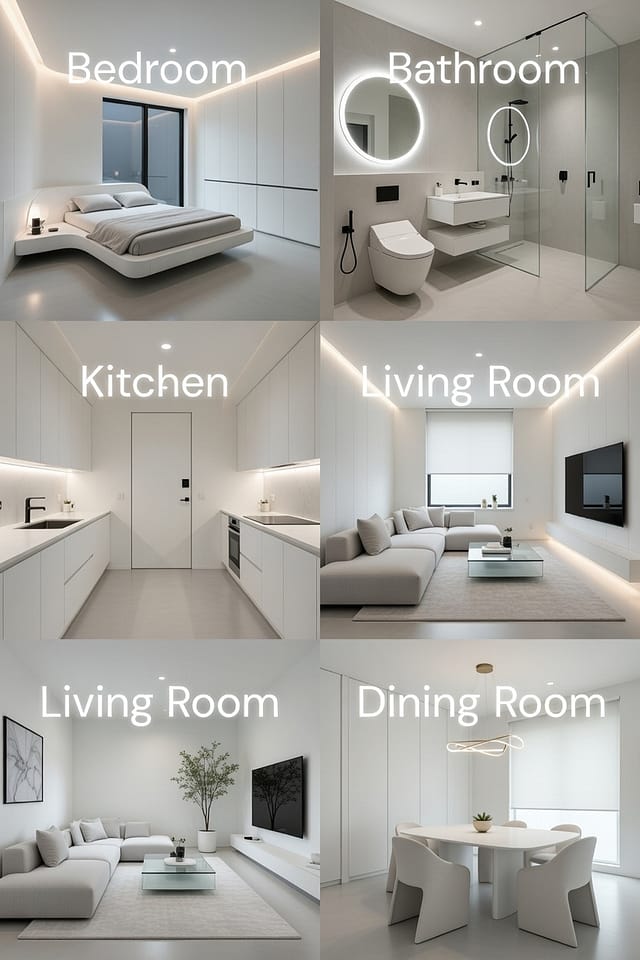
Modern homes typically revolve around key rooms, each optimized for specific activities while allowing artistic expression.
The living room acts as the social hub, facilitating relaxation and interaction. Functionally, it accommodates seating arrangements for conversation, media centers for entertainment, and storage for shared items. Ergonomically, layouts promote flow—circular furniture setups encourage inclusivity. Art transforms it: abstract sculptures by Henry Moore add focal points, while gallery walls with mixed media reflect family tastes, turning passive space into an engaging narrative.
The kitchen has shifted from a backstage utility to a central command center for nourishment and bonding. Historical sculleries gave way to open-plan designs post-WWII, integrating islands for prep and dining. Functions include storage optimization (pantries, modular cabinets) and appliance efficiency for cooking. Artistically, tiled backsplashes with geometric patterns by artists like Piet Mondrian infuse vibrancy, while hanging herb gardens blend function with biophilic aesthetics, promoting sustainability.
Bedrooms prioritize rest and rejuvenation, functioning as personal retreats. Essential elements include supportive bedding, blackout features for sleep hygiene, and closets for organization. Psychologically, as per sleep studies from the National Sleep Foundation, calming environments reduce insomnia. Art enhances this: serene landscapes by Monet on walls induce tranquility, bedside lamps sculpted like organic forms provide soft illumination, and personalized textiles—quilts with embroidered stories—foster emotional security.
The bathroom serves hygiene and self-care, evolving from rudimentary privies to spa-like oases. Functions encompass efficient plumbing, ventilation, and storage for toiletries. Modern trends include smart mirrors and heated floors for comfort. Art integration: mosaic murals inspired by ancient Roman baths add luxury, while minimalist prints by Yayoi Kusama create meditative vibes, turning routine into ritual.
Home offices or studies, amplified by remote work, focus on productivity. Functions involve ergonomic desks, lighting to reduce eye strain, and tech integration. Art stimulates creativity—kinetic mobiles by Calder overhead inspire movement, bookshelves with illuminated manuscripts organize knowledge aesthetically.
Secondary spaces like dining rooms (for formal meals, with chandeliers as sculptural art) and entryways (for transitions, with consoles displaying vases) bridge functions, ensuring cohesive flow.
Psychological and Cultural Influences on Room Design
Room functions are deeply tied to psychology. Environmental psychologists like Roger Ulrich note that well-designed spaces reduce stress through order and personalization. Cultural variations abound: Japanese homes feature multipurpose tatami rooms with sliding shoji screens, emphasizing minimalism and flexibility, adorned with ikebana arrangements as living art. In contrast, Mediterranean villas prioritize outdoor-indoor flow with patios functioning as extended living areas, decorated with terracotta pottery.
Art serves as a cultural bridge, adapting functions to identities. In multicultural households, rooms might incorporate mandala rugs for spiritual grounding or African masks for ancestral connection, enhancing belonging.
Contemporary Trends and Future Directions
Today’s designs favor open concepts, blurring room boundaries for adaptability—kitchens merging with living areas via movable partitions. Sustainability drives multifunctional furniture, like convertible sofas with built-in storage, paired with eco-art from recycled materials.
Technology redefines functions: smart rooms with voice-activated adjustments, augmented reality overlays for virtual art galleries. Post-pandemic, wellness rooms for yoga or therapy incorporate soundproofing and nature-inspired murals.
Future visions include modular homes with reconfigurable walls, AI-optimized layouts, and bio-adaptive art—walls that change colors based on mood sensors. Challenges like urban density inspire micro-rooms, where vertical space and illusionary art (trompe-l’œil) expand perceived functions.
In essence, rooms and functions form the blueprint of home life, where art infuses purpose with poetry. By balancing utility with creativity, we craft spaces that not only serve but inspire.
Dive deeper with our features on kitchen artistry or bedroom serenity.
