
Materials & Lifecycles
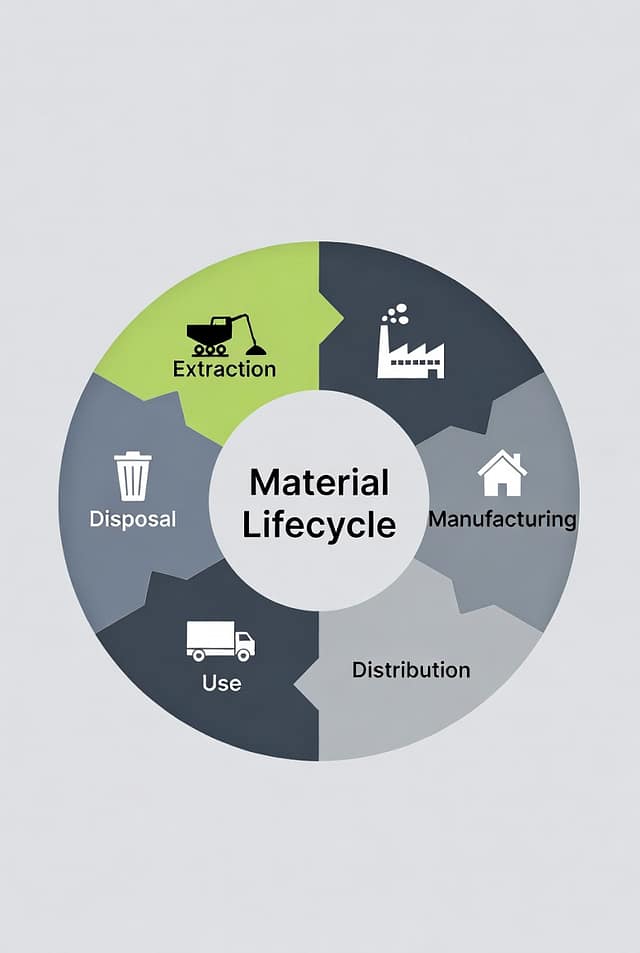
Every material tells a story—of origin, use, transformation, and eventual return to the environment or reinvention into something new. In the context of home design and art, understanding material lifecycles is essential for creating spaces that are not only beautiful, but also responsible, durable, and meaningful. From raw extraction to disposal or reuse, the lifecycle of materials shapes both the environmental impact and the emotional value of what we build and live with.
Natural materials such as wood, stone, clay, and wool often carry the advantage of renewability and biodegradability. Responsibly sourced timber, for example, can be harvested, used in construction or furniture, and later repurposed or allowed to decompose naturally. Stone, while not renewable in a human timeframe, offers incredible longevity—structures built from it can last centuries, reducing the need for replacement and minimizing long-term resource consumption. These materials age with character, developing patinas that enhance their aesthetic over time rather than diminishing it.
On the other hand, synthetic materials like plastics, composites, and certain metals present a more complex lifecycle. While they often provide affordability, flexibility, and resistance to wear, their production can be energy-intensive, and their disposal can contribute to environmental degradation. However, innovation is transforming this narrative. Recycled plastics, engineered wood products, and low-impact composites are extending the lifecycle of materials that would otherwise become waste, giving them new purpose in modern design.
Lifecycle thinking encourages a shift from a linear model—take, make, dispose—to a circular one. In a circular approach, materials are selected not only for their immediate function but also for their potential to be reused, repaired, or recycled. Modular construction, for instance, allows components to be disassembled and reconfigured rather than demolished. Similarly, choosing finishes and furnishings that can be refinished or reupholstered extends their usable life and reduces the need for replacement.
Durability plays a crucial role in material sustainability. A well-crafted hardwood floor may last decades with proper care, while cheaper alternatives may need frequent replacement, ultimately consuming more resources over time. Maintenance, therefore, becomes part of the lifecycle conversation. Designing with materials that are easy to clean, repair, and maintain ensures longevity and preserves both function and appearance.
Transparency is also increasingly important. Consumers and designers alike are seeking information about where materials come from, how they are processed, and what happens to them at the end of their life. Certifications, environmental product declarations, and ethical sourcing practices are helping guide more informed decisions, aligning design choices with broader environmental and social values.
Incorporating lifecycle awareness into home and art design is not about sacrificing creativity—it’s about enhancing it. It challenges designers to think innovatively, to blend aesthetics with responsibility, and to create spaces that evolve gracefully over time. By choosing materials thoughtfully and considering their full journey, we contribute to a built environment that respects both people and the planet, ensuring that the beauty we create today does not come at the expense of tomorrow.
Materials & Lifecycles: The Evidence of What We Build and Why It Matters
Materials are not neutral substances. They are **active participants in time, ecology, labor, and culture** — evidence of choices that resonate long after a building is first inhabited. To understand materials is to read the stories of extraction, use, aging, adaptation, and legacy.
Extraction: The Material Beginning
Before a material becomes part of a structure, it must be *extracted* from the earth — quarried stone, logged timber, mined metals, refined minerals, or processed polymers. This moment of extraction is not neutral. It imprints landscapes, disrupts ecosystems, and entangles labor systems, economic pressures, and regulatory environments.
When we choose a material, we inherit its extraction history:
- Where was it sourced?
- Whose labor brought it out of the ground?
- What ecosystems were altered or fragmented?
- What transportation energy was used to bring it to site?
These are questions about *ecology and ethics*, not just aesthetics.
Processing & Manufacturing: Embedded Systems
Once extracted, materials are processed: cut, refined, alloyed, pressed, cast, woven, cured. This stage embeds energy, labor, and environmental cost into the substance itself — known as **embodied energy** and **embodied carbon**. Some materials carry these costs lightly; others carry them heavily.
For example:
- Steel and concrete require high thermal energy in processing.
- Ceramics and glass demand high-temperature kilns.
- Treated lumber may use chemical processes with long-term toxicity concerns.
Understanding processing is essential to understanding **what a material tells us about the systems that produced it**.
Installation: The Human Labor Interface
A material is only as meaningful as the labor that brings it into place. Installers, craftspeople, technicians, finishers, and trades workers are part of the lifecycle. Their skills, conditions, rights, compensation, and safety are evidence of how we value human labor in the built environment.
A well-executed timber joint or stone bond does not just *look* good — it reflects **craft knowledge developed over generations**, embodied in hands, eyes, and muscle memory. These are material histories most design gloss ignores.
Use Phase: Aging, Patina, and Performance
Once in place, materials don’t sit still. They interact with light, moisture, heat, bodies, and time. They age, they wear, they patinate, they strain, they compress. These are not defects. They are evidence of *use, context, and temporal life*.
The lifecycle of a material in use involves:
- wear patterns from human traffic
- shade and sunlight altering surface color over years
- thermal cycles inducing expansion and contraction
- moisture and humidity causing swelling or patination
Attention to this phase — not just initial appearance — reveals how materials *perform over time*, offering insights into durability, comfort, and sensory memory.
Maintenance & Repair: The Conditioning of Time
Stewardship of materials lives in maintenance and repair. A material that weathers gracefully is not evidence of neglect — it is evidence of **intentional care**. Timely maintenance extends life, reduces waste, and preserves memory.
Systems that facilitate repair — replaceable panels, accessible mechanical systems, modular connections — show **design that anticipates change and adaptation**. In contrast, systems that require premature replacement or demolition are evidence of short-term thinking.
This phase is where materials become *life partners*, not disposable objects.
Adaptation & Reuse: Extending Life Cycles
Some materials are repurposed or reimagined. Adaptive reuse — whether of entire buildings or individual components — is evidence of **temporal respect**: honoring the labor, material, and ecological cost already invested.
Material reuse might include:
- salvaged timber repurposed for structure or finish
- brick reclaimed from demolished buildings
- glass tiles remade into mosaic art
- metal frames reconfigured for new programs
Reuse reduces embodied carbon and preserves narrative continuity — evidence of ethical longevity.
End-of-Life: Waste, Recycling, and Ecological Cost
When materials reach the end of their use phase, what happens next matters deeply. Some materials are recyclable — fiber, metal, glass — while others are not, and end up buried in landfills with long-term ecological cost.
Questions to ask at this stage include:
- Can this material be reclaimed and repurposed?
- Does recycling require less energy than producing new material?
- Are there toxic components with long-term ecological risk?
- Is the disposal burden externalized onto communities with less power?
These questions make the *end-of-life phase* a moment of ethical consequence, not afterthought.
Ecological Impact & Carbon Accounting
Materials are the largest contributors to a building’s **embodied carbon**, which often outweighs operational carbon over long lifetimes. A lifecycle approach accounts for:
- energy used in extraction and processing
- transport energy over global supply chains
- operational impacts over decades
- end-of-life disposal or reuse impacts
Lifecycle assessment reframes material choice as an **ethical and ecological metric**, not a stylistic decision.
Material Memory and Sensory Life
Materials are not silent. They *remember*. A timber threshold worn smooth under decades of footsteps tells a story about human presence. A rough plaster wall that softens in light records time and use. A stone wall whose color deepens with rain carries climate memory.
These are not superficial impressions. They are *sensory archives* — material evidence of lived experience, memory, and human scale.
Ethics of Choice: Who Benefits and Who Bears Burden?
Material lifecycles are also social indicators. Who benefits from high-end finishes that drive up costs? Who bears the health or environmental risks of extraction and waste disposal? Equity and material choice are inseparable.
Ethical material decisions:
- prioritize locally sourced systems
- reduce environmental justice burdens on marginalized communities
- support labor conditions that are fair and protective
- choose systems that minimize long-term ecological harm
These are not trends. They are **moral commitments visible in material consequence**.
Material Learning and Design Evolution
Architects, designers, and builders accumulate knowledge about materials through feedback loops:
- post-occupancy evaluation of performance
- monitoring wear and aging patterns
- tracking ecological impact data
- sharing case studies of reuse and adaptation
This is not accidental knowledge. It is **material intelligence**, the body of evidence that makes future design more informed, responsible, and consequential.
Final Questions About Materials & Lifecycles
If architecture answers how we live together and art reveals why it feels the way it does, then materials and lifecycles ask:
*What stories do our materials tell? How do our choices ripple through ecosystems, communities, and time? What values do we inscribe into the very fabric of life?*
These are not decorative questions. They are **ethical, ecological, social, and temporal** — the deepest inquiries about what it means to build, steward, adapt, and inherit.
Home |
About |
Energy Systems |
Contact
