
Cycles, Booms & Failure: Reading Economic Rhythms as Cultural Evidence
Economic cycles are not abstract metrics. They are rhythms of expansion and contraction that shape how places are built, how people live, and how generational memory is formed. Booms bring investment; busts expose fragility. Failures reveal assumptions that didn’t hold. Together they are the **pulse of material life on Earth**.
Bust and Boom as Material Force
A boom period — characterized by rising investment, easy credit, and confidence — leaves visible traces: construction activity, new subdivisions, commercial districts enlarged, speculative projects launched. But what it *also* leaves behind are assumptions about perpetual growth, risk distribution, and future demand that may not hold.
A bust — recession, contraction, fiscal tightening — reveals what was built on assumption rather than resilience: unfinished projects, vacant buildings, deferred maintenance, displacement, and economic fragility. These are not aesthetic markers. They are **material evidence of economic logic meeting lived reality**.
Cycles and Architecture
Architecture is shaped by cycles. During boom periods, risk is treated as secondary to volume and speed. Buildings go up quickly, often optimized for cost rather than longevity. During downturns, maintenance is deferred, stewardship suffers, and decisions made in haste reveal systemic weaknesses.
These cyclical effects are material:
- facades that weather poorly because shortcuts were taken in boom economics
- mechanical systems under strain when deferred maintenance becomes chronic
- unfinished or abandoned projects that become urban scars
- communities destabilized by foreclosure, vacancy, or displacement
These are the **material consequences of economic cycles**, not aesthetic coincidences.
Failure as Evidence, Not Stigma
Failure in the economic context — a project that runs out of funds, a business that collapses, a neighborhood that disinvests — is often treated as an embarrassment. But failure is data. It reveals where assumptions did not align with context: demand, labor capacity, supply chains, resilience, or ecological limits.
A failed real estate project shows where market forecasts were off. A collapsed neighborhood reveals inadequate social infrastructure. A shuttered retail strip exposes shifts in consumer behavior. These are not isolated breakdowns. They are **systems failing under stress**, and the evidence of those failures should inform better practice rather than be hidden.
Economic Stress & Social Inequity
Cycles are not neutral in their distribution of impact. Booms often benefit those with capital access — developers, investors, speculators — while busts disproportionately harm those with fewer resources: renters, small-scale owners, workers with limited safety nets.
This dynamic is materialized in place:
- neighborhoods with rising rents and displacement pressure during expansion
- vacant properties and deteriorating infrastructure during contraction
- reduced access to services and investment in disinvested areas
- economic segregation that becomes spatial segregation
These are **evidence of how cycles redistribute opportunity and risk unevenly across society**.
Urban Form and Speculative Logic
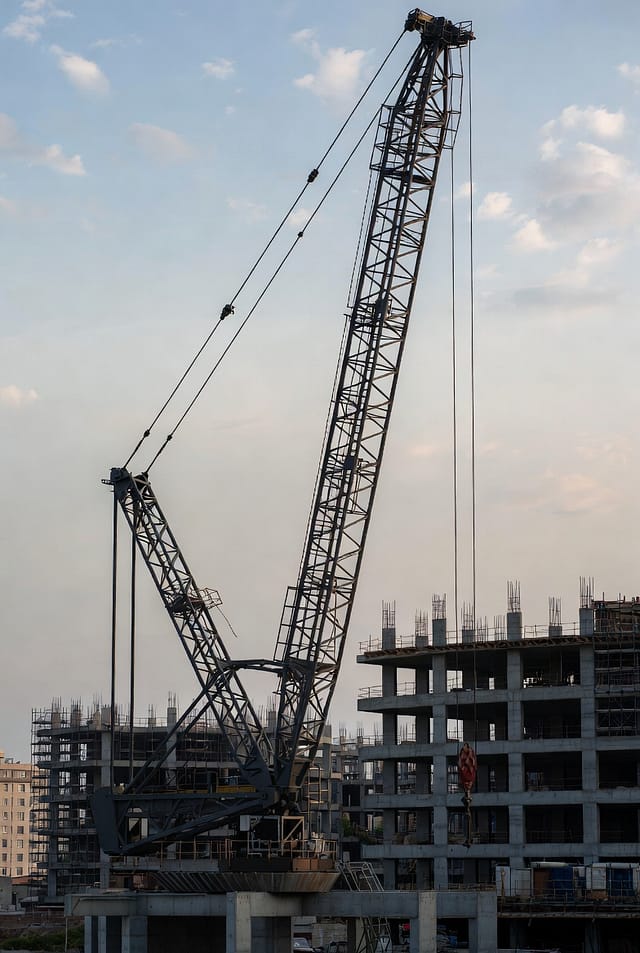
Urban patterns often reflect speculative logic rather than long-term stewardship. Tower cranes during booms signal expectation of growth. Empty office buildings during busts signal overextension. Retail districts that shutter reveal assumptions about location, consumption, and mobility that no longer hold.
These patterns are not random. They are traces of **economic imaginaries — assumptions about value, demand, and future growth — inscribed into physical form**.
Housing Cycles and Lived Experience
Housing markets are deeply cyclical. During expansion, prices and rents rise; housing becomes less accessible. During contraction, foreclosure risk rises; credit tightens; investment stalls. These cycles shape families’ decisions about where to live, when to move, what stability means.
These decisions have *material consequences*:
- household displacement
- increased homelessness
- neighborhood turnover
- community memory destabilized
These are not abstract outcomes. They are *life outcomes* shaped by economic rhythms.
Cycles, Innovation & Adaptive Capacity
Cycles also reveal **adaptive capacity**. In periods of contraction, communities, entrepreneurs, designers, and residents innovate out of necessity:
- adaptive reuse of disinvested buildings
- informal economies that fill gaps in services
- collaborative community land trusts and shared equity models
- networks of mutual aid that redistribute resources
These responses are not trend stories; they are **adaptive intelligence — evidence of how people respond when systems falter**.
Feedback Loops and Evidence-Driven Practice
To learn from cycles and failure requires **feedback loops** — mechanisms that turn evidence into action:
- post-occupancy evaluation of buildings that underperformed
- analysis of neighborhood outcomes after cycles of boom and bust
- econ-spatial data informing policy choices
- community narratives shaping equitable redevelopment priorities
These loops are not technical add-ons. They are how societies *translate failure into knowledge* rather than repeat the same assumptions.
Institutional Memory and Long-Term Resilience
Institutions — universities, government agencies, cultural bodies — also experience cycles. Their responses matter:
- investment in research that anticipates risk rather than reacts to crisis
- community engagement that builds social infrastructure before disruption
- policy frameworks that integrate equity into recovery plans
- cross-sector strategies that balance economic growth with sustainability
Institutional memory — documented lessons from past cycles — is evidence of **cultural resilience rather than amnesia**.
Ecological Limits and Economic Realities
Economic cycles do not exist outside ecological boundaries. Resource extraction, energy demand, land pressure, and climate change interact with boom and bust logic. A society that ignores ecological limits may accelerate into boom, only to encounter collapse or forced contraction.
Acknowledging ecological constraint within economic planning shifts practice away from short-term gain and toward **sustainable equilibrium** — evidence of responsibility across time.
Cycles and Culture: Memory, Meaning, and Time
Economic rhythms shape cultural memory. Boom periods create narratives of success and optimism; bust periods expose fragility and hypocrisy. How societies interpret these cycles — whether as inevitable or avoidable — becomes part of cultural storylines.
These narratives influence design:
- memory of prosperous times shaping future expectation
- stories of failure guiding cautious practice
- cultural attitudes toward risk, innovation, and resilience
- values embedded into built form and policy choices
Economic cycles do not merely *affect life*. They help tell **how societies understand themselves over time**.
Final Questions About Cycles, Booms & Failure
If architecture answers how we live together and art reveals why it feels the way it does, then cycles and failure ask: *What rhythms define opportunity and risk? How do we read evidence of past growth and contraction? What assumptions led to failure, and what responses show adaptive intelligence?*
These are not economic abstractions. They are **temporal, social, ecological, and ethical inquiries** about how human life negotiates uncertainty and consequence in place.
Home |
About |
Climate & Constraint |
Contact
