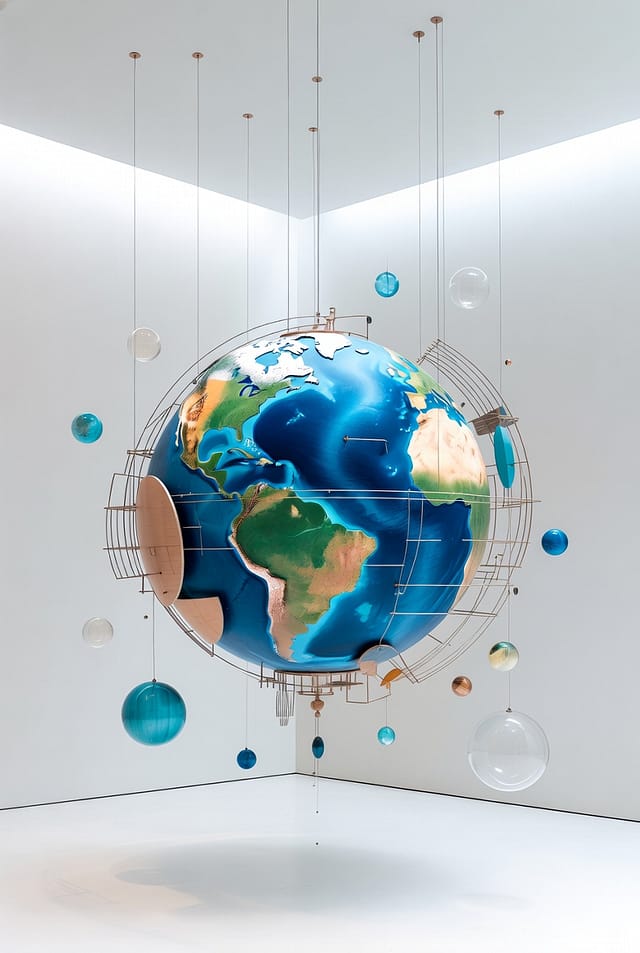
Modern global art reflects a dynamic exchange of ideas, cultures, and creative expression that transcends geographic boundaries. In today’s interconnected world, artists draw inspiration from diverse traditions, social movements, and technological advancements, resulting in work that is both deeply personal and universally resonant. This evolution has transformed art into a powerful medium for storytelling, identity, and dialogue.
Contemporary artists often blend traditional techniques with modern materials and digital tools, creating innovative forms that challenge conventional definitions of art. From immersive installations and multimedia experiences to minimalist painting and street art, modern global art embraces a wide spectrum of styles. It is not confined to galleries alone—public spaces, digital platforms, and urban environments have become essential canvases for artistic expression.
Themes in modern global art frequently address pressing global issues such as climate change, migration, cultural identity, and social justice. Artists use their work to provoke thought, inspire action, and foster empathy across cultures. This emphasis on narrative and meaning allows audiences to engage with art on a deeper level, connecting personal experiences with broader global perspectives.
Technology has also played a significant role in shaping modern art. Digital art, virtual reality, and blockchain-based ownership have redefined how art is created, shared, and collected. These innovations expand accessibility, allowing artists from underrepresented regions to reach global audiences and participate in the international art conversation.
Ultimately, modern global art is a reflection of our time—fluid, diverse, and constantly evolving. It celebrates both individuality and shared human experience, inviting viewers to explore new perspectives and engage with the world in meaningful ways.
Step into a sunlit Connecticut living room where a monumental El Anatsui bottle-cap tapestry cascades like molten bronze down one wall, its recycled shimmer catching light from a floor-to-ceiling window. Opposite hangs a layered Julie Mehretu canvas—ink, acrylic, and graphite tracing invisible migrations across continents. A polished bronze Wangechi Mutu hybrid figure stands sentinel beside a low teak table, while a vibrant Tunji Adeniyi-Jones painting pulses with Yoruba-inspired figures reimagined in electric color. The space feels alive, not curated for Instagram but alive with stories from Lagos, Tehran, Beijing, and the Australian outback. This is the power of modern global art in the home: a borderless conversation that turns four walls into a microcosm of our interconnected planet.
Modern global art—also called global contemporary art—emerged in the late 20th century as the art world finally caught up with globalization. While “modern art” traditionally spanned the 1860s to 1970s and centered Europe and North America (think Impressionism through Abstract Expressionism), the global turn began accelerating after World War II. Increased travel, migration, decolonization, and technology dissolved old hierarchies. Landmark moments include the 1989 exhibition “Magiciens de la Terre” in Paris, which deliberately placed Western and non-Western artists side by side for the first time, and the explosive growth of international biennials—Venice, Havana, Istanbul, Dakar, Gwangju—that became platforms for artists previously invisible to the mainstream. By the 1990s, the term “global contemporary” described work produced across continents that reflected shared experiences of migration, technology, identity, climate crisis, and cultural hybridity. No longer was the story told only from New York or London; Lagos, Mumbai, São Paulo, and Seoul became vital nodes. In 2026, this art form has matured into its most confident era yet, shaped by post-pandemic reflection, AI disruption, and urgent calls for equity and sustainability.
What distinguishes modern global art is its refusal of a single aesthetic. Instead, it thrives on hybridity. Artists draw from ancestral traditions while embracing cutting-edge media. El Anatsui (b. 1944, Ghana) transforms liquor-bottle caps into monumental, glittering textiles that speak of trade, consumption, and African ingenuity. Iranian-American Shirin Neshat (b. 1957) uses photography, video, and calligraphy to explore gender, exile, and Islamic culture. Kenyan-born Wangechi Mutu (b. 1972) collages magazines, paint, and organic materials into cyborg-like figures that critique colonialism and celebrate Black femininity. British-Nigerian Tunji Adeniyi-Jones (b. 1992) reimagines Yoruba mythology in bold, patterned paintings that pulse with joy and diaspora energy. Chinese artist Ai Weiwei (b. 1957) turns porcelain sunflower seeds or surveillance cameras into potent political statements. Younger voices like Pol Taburet (b. 1997, France) blend surrealism with global pop, while Bosnian-American Maja Ruznic weaves dreamlike narratives of memory and displacement. The common thread? Art that is local in origin yet universally resonant, often using materials charged with cultural memory—Kente cloth, Japanese washi paper, Aboriginal ochre, Mexican amate bark.
In the home, modern global art functions as both anchor and catalyst. Unlike purely decorative pieces, these works invite dialogue. A single large-scale installation can redefine a room’s energy. Imagine a living moss-and-metal sculpture by a Nigerian artist in a minimalist white-walled entryway—biophilic calm meets industrial edge. Or a gallery wall that layers a delicate Iranian miniature-inspired drawing beside a bold Aboriginal dot painting and a digital print by a Korean artist exploring virtual identity. The effect is never chaotic when guided by intention. Scale matters: pair one monumental piece with smaller supporting works. Lighting becomes storytelling—warm spotlights on textured surfaces reveal hidden details, while natural daylight shifts colors throughout the day. Texture contrast heightens impact: the rough weave of an African textile against smooth concrete floors, or a glossy ceramic vessel from Japan beside matte black furniture.
Collectors and designers in 2026 approach global art with deepened respect and nuance. The conversation has moved beyond “exotic” accents to ethical sourcing and cultural context. Interior experts advise learning the artist’s story—many galleries now provide provenance and artist statements alongside pricing. In practice, this means commissioning directly from studios in Accra or Bogotá, supporting online platforms that connect collectors with emerging talent worldwide, or acquiring limited-edition prints and multiples that make the movement accessible. Sustainability is paramount: many global artists repurpose found materials (discarded plastics, textiles from fast fashion, electronic waste), aligning perfectly with eco-conscious homes. In hybrid work-live spaces so common today, art zones double as inspiration hubs—a home office corner featuring South American geometric abstractions that spark creativity during Zoom calls, or a bedroom reading nook anchored by a serene landscape reinterpreted by an Indigenous Australian artist.
Bringing modern global art into your own space is more achievable than ever. Begin with curiosity rather than commitment. Visit virtual biennial tours or gallery websites from different continents. Start small: a single statement piece—a Mutu collage print or an Adeniyi-Jones poster—can transform a neutral room. Build layers thoughtfully. In dining areas, hang a vibrant series of Latin American prints above a reclaimed-wood table; the colors energize meals and conversations. Bedrooms benefit from quieter global voices—subtle Japanese ink works or soft Moroccan-inspired abstractions that promote calm. Entryways shine with sculptural objects: a polished Nigerian bronze head or a contemporary Korean moon-jar ceramic. Mix media for depth—paintings with ceramics, textiles with photography, digital screens with traditional craft. Negative space is your friend; let each piece breathe. Consider sightlines: art should reveal itself gradually as you move through the home.
Color palettes in global-art homes favor grounded richness over stark minimalism. Earth tones—terracotta, deep indigo, warm ochre—anchor the space, while accents of saffron, turquoise, or metallic gold nod to specific cultural origins without cliché. Many collectors pair global art with neutral backdrops (soft greys, warm whites, natural woods) so the artworks become the focal point. Furniture often echoes the hybrid spirit: a Danish-modern sofa beside an Indian daybed, or mid-century Italian lighting over a Mexican Talavera-inspired side table. Plants and natural materials complete the story—monstera leaves framing an African mask, or a living wall complementing textile art.
The 2026 renaissance of modern global art in homes reflects broader cultural shifts. After years of digital saturation, people crave tangible connection to the wider world. Climate anxiety makes artists’ use of recycled materials feel urgent and hopeful. Remote work has turned private spaces into personal museums where daily life intersects with global ideas. Social media democratizes discovery—Instagram and TikTok introduce collectors to artists in real time, while NFTs and digital editions expand access. Yet the most profound appeal remains emotional: these works remind us that beauty, struggle, resilience, and joy are universal. In an era of division, a home filled with global art quietly asserts unity through difference.
Practical tips abound from designers who specialize in art-forward homes. Lucien Wolff of Desert Wolff suggests treating art as the “soul” of a room—choose pieces that resonate personally, then build the interior around them rather than forcing art to fit a pre-existing scheme. Balance is everything: alternate busy and quiet works, vary heights, and rotate collections seasonally to keep the dialogue fresh. Budget thoughtfully—originals from established names carry investment value, while emerging artists and prints offer entry points under $5,000. Lighting upgrades (dimmable LEDs, picture lights) dramatically enhance impact. And always, context: a piece from a specific culture gains power when paired with a book or small artifact that tells more of its story.
Why does modern global art feel so essential right now? Because it mirrors how we live. In West Torrington, Connecticut, or anywhere on Earth, our kitchens source ingredients from Peru, our playlists blend Afrobeats and K-pop, our friends span time zones. Homes that embrace this reality feel authentic rather than aspirational. Unlike fleeting trends, global art accrues meaning over time—each viewing reveals new layers as your own perspective evolves. Museums worldwide have expanded their contemporary wings to reflect this; private homes can do the same on intimate scale.
Tonight, look around your space. That blank wall above the sofa could host a triptych from three different continents. The empty pedestal in the hallway might welcome a sculpture forged from materials that crossed oceans. Your coffee table might display a catalog from the latest Venice Biennale alongside a handmade ceramic from a local potter who draws global inspiration. Modern global art doesn’t demand perfection or vast wealth—it asks only for openness. In the grand story of home art, it teaches us that the most beautiful interiors are never isolated. They are bridges. They are mirrors. They are the world, invited inside.
