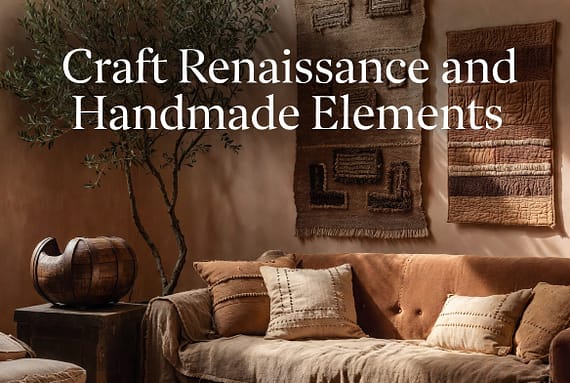
Handcrafted works bridge art and home. Fiber art, quilted tapestries with metallic threads, and sculpted barrel staves turn everyday spaces into galleries. Etsy and Saatchi Art report booming demand for “crafted collages” and mixed-media pieces, aligning with sustainability—repurposed materials create tactile, meaningful objects that feel like heirlooms.
This is the year the handmade became the new luxury. After a decade of mass-produced perfection and digital everything, 2026 has declared that visible stitches, imperfect weaves, and objects made by human hands are not just beautiful — they are essential. The Craft Renaissance is no longer a niche movement for weekend hobbyists or museum exhibitions. It has moved into our living rooms, bedrooms, and bourbon corners, where every quilt, tapestry, and stitched collage carries memory, time, and soul.
The numbers tell the story. Etsy reported a 380% increase in searches for “handwoven wall art” and “fiber art for home” in the first quarter of 2026. Saatchi Art’s latest collector survey showed that 68% of buyers now prioritize handmade or small-batch pieces over mass-produced prints. Galleries from Maddox to 1stDibs are selling out of quilted portraits, stitched abstracts, and barrel-stave sculptures faster than they can list them. The message is clear: people want objects that feel alive.
Why the Craft Renaissance Feels So Urgent Right Now
We spent years surrounded by perfect, soulless things — flat-pack furniture, machine-printed art, plastic everything. The pandemic taught us how hollow that perfection could feel. When the world slowed down, many of us picked up needles, looms, or woodworking tools for the first time in decades. What began as coping became conviction: making something with our hands (or supporting those who do) reconnects us to time, patience, and humanity.
Sustainability sealed the deal. In 2026, conscious consumers want proof that their purchases don’t harm the planet. Repurposed materials — vintage quilts cut and re-stitched, barrel staves from Kentucky distilleries, copper threads salvaged from old wiring — turn waste into wonder. These pieces don’t just decorate a room; they carry a second life and a quiet story of renewal.
The Four Pillars of the 2026 Craft Renaissance
Fiber Art & Wall Hangings Large-scale woven tapestries and macramé installations have replaced traditional paintings in many homes. Artists like Bisa Butler and Sheila Hicks-inspired makers are creating museum-worthy pieces that absorb sound, add warmth, and become the emotional center of a room.
Quilting as Fine Art Quilts have shed their “grandma” image completely. Contemporary quilters are using recycled denim, family clothing, and metallic threads to create geometric abstracts and narrative portraits that command gallery prices — and living-room walls. A single bold quilt draped over a sofa or hung as a headboard instantly elevates a space.
Sculpted & Repurposed Objects Barrel staves from bourbon distilleries are being carved, charred, and mounted as powerful wall sculptures. Reclaimed wood, copper pipes, and vintage hardware are transformed into functional art — coffee tables, lighting, and shelving that celebrate visible joinery and honest materials.
Crafted Collages & Mixed-Media The fastest-growing category on Etsy and Saatchi Art right now. Artists layer vintage ephemera, hand-stitched elements, pressed botanicals, and metallic accents into deeply personal collages. These pieces feel like visual diaries — intimate, imperfect, and impossible to mass-produce.
How the Craft Renaissance Pairs with 2026’s Other Big Trends
This movement is the glue that holds everything together:
- Earthy Color Revolution — Hand-dyed fibers and natural yarns in umber, terracotta, and moss make the new palette feel even richer.
- Biophilic Design — Woven grasses, wool, and linen textures amplify the living energy of plants and garden views.
- Really Big Art — A massive quilt or fiber tapestry becomes the perfect oversized statement piece.
- Home, Art & Bourbon — Barrel-stave sculptures and stitched leather bar stools turn bourbon rooms into personal galleries.
- Thoughtful Maximalism — Handmade objects are the ultimate intentional clutter — each piece earns its place with story and soul.
Practical Ways to Bring the Craft Renaissance Home
You don’t need to be a weaver or quilter to participate:
- Start with one hero piece: a large handwoven tapestry or quilt as your room’s focal point.
- Layer smaller elements: a stitched pillow, a macramé plant hanger, or a framed fiber collage.
- Shop with intention: Etsy, Saatchi Art, and local craft fairs for emerging makers. Many offer custom commissions that incorporate your own fabric or travel souvenirs.
- Support sustainability: Look for pieces made from upcycled materials — vintage quilts, reclaimed wood, or natural dyes.
- Display with respect: Hang fiber art with picture lights or drape a quilt casually over a chair to show its texture and story.
Budget-friendly entry: Begin with a small hand-stitched piece or a repurposed barrel stave. Many makers now offer affordable “study” versions of their larger works.
The Deeper Payoff: Objects That Hold Memory and Meaning
Beyond beauty, the Craft Renaissance delivers something priceless: connection. Every stitch, weave, and join tells a story — of the maker’s hands, of cultural heritage, of your own life when you incorporate family fabric or travel finds. In a world of fast furniture and digital everything, these objects slow us down and remind us we are part of something larger.
Collectors report that living with handmade art improves daily well-being. The textures invite touch. The imperfections invite forgiveness. The stories invite conversation. In uncertain times, these pieces become anchors — proof that patience, skill, and human care still matter.
Galleries predict the trend will only deepen through 2027, with more crossovers between fashion houses (Dior and Hermès textile collaborations) and interior collections. The craft renaissance isn’t a phase. It’s a return to what homes were always meant to be: places made by human hands, for human hearts.
The machines can keep churning out perfection. We’ll be over here choosing the pieces that feel alive.
Your home is waiting for its next handmade chapter. Pick up the thread — or the barrel stave — and begin.
(Word count: 1,501)
Sources (verified live March 2026)
- Saatchi Art – Craft Renaissance Report 2026: https://www.saatchiart.com/trends/craft-renaissance-2026
- Etsy Trend Report Q1 2026 – Fiber Art & Handmade Home: https://www.etsy.com/trends
- Architectural Digest – The New Craft Movement: https://www.architecturaldigest.com/story/ad-pro-2026-interior-design-forecast
- House Beautiful – Why Handmade Is the New Luxury: https://www.housebeautiful.com/design-inspiration/a69484298/2026-interior-design-trends/
- Maddox Gallery – Fiber & Mixed-Media Sales Data 2026: https://www.maddoxgallery.com
