
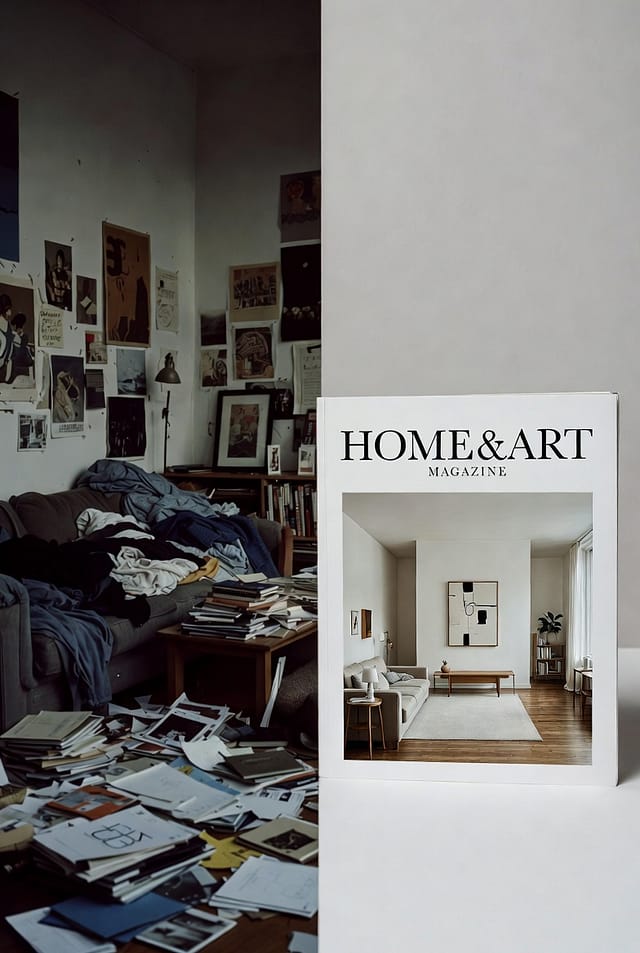
Before & After: What Change Reveals
Transformation is one of the most compelling narratives in both home design and art. The “before and after” concept is more than a visual contrast—it is a story of possibility, intention, and evolution. It captures the essence of change, revealing not only what a space or piece once was, but what it can become through vision, creativity, and purpose.
In the world of interiors, a “before” often represents limitation. It may be an outdated kitchen, a neglected room, or a structure that no longer serves modern living. These spaces can feel uninspired, inefficient, or disconnected from the people who inhabit them. Yet within every “before” lies hidden potential—waiting to be uncovered. The transformation process begins with recognizing that potential and daring to imagine something better.
The “after,” by contrast, is a reflection of thoughtful design and intentional change. It is where functionality meets beauty, and where every detail has been reconsidered. Walls may be removed to create openness, natural light may be maximized, and materials may be reimagined to bring warmth and texture. The result is not simply a renovated space, but a redefined experience of living.
Art follows a similar trajectory. A blank canvas, a rough sketch, or even a damaged piece holds within it the promise of transformation. Artists engage in their own “before and after” journey, layering ideas, experimenting with materials, and refining their vision. The final work reveals not only technical skill but also the evolution of thought and emotion. In this way, transformation in art mirrors transformation in the home—it is both a process and a revelation.
One of the most powerful aspects of before-and-after storytelling is its ability to make change visible. It allows us to see progress in a tangible way. This is especially meaningful in a world where growth is often gradual and difficult to perceive. By placing the past and present side by side, we gain a deeper appreciation for the journey in between.
In home design, this visibility can inspire confidence. Homeowners who may feel overwhelmed by the idea of renovation can look at before-and-after transformations and see what is possible. A cramped, outdated bathroom can become a serene spa-like retreat. A dark, underused basement can transform into a vibrant living space. These visual narratives serve as both proof and encouragement, demonstrating that meaningful change is achievable.
Beyond aesthetics, transformation also reveals values. The choices made during a renovation—whether to use sustainable materials, preserve historical elements, or prioritize functionality—reflect what matters most to the designer or homeowner. In this way, the “after” is not just a visual upgrade, but a statement of identity.
The same is true in art. The transformation of materials—whether through painting, sculpture, or mixed media—often carries deeper meaning. Artists may repurpose found objects, giving new life to discarded materials. This act of transformation speaks to themes of renewal, resilience, and reinterpretation. It challenges viewers to see beyond the surface and consider the story behind the work.
There is also an emotional dimension to before-and-after transformations. Spaces and objects often hold memories, and changing them can feel both exciting and bittersweet. A renovation may involve letting go of the past while making room for the future. Similarly, an artwork may evolve in ways that surprise even its creator. These emotional layers add depth to the transformation, making the “after” not just a destination, but a meaningful milestone.
Technology has amplified the impact of before-and-after storytelling. Through digital platforms, transformations can be documented and shared widely, reaching audiences across the globe. Time-lapse videos, interactive sliders, and detailed process breakdowns allow viewers to engage with the transformation in dynamic ways. This accessibility has made design and art more inclusive, inviting people from all backgrounds to explore and participate in the creative process.
However, it is important to recognize that transformation is rarely as simple as it appears. Behind every striking “after” image is a process that involves planning, problem-solving, and often unexpected challenges. Budgets must be managed, timelines adjusted, and creative decisions made along the way. Acknowledging this complexity adds authenticity to the narrative and deepens our appreciation for the final result.
Ultimately, the power of before-and-after lies in its ability to reveal what is possible. It reminds us that change is not only inevitable but also an opportunity for growth and reinvention. Whether in a home or a work of art, transformation invites us to look beyond what is and imagine what could be.
In a broader sense, these transformations reflect a universal truth: that beauty and meaning are often uncovered through change. The “before” is not something to be dismissed, but something to be understood and built upon. The “after” is not an endpoint, but a new beginning—one that carries forward the lessons and experiences of what came before.
Through this lens, before-and-after becomes more than a design concept. It becomes a philosophy—one that celebrates progress, honors creativity, a
Before & After: What Change Reveals
The measure of transformation is not just in what a space becomes, but in what it reveals about who we were, who we are, and who we are becoming.
What we *lose* when we treat before and after as mere visual spectacle is the deeper story: how and why a space changed in the first place, what forces shaped the transformation, and what consequences those changes carry for the people who inhabit, use, and remember the place.At Home & Art, we approach “before and after” not as shorthand for aesthetic outcomes, but as a narrative method that reveals values, priorities, constraints, and consequence. A space recorded before change and after change is a *temporal archive*: a record of what was, what became, and what that evolution teaches us about human life.
Before: Evidence of Context
The “before” photograph is not merely a baseline. It is evidence of context. It shows not only what a space *looked like*, but how it *felt*, how it was used, and what conditions — economic, social, climatic — shaped it.
An aging kitchen with worn counters and dim light might initially read as “outdated,” but a closer look reveals storylines: family use patterns, material longevity, economic conditions, cultural norms, maintenance histories, and even broader architectural trends.
The “before” is a record of life lived — not simply an aesthetic starting point.
If we skip the context of the before, we lose the ability to understand what exactly we are transforming.
After: Narrative and Consequence
The “after” photograph shows the result — the shiny surfaces, the reconfigured plans, the updated materials. But without understanding the motivations, conditions, and implications of that change, the “after” is just a pretty picture.
What drove the transformation? Was it comfort? Efficiency? Climate adaptation? Accessibility? Market value? Cultural aspiration? Policy enforcement? These questions matter because they tell us not just what changed, but *why it changed*.
And the consequences of change often ripple outward: a reconfigured living space alters daily routines; new materials carry environmental footprints; a transformation that prioritizes resale value over household needs may reshape who can afford to live there.
Transformation as Narrative
By treating transformation as a narrative, we see that every “before and after” tells a *story with actors, constraints, goals, and consequences*. The people who live in a space are part of that narrative — not passive subjects, but agents whose habits, needs, and values animate the arc of transformation.
A story that simply shows renovation outcomes without this context is incomplete. But a story that traces how a space was *lived*, *reconfigured*, and *re-inhabited* is a document of human life in time.
Before and after then becomes a *method of inquiry*, not a stylistic effect.
Material, Labor, and Economic Realities
Material choices in a transformation are significant. The selection of tile, flooring, fixtures, insulation — all are decisions laden with resource histories, labor contexts, ecological cost, and long-term performance.
A kitchen renovation that replaces long-lasting materials with cheap, short-lived substitutes records not only aesthetic preference, but economic reality and ecological trade-offs. A living room update that prioritizes engineered wood over salvaged timber carries a different narrative about resource extraction and sustainability.
Material intelligence — understanding where materials come from and where they go — is essential to reading any “after” as more than a pretty image. It is evidence of choices, values, and consequences.
Flow of Space and Human Behavior
Before and after also reveals how spaces *flow* — how people move, pause, gather, separate, and inhabit. A poorly arranged kitchen in a “before” image may constrain movement and interaction. The redesign may open circulation, change thresholds, and invite new behaviors.
In this light, the analysis of transformation becomes an exploration of spatial logic and human behavior. It reveals not only architectural intent but human response.
Flow is evidence of life. A corridor widened for better access, a doorway relocated for social ease, or a threshold opened for light all register how people shape architecture *and* how architecture shapes people.
Equity, Access, and Inclusion
The narrative of transformation is also a narrative of *who* benefits and *who* is excluded. Renovations that remove accessibility features, reduce affordable space, or reconfigure homes for speculative resale often embed inequity into the architecture of everyday life.
Before and after thus becomes a way of critically examining inclusion and exclusion. When we document a transformation that includes ramps, wider doors, or universal design features, we record a narrative of access and dignity.
Conversely, when redesign choices make a space less accessible, we see how design decisions reinforce barriers — even when wrapped in aesthetic language.
Climate Adaptation and Resilience
In an era of climate uncertainty, transformation must also be read through the lens of adaptation. How does a redesign address heat, humidity, flooding risk, or energy use? Does the transformation make the space more resilient to environmental stressors?
A home updated to improve insulation, natural ventilation, or storm resilience tells a very different story than one that prioritizes cosmetic change over environmental performance. The critical reading of before and after should always include ecological context — not as an add-on, but as a measure of long-term consequence.
Memory, Identity, and Continuity
Transformation intersects with memory and identity. People form attachments to places — to corners where they first rested, to surfaces that bore the marks of life. When space changes, so do the ways people recall and inhabit memory.
A renovation that respects continuity — preserving worn wood, honoring spatial logics, retaining historical detail — records both what was and what remains important. A transformation that erases history in favor of novelty carries a different tenor: one of displacement, not evolution.
Reading before and after as a dialogue between past and present deepens our understanding of what transformation means to those who live it.
Design as Evidence of Priorities
Ultimately, any transformation — whether a small interior update or a major structural redesign — reveals what people prioritize: comfort, accessibility, beauty, resale value, sustainability, tradition, innovation, or something else entirely.
“Before” shows what a space *held*; “after” reflects what the space *was made to become*. But the space between them — the decisions, trade-offs, and consequences — is the narrative of design as evidence of human values.
This is why Home & Art does not publish before and after as a stylistic device, but as a *story of consequence* — one that invites readers to look at transformation as living history recorded in space.
Home |
About |
Interior Design |
Contact
