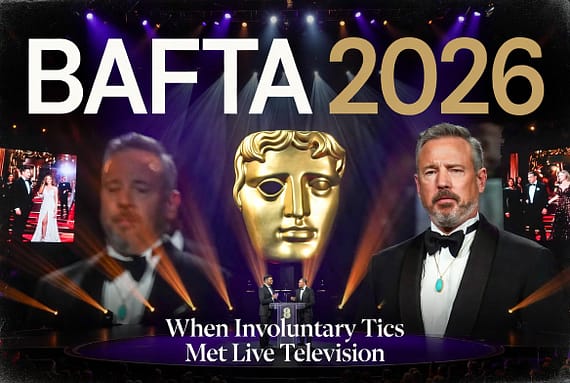
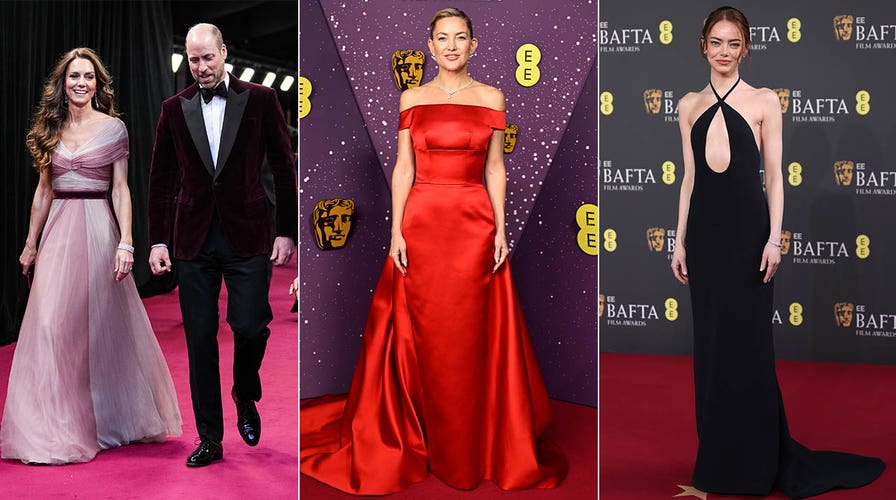
The purple carpet sparkled under London’s lights on Sunday night at the Royal Festival Hall. Stars poured in wearing everything from sapphire-blue fringe gowns to dramatic burgundy sculptural creations. Prince William and Kate Middleton walked hand-in-hand; Emma Stone, Sadie Sink, and Timothée Chalamet turned heads. It felt like the perfect launch to awards season.

:max_bytes(150000):strip_icc():focal(728x193:730x195)/jordan-hudson-stone2-baftas-22226-ca20a891558d4f8db054cbc8bb6269e5.jpg)
Inside, the 2026 EE BAFTA Film Awards celebrated bold storytelling. Paul Thomas Anderson’s One Battle After Another dominated with six wins. Ryan Coogler’s vampire epic Sinners made history. Robert Aramayo took home Best Actor and Rising Star for I Swear — the deeply personal British drama inspired by the real-life struggles of Scottish Tourette’s campaigner John Davidson.
Host Alan Cumming had opened the show with warmth and warning. He told the audience that Davidson was in attendance and that “some strong and offensive language” might occur — involuntary tics from Tourette’s syndrome. Everyone clapped in support. The night felt inclusive, compassionate, forward-moving.

Then came the first award presentation of the night. Michael B. Jordan and Delroy Lindo stepped to the podium to present Best Visual Effects. The two Sinners stars stood tall, smiling, ready to honour their colleagues.

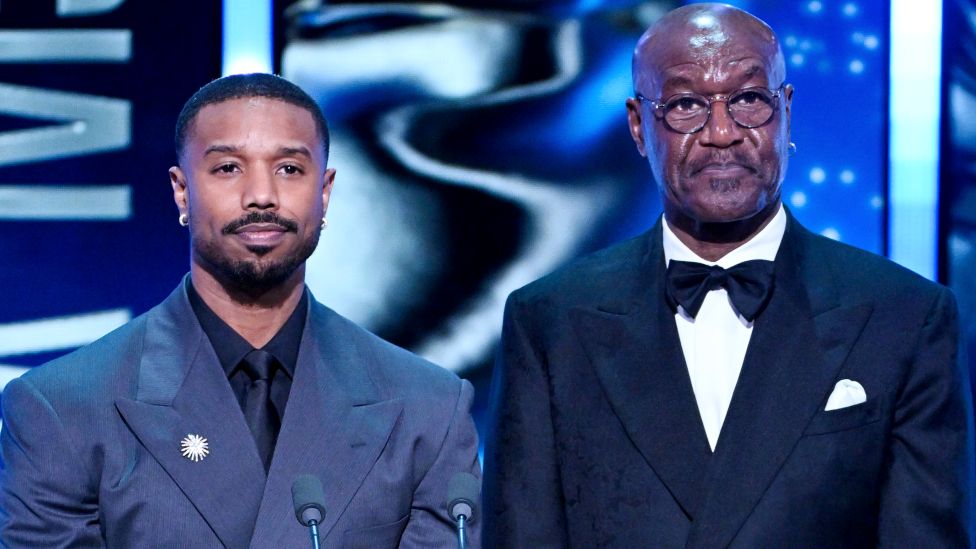
That’s when it happened.
From the audience, John Davidson — the very man whose life story had just won major awards — involuntarily shouted the N-word. Loud. Clear. Multiple times throughout the evening, but this moment landed while two Black actors stood centre stage. The word echoed through the microphones and into millions of homes via the BBC’s delayed broadcast.
Davidson has lived with Tourette’s for decades. He campaigns tirelessly for understanding of the condition, where 10–30% of people experience coprolalia — uncontrollable outbursts of taboo words or phrases that have nothing to do with their beliefs or intentions. He had been open about his fears before the show. He left early, mortified.
The next day the internet, newsrooms, and Hollywood exploded.
BBC issued an immediate apology: “Some viewers may have heard strong and offensive language… This arose from involuntary verbal tics associated with Tourette syndrome, and as explained during the ceremony it was not intentional. We apologise that this was not edited out prior to broadcast.”
BAFTA followed with a fuller statement: “We apologise unreservedly to [Michael B. Jordan and Delroy Lindo], and to all those impacted… We take full responsibility for putting our guests in a very difficult situation.”
John Davidson released his own statement: “I was deeply mortified if anyone considers my involuntary tics to be intentional or to carry any meaning. I have spent my life trying to support and empower the Tourette’s community and to teach empathy, kindness and understanding.”
:max_bytes(150000):strip_icc():focal(748x235:750x237)/John-Davidson-baftas-022326-2-de8c24a9b32b443d95e18f7267b26180.jpg)

The film that brought him there — I Swear — now sits at the centre of a global conversation. Its poster, featuring Robert Aramayo in a tracksuit, suddenly carried new weight.

Backlash came fast. Jamie Foxx called the slur “unacceptable.” Wendell Pierce said the initial apologies felt insufficient. Hannah Beachler (production designer on Sinners) revealed she had been targeted by another tic later that night and criticised the “throwaway” tone of some responses. Delroy Lindo later told Vanity Fair he wished BAFTA had spoken to them privately afterward.
Yet many voices — including Tourette’s Action charity and Aramayo himself in his acceptance speech — urged deeper understanding: tics are not thoughts. They are not hatred. They are neurology.
By Monday afternoon the full ceremony had vanished from BBC iPlayer for re-editing. Headlines shifted from red-carpet glamour and historic wins to questions about live television, disability inclusion, and whether a two-hour delay should have caught this.
The 2026 BAFTAs will be remembered not just for the trophies or the fashion, but for the raw, painful, very human collision of celebration and reality — a night that forced the entire industry to ask: How do we truly make space for everyone when some bodies don’t follow the script?
Sources
- BBC News (full coverage & statements): https://www.bbc.com/news/articles/cz6edwg06n1o
- The Guardian (analysis & context): https://www.theguardian.com/film/2026/feb/23/n-word-baftas-diversity-tourette-john-davidson
- Variety, NPR, Vanity Fair, Deadline, and Hollywood Reporter (multiple reports on reactions and Davidson’s statement)
- Official BAFTA statements and red-carpet photography via Vogue, People, and Getty Images
This wasn’t fiction. It was live television meeting real life — messy, heartbreaking, and impossible to look away from.
