
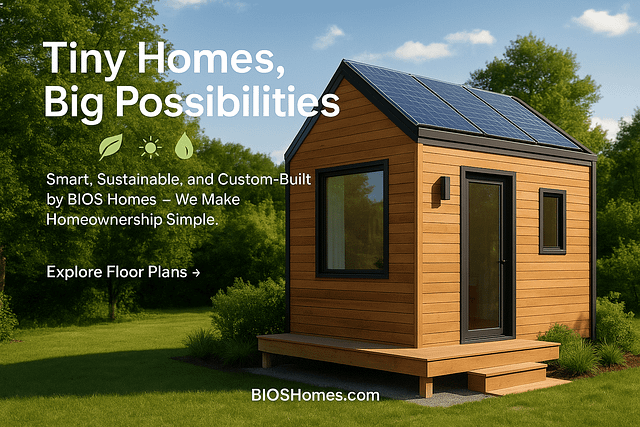
When it comes to building a tiny home or accessory dwelling unit (ADU) in Connecticut, BIOS Homes is your top choice. We combine decades of expertise in modular and panelized construction with a deep understanding of local building codes, zoning requirements, and town approvals. Our network of trusted factories and skilled builders ensures each project is custom-designed, energy-efficient, and delivered on time, while our hands-on team guides you through every step — from design and permitting to construction and finishing touches. With BIOS Homes, you’re not just building a home; you’re investing in a sustainable, functional, and beautifully crafted space that maximizes comfort and value in every square foot.
Tiny Homes, Big Possibilities
ADUs (Accessory Dwelling Units) and tiny houses have surged from niche concepts to mainstream phenomena, redefining modern home design and living. These compact dwellings address housing challenges while doubling as canvases for architectural creativity. As a result, ADUs and tiny houses are now celebrated in home and art magazines alike, prized for their blend of functionality and style. In this article, we’ll explain what ADUs and tiny houses are, explore their benefits and growing popularity, discuss design aesthetics (and how they reflect modern art and architecture), and provide expert tips, common mistakes to avoid, and innovative use cases. Whether you’re dreaming of an ADU design idea for your backyard or fantasizing about tiny house living on the open road, read on to learn how these small homes are making a big impact in 2025.
What Is an ADU (Accessory Dwelling Unit)?
An Accessory Dwelling Unit (ADU) is a secondary residential unit that shares a single-family lot with a larger primary home investopedia.com. Essentially, it’s an additional home on the same property as an existing house. ADUs come in many forms – a detached guest cottage in the backyard, a converted garage or basement apartment, or an addition attached to the main house housebeautiful.com. Crucially, an ADU is a fully independent living space: it typically has its own entrance, kitchen, bathroom, sleeping area, and living room, but it cannot be sold separately from the main home. Commonly known as granny flats, in-law suites, backyard cottages, or laneway houses, ADUs have been around for ages under various names hcd.ca.gov.
ADUs are permanent structures by definition – either built anew or carved out of existing space – and they remain part of the primary property. They are subject to local building codes and zoning laws as residential units. Many areas limit ADU size (often capping around 800–1,200 sq. ft.) and require the property owner to reside on-site. ADUs use the utilities of the main house in most cases (water, electricity, sewer), though they can be metered separately. Examples of ADUs include a small guesthouse in the backyard or a garage apartment above a detached garage. The key is that an ADU provides an extra housing unit on an existing property – offering homeowners flexibility for family or rental needs without buying new land.
What Is a Tiny House?
A tiny house generally refers to a very small home, often defined as having less than 400 square feet of living space betterplacedesignbuild.com. Tiny houses are usually standalone structures built for simplicity and minimalism. They come in two main flavors: mobile tiny houses (built on trailers with wheels, sometimes classified as RVs) and fixed tiny houses (built on foundations like a regular house). Both types embrace the “small is beautiful” philosophy, trading excess space for a focus on essentials and experiences.
Tiny houses gained fame through the “Tiny House Movement,” which promotes downsized living for financial freedom, sustainability, and a life of intention. Unlike ADUs, tiny homes are often independent dwellings not tied to a primary residence – though a tiny house can serve as an ADU if parked or built on someone’s property with permission. Many tiny homes are designed to be mobile, giving owners the freedom of a nomadic lifestyle or the option to move their home if needed. Others are stationary cottages or cabins that simply happen to be very small. The hallmark of a tiny house is efficient use of space and a minimalist lifestyle: sleeping lofts, multi-purpose furniture, and creative storage solutions are common features.
It’s important to note that ADUs vs. tiny houses have some overlap but also key differences. ADUs are legally part of a larger property and are meant as permanent housing units (often for family or rental) on that property betterplacedesignbuild.com. Tiny houses, on the other hand, are usually smaller (often under 300–400 sq. ft.), and can be on wheels or off-grid, appealing to those who prioritize mobility, simplicity, or eco-conscious living. In short, an ADU is a secondary home on a fixed lot, whereas a tiny house can be anywhere – from an off-grid forest clearing to an urban backyard – and may not require a permanent land ownership (in the case of mobile tiny homes).
ADU vs. Tiny House: Key Differences
Many people use the terms interchangeably, but ADUs and tiny houses are not the same thing. Here’s a quick comparison of their key differences:
-
Location & Legal Status: An ADU shares a lot with a primary dwelling – it’s legally tied to an existing home and typically must meet local ADU ordinances (for example, providing off-street parking or having an owner occupy the main house) investopedia.com. A tiny house is a standalone mini-home that might be on wheels; if on wheels, it may be legally considered an RV or mobile home, and if on a foundation, it might be considered an ADU or just a very small house depending on local code. Tiny houses often face zoning restrictions if used as full-time residences, whereas ADUs are increasingly permitted in residential zones by updated laws.
-
Size: ADUs can be larger than tiny houses in many cases. Some jurisdictions allow ADUs up to 800, 1,000, or even 1,200 sq. ft., essentially making them small conventional homes businessinsider.com. Tiny houses are usually much smaller – commonly 150 to 400 sq. ft. – to facilitate mobility and reduce costs. Tiny House vs ADU size is a notable distinction: an ADU could be a small two-bedroom cottage, while a tiny house might squeeze everything into one open studio space.
-
Amenities & Utilities: Both typically have the full suite of home amenities (kitchen, bathroom, etc.), but an ADU will almost always be hooked up to the primary house’s utilities (water, power, sewer) investopedia.com betterplacedesignbuild.com. A tiny house on wheels might use RV-style hookups, off-grid systems (solar panels, composting toilet, propane), or be connected to utilities if parked long-term. ADUs are considered permanent dwellings, so they must meet building codes for homes (for example, ceiling height, foundation, insulation requirements). Mobile tiny homes often follow RV standards which are more lenient in some ways (but then they aren’t always legal for year-round living in one spot).
-
Mobility: ADUs are fixed structures – you build it and it stays with the property. Tiny houses are often mobile; many are built on flatbed trailers so that owners can tow them. This mobility is a huge draw for tiny house enthusiasts who want the option to travel or relocate without losing their home. However, mobility comes with trade-offs: if you move a tiny house frequently, you’ll need to secure it like an RV and face road limits (weight, height) buildlabs.com. ADUs, being stationary, contribute to property value and provide stable housing, whereas tiny houses offer freedom and flexibility.
-
Property Value & Purpose: An ADU tends to increase property value (by adding rentable space and square footage to a lot) and is often used to house relatives, guests, or tenants long-term housebeautiful.com. Tiny houses are often about personal lifestyle; they may not appreciate in value like property-tied real estate. People choose tiny houses to simplify life, reduce costs, and sometimes to live more sustainably. ADUs are frequently part of an investment or family housing strategy (e.g., aging parents moving in, or earning rental income), whereas tiny homes are a conscious choice to live small – often a symbol of the minimalist movement and sometimes a form of protest against high housing costs.
In summary, if you want a secondary home on your lot, go for an ADU; if you want a home you can take anywhere or a truly micro-living experience, a tiny house might be the answer. Some people even combine the concepts by placing a mobile tiny house in a backyard as a de facto ADU – but even then, local laws determine whether that tiny house “counts” as an ADU or an RV. Always check your local regulations before you build or park a tiny home as an ADU!
Benefits of ADUs and Tiny Houses (Why Small Living Is Big Now)
Why are ADUs and tiny houses popping up everywhere? The benefits of small-scale living are driving their growing popularity. From economic advantages to lifestyle perks, here are some key reasons people are embracing ADUs and tiny homes:
-
Housing Affordability: With traditional home prices soaring, these smaller dwellings provide a more accessible, budget-friendly path to homeownership BiosHomes. Building a compact ADU or buying a tiny house is often far cheaper than purchasing a full-size home in the same area. In fact, ADUs have become a popular alternative to costly houses and apartments for first-time buyers businessinsider.com. They offer more bang for your buck by utilizing existing land and reducing construction costs. For example, in expensive markets, a family might opt to build an ADU in the backyard rather than try to buy a new house in the area, thus saving hundreds of thousands of dollars.
-
Extra Income & Property Value: Homeowners can generate rental income by leasing out an ADU or tiny house on their property, helping offset mortgages and increasing property value hcd.ca.gov. An ADU can function as a long-term rental unit or an Airbnb/short-term rental if local rules allow. This dual-use of one property makes ADUs financially appealing. According to California’s housing department, ADUs give owners flexibility to share independent living areas with others and are an affordable way to add housing in existing neighborhoods. Even a tiny house on wheels can be listed on rental platforms when parked, providing side income. Additionally, adding an ADU is often seen as a safe investment – it’s cheaper than buying a second property but can significantly boost your home’s overall value and usability.
-
Multigenerational Living & Flexibility: Both ADUs and tiny houses enable multigenerational living arrangements that benefit families. An ADU makes it possible for extended family (aging parents, adult children) to live close by while maintaining privacy and independence. For instance, an elderly parent can live in the backyard cottage rather than a distant retirement facility, or a college grad can have a starter home on the family lot. This proximity with privacy is a huge draw. Tiny houses similarly allow families to create a “family compound” – some owners place multiple tiny homes on a single property for different family members, creating a community feel. The flexibility of these units is key: use an ADU as a guest suite now, then perhaps as your own downsized home later in retirement, or convert a tiny house into a home office or studio as needs evolve. “Whether it is an aging parent or a 20-something-year-old child looking to save money, the flexibility of an ADU has become paramount,” notes real estate expert Kori Sassower housebeautiful.com. In short, small homes provide big solutions for changing family needs.
-
Sustainability and Eco-Friendly Living: Embracing a tiny footprint often means embracing a greener lifestyle. ADUs and tiny houses inherently use fewer materials to build and less energy to heat/cool, shrinking their environmental impact. Many tiny home enthusiasts prioritize solar panels, rainwater harvesting, and composting toilets to live off-grid or reduce utility usage. ADUs and tiny homes are leading the charge in sustainable living by using eco-friendly construction and energy-efficient designs BiosHomes. Smaller size means lower energy consumption and often a push towards renewable energy integration. For example, it’s easier (and cheaper) to put a solar panel array on a 300 sq. ft. tiny home and meet most of its power needs than to do the same on a McMansion. Some cities even encourage ADUs for sustainability reasons, as they create gentle density (more housing without expanding sprawl). In sum, these dwellings let people lighten their carbon footprint without sacrificing comfortBiosHomes.
-
Minimalist Lifestyle & More Personal Freedom: There’s a cultural shift toward minimalism and simplified living, and tiny houses are at the heart of it. By design, living in a tiny space forces you to declutter and focus on what truly matters. Many tiny house dwellers talk about how liberating it is to shed excess belongings and live with just the essentials. This minimalist mindset often translates to less consumerism and more financial freedom. With lower expenses and less stuff to worry about, people can prioritize experiences, travel, hobbies, or family over working long hours just to pay for a big house. As one blog put it, tiny homes encourage a “less-is-more approach,” helping individuals streamline their lives and find peace in simplicity. ADU residents and builders also echo this: since the space is smaller, every item needs to be intentional. Both ADU and tiny home living can thus be lifestyle choices to live more intentionally, focusing on experiences over material possessions. It’s about quality of life over quantity of space.
-
Addressing Housing Shortages: In many cities, ADUs are seen as a quick and effective way to add affordable housing options within established neighborhoods. Governments are loosening regulations and even offering incentives for ADU construction because they help increase housing supply gently. For instance, states like California, New York, and others have passed laws or grant programs to encourage ADUs as a solution to the housing crisis businessinsider.com. ADUs can provide affordable rental units in expensive areas without altering neighborhood character drastically. From a broader perspective, ADUs are an innovative answer to housing shortages, as noted by planners, effectively adding units one backyard at a time. Meanwhile, the tiny house movement has inspired some communities to develop tiny house villages for veterans or the homeless, and some rural areas use tiny homes for eco-tourism stays. In short, these small structures are big players in addressing larger social needs – from affordable housing to community development.
It’s no wonder that publications are declaring ADUs the “hottest real estate trend” of 2025 housebeautiful.com and noting that interest in tiny homes continues to grow. When you mix economic sense, lifestyle appeal, and artistic design potential, you get a powerful recipe – one that’s reshaping how we think about home.
Design Aesthetics: Modern Art and Architecture in Small Spaces
One of the most exciting aspects of ADUs and tiny houses is how they showcase cutting-edge design, modern art, and architecture on a miniature scale. Designing a small space is a unique creative challenge – every inch counts – and architects and homeowners have risen to the occasion with ingenuity and flair. The result: many ADUs and tiny homes are jewel boxes of design, reflecting contemporary aesthetics and even influencing mainstream architecture.
Modern Architectural Trends: Far from simple shacks, today’s ADUs and tiny houses often boast sleek, modern designs. Clean lines, cubic forms, and open-plan layouts prevail, echoing trends in modern architecture clevertinyhomes.com. In fact, experts say that ADU designs tend to follow the same interior design trends as full-sized homes – they’re not just “basic white boxes” anymore housebeautiful.com. Architects are experimenting with form to make small structures interesting: we’re seeing curved rooflines, sloped walls, and creative facades that turn these dwellings into art pieces. For example, with the advent of new construction techniques like 3D printing, some designers predict more curves and organic shapes will appear in ADU architecture (think barrel-vaulted roofs or rounded corners) instead of the typical shoebox shape of many tiny homes. In one Architectural Digest feature, an 890-square-foot ADU in L.A. was designed with a futuristic mix of rectilinear and curvy elements, showing how avant-garde a small home can be architecturaldigest.com. The bottom line: small doesn’t mean boring. Many ADUs and tiny houses look like modern art sculptures or high-end apartments shrunk down – complete with trendy exterior materials like cedar slats, metal panels, large glass windows, and bold color accents.
Maximizing Light and Space: Great small-space design is all about creating an illusion of spaciousness. Designers employ tricks like high ceilings, abundant windows, and skylights to make a tiny area feel airy and open. For instance, a tiny house might feature a vaulted ceiling following the roofline – this vertical boost makes the interior feel much larger than its footprint. Large windows and glass doors are another hallmark of modern small homes, blurring indoor-outdoor boundaries and inviting in natural light isaacsbuilders.com. Some ADUs even have entire glass walls or garage-style doors that roll up to connect to a patio, extending the living space outdoors. Reflective surfaces and strategic lighting further enhance the sense of openness. In short, the architecture of ADUs and tiny houses prioritizes light and height to avoid any claustrophobic vibe.
An ADU interior designed with exposed wood beams, open shelving, and ample windows creates a warm yet spacious atmosphere. Even at under 800 sq. ft., thoughtful design elements like vaulted ceilings and natural light make this small space feel expansive.
Interior Design and Décor: Inside these small homes, design becomes a blend of art and engineering. Every piece of furniture often serves multiple purposes, and storage is cleverly integrated into nooks and crannies. Multifunctional furniture is a must: think Murphy beds that fold into the wall, sofas that convert to guest beds, tables that expand or collapse, and built-in benches with storage underneath clevertinyhomes.com. This adaptability is both functional and a style statement – it reflects a modern, minimalist aesthetic where form follows function elegantly. Designers also play with styles: tiny homes can be ultra-modern with minimal decor, white walls, and stainless steel accents, or rustic chic with shiplap wood walls and a cozy loft, or even industrial with exposed pipes and concrete finishes. The small canvas lets owners personalize boldly: some go for vibrant accent walls or artistic tile work that would be too costly in a large home but is affordable in a tiny space due to the small quantity needed. As House Beautiful noted, ADU interiors are incorporating joyful design elements – unique features and bold paint colors – to ensure they have character and aren’t just utilitarian afterthoughts housebeautiful.com.
Despite size constraints, many ADUs and tiny houses don’t skimp on luxury. High-end materials like quartz countertops, hardwood floors, and designer lighting fixtures are common, precisely because the reduced square footage makes them more attainable cost-wise. One builder noted that small homes take cues from luxury design: you might find elegant cabinetry, custom built-ins, and premium fixtures all scaled to size, creating a jewel-box effect clevertinyhomes.com. It’s the art of small living – where quality trumps quantity.
The interior of a tiny house on wheels showcases creative use of space: a cozy sleeping loft above, a compact kitchen and living area below, and rich wood textures that add warmth. Such designs prove that tiny house living can be both stylish and comfortable.
Outdoor Integration: Another aesthetic trend is connecting these small homes to outdoor areas. An ADU often comes with a landscaped patio or deck – effectively an outdoor living room – expanding the usable space and providing an outlet for creative landscape design. Many tiny houses deploy large French doors or folding glass walls that open onto nature, making the home feel bigger and marrying architecture with its surroundings. Given their petite footprint, tiny homes and ADUs can emphasize quality over quantity not just indoors but outdoors too – think succulent gardens, artistic pathways, trellises or pergolas that create an inviting environment around the unit. This integration of indoor-outdoor living is a very modern, Californian ethos that has trickled into tiny living as well.
In summary, ADUs and tiny houses exemplify the saying that architecture is art you live in. They encapsulate modern design principles – sustainability, simplicity, functionality, and beauty – in very compact forms. From an artistic standpoint, designing a fully functional home in a couple of hundred square feet is like designing a compact piece of art or a custom piece of furniture. It’s no surprise that architects and interior designers are increasingly fascinated by these projects. They’re small but mighty, pushing innovation that often finds its way back into larger home design (for instance, clever storage solutions or open-plan concepts that work in any size space). Whether you prefer the ultra-modern tiny house with floor-to-ceiling glass or a charming cottage-style ADU with vintage flair, there are endless design ideas to make a small home reflect big personality.
Expert Tips for Building an ADU or Tiny House
Embarking on the journey to build an ADU or a tiny house is exciting, but it requires careful planning and smart decisions. We’ve gathered some expert tips to ensure your small-home project goes smoothly and yields a beautiful, livable result:
-
Start with a Clear Purpose: Begin by defining why you want an ADU or tiny house. Is it for rental income, downsized living, a home office, or housing a family member? Your “why” will drive the design and features you need buildlabs.com. For example, an ADU for an elderly parent might prioritize single-level accessibility and safety (no lofts or ladders), while a tiny house for travel might focus on weight reduction and roadworthy features. Having a clear goal will help you make decisions that align with your lifestyle and needs.
-
Research Local Regulations Early: Before you draw up plans or buy a tiny house trailer, do your homework on zoning laws, building codes, and permitting. Every city and county has different rules. Some places are very ADU-friendly (relaxing parking requirements, offering expedited permits), while others have strict rules on size, height, or owner occupancy. Ensure your project is lawful from the get-go – building an unauthorized ADU can lead to fines and headaches if you have to retrofit or remove it later investopedia.com. Likewise, if you plan to live in a tiny house on wheels, find out where it can be legally parked or if it can be classified as an ADU. Pro tip: Consult your city’s planning department or use online tools (some states provide ADU guides) to understand the requirements. Don’t skip the step of getting a permit; one common mistake is starting construction and then applying for permits, which can backfire if the design isn’t compliant gatheradu.com.
-
**Plan and Budget Realistically: Set a budget and include a contingency. Small homes can still come with big expenses, and costs can creep up if you’re not careful. Consider all factors: design/architect fees, permits, site preparation (excavation, foundation work or trailer purchase), utility hookups (running water/sewer lines or electrical can be pricey), and interior finishes. On average, a basic tiny house might cost between $30,000 and $60,000 to build, but high-end models can reach $100k+ buildlabs.com. ADU construction, being subject to full code, often ranges from $100,000 to $300,000 depending on size and finishes businessinsider.com. Get multiple quotes if using contractors, and remember to budget for furnishing the small space (built-in storage, custom furniture can add to cost). Financial planning is key – you don’t want to run out of money halfway through and end up with an incomplete unit halftheclothes.com.
-
Design for Space Optimization: In small homes, every square foot should serve a purpose. Engage in smart space planning or hire a designer experienced in small spaces. Use vertical space – high ceilings can accommodate a sleeping loft or extra storage. Incorporate built-in furniture and storage nooks (for instance, toe-kick drawers under cabinets, or shelving between wall studs). Multi-functional furniture is your friend: a bench that contains storage, a dining table that folds down from the wall, or a murphy bed that doubles as a desk when folded clevertinyhomes.com. Also, prioritize an open-concept layout if possible; minimizing interior walls helps a small space feel larger and more flexible isaacsbuilders.com. For ADUs, consider an open studio layout or one-bedroom layout with pocket doors that save space. For tiny houses, carefully choose appliances sized for small homes (apartment-size fridge, combo washer/dryer, etc.). Pro Tip: On small floor plans, light colors and reflective surfaces inside can make the space feel bigger, and continuity in flooring material (using the same flooring throughout) avoids visual chopping of space.
-
Maximize Natural Light and Ventilation: Small spaces can feel cramped if dark or stuffy. Design your ADU/tiny house with plenty of windows to bring in light and views of the outside (which psychologically enlarges the space). Even well-placed skylights or solar tubes can make a huge difference in a studio-sized home. Large windows or glass doors not only add a modern aesthetic but also connect the interior to the outdoors, essentially “borrowing” the outdoor space to expand the feel of the home isaacsbuilders.com. Also plan for good ventilation and insulation – small homes can heat up quickly or suffer condensation if not properly ventilated. Include operable windows or vents on opposite sides for cross-breeze. If building in a hot climate, consider an A/C heat pump unit; in a cold climate, ensure you have proper insulation (tiny houses on wheels might need spray foam insulation to maximize R-value in thin walls). A comfortable interior environment is crucial given the compact space.
-
Don’t Skimp on Quality (Select Durable, Space-Savvy Materials): Since you’re dealing with fewer square feet, you can often afford to invest in higher-quality materials and finishes. This is one of the joys of building small – you might splurge on a gorgeous countertop or handcrafted tiles because you need only a small quantity. Choose materials that are durable and low-maintenance, as wear and tear can be higher in tight quarters (every surface gets touched and used frequently). Also, think lightweight if it’s a tiny house on wheels (e.g. use lighter wood or composite materials to reduce weight). Expert tip: Use materials with dual benefits, like cork flooring which is both light and provides insulation and cushioning, or metal roofing which is light and long-lasting. And in the design phase, measure everything – know the dimensions of your appliances and furniture beforehand to ensure a perfect fit (an inch can make or break a layout in a tiny home).
-
Blend with the Environment (especially for ADUs): If building an ADU in a backyard, consider the design harmony with the main house and neighborhood. While it’s tempting to make a statement with a bold modern design (and that can be great), some experts advise complementing the existing home’s style or at least its roofline/materials, especially if local rules require it. An ADU that aesthetically gels with the primary house can enhance overall property cohesion and appease neighbors. On the other hand, if you have artistic license, a contrasting modern ADU can create a cool dichotomy (old house in front, modern box in back). For tiny houses, think about the setting – if you’ll be in nature, maybe large windows and natural wood exteriors make sense; in an urban setting, perhaps more privacy and security features are needed. Also, plan the outdoor space: a small deck, a garden path, even a trellis can extend the living area and make your tiny dwelling more livable and inviting.
-
Plan Utilities and Systems Early: One thing newcomers often underestimate is the complexity of utilities in a small build. Decide upfront how you’ll handle power, water, sewage, heating/cooling. For an ADU, tying into the main house’s systems is standard, but you may need a new electrical sub-panel, a sewer connection or septic solution, and water line extension. Plan for water heaters (tankless wall units are popular to save space), and consider a sub-meter if you want to monitor the ADU’s utility usage separately. For tiny houses, if on wheels, will you connect via RV hookups, or install solar panels and batteries for off-grid? If the latter, you’ll need to size your system for your energy usage. Also, think about propane vs. electric for cooking and heating (many tiny homes use propane for stoves or on-demand water heaters to conserve electricity). Heating and cooling needs are smaller, but you should still choose an efficient solution (mini-split heat pump units work great in ADUs and tiny houses). And don’t forget ventilation fans in the bathroom and kitchen – moisture control is critical in small spaces.
-
Hire Experienced Professionals (or Do Thorough Research): Not all contractors or architects have experience with tiny spaces or ADUs, so try to find those who do. An experienced ADU designer can navigate permitting and suggest innovations you might not think of, and a builder used to small projects will know how to optimize construction (and avoid common pitfalls like improper insulation or inefficient layout). If you DIY, immerse yourself in resources: there are countless tiny house communities, forums, and workshops that share knowledge. Learn from others’ mistakes and successes – the small living community is generally very open and helpful. If your project is an ADU that will be a permanent part of your property, consider at least consulting an architect or structural engineer for the plans (to ensure safety and compliance). The investment in good design and solid construction is well worth it for a structure that will be part of your home (and potentially housing loved ones or tenants).
-
Think Long-Term and Lifestyle: Finally, approach your ADU or tiny house project with a long-term mindset. Plan for adaptability – needs may change. Maybe design an ADU such that it could be an office now but easily convert to a rental studio or in-law unit later (e.g., by including a full bathroom and kitchenette even if you use it as an office). In a tiny house, consider aging in place: if you intend to live there for a while, could you incorporate modular features to adjust to life changes? Also, prepare for the lifestyle shift, especially for a tiny house: decluttering and organization habits will be important. It’s a good idea to do a trial run of tiny living (rent a tiny vacation cabin or try living in one space of your current home for a week) to identify what you truly need. Many people find the lifestyle rewarding, but it does come with trade-offs in privacy and convenience, so set expectations accordingly.
By following these tips and planning with intention, you’ll set yourself up for success. Building small can be incredibly rewarding – both financially and personally – as long as you mind the details.
Common Mistakes to Avoid When Going Tiny
While ADUs and tiny houses offer big benefits, there are also common pitfalls you’ll want to steer clear of. Here are some frequent mistakes and how to avoid them:
-
Ignoring Local Laws or Bypassing Permits: Perhaps the number one mistake is failing to check local regulations. Building an ADU without proper permits or in violation of zoning rules can lead to legal trouble, fines, or an order to tear it down gatheradu.com. Likewise, parking a tiny house illegally (for instance, in a city back yard not zoned for RV living) can get you evicted from your own tiny home. Avoidance: Always do your due diligence with city planning departments. Obtain all necessary permits and inspections. If something seems like a gray area (like a tiny house on wheels as an ADU), seek written clarification or consider working within official ADU frameworks (some places allow “moveable tiny homes” as ADUs if they meet certain standards).
-
Underestimating the Project Scope and Costs: People often assume a smaller home is a small project. In reality, building a house – no matter the size – is a complex endeavor. Under-budgeting or oversimplifying can lead to nasty surprises. Running out of money or encountering delays because you thought “it’s just a shed, how complicated can it be?” is a recipe for frustration halftheclothes.com. Avoidance: Treat the project professionally. Make a detailed budget (and include 10-15% extra for contingencies). Don’t assume that everything is scaled down linearly; sometimes per-square-foot costs of tiny builds can be higher because of custom fittings. If you’re DIYing, double the time you think you need (many tiny house self-builders take months longer than expected to finish). Plan the schedule and finances as if it were a full home build – because it is, just smaller.
-
Poor Space Planning (Cramped or Dysfunctional Layouts): Squeezing all functions of a home into a tiny footprint is like a puzzle, and poor planning can make the space uncomfortable. Common errors include not having enough storage, placing windows poorly (leading to dark corners or lack of airflow), or mis-measuring key components (like a kitchen that’s too tight to cook in, or a loft too low to sit up in). For ADUs, a design mistake might be not providing enough privacy separation from the main house (e.g., windows directly facing each other). One expert notes that a big mistake is assuming less space means fewer challenges – in fact, smaller homes often demand even more intentional design to avoid feeling cluttered pinuphouses.com. Avoidance: Work on the layout intensively. Use templates or software to mock up where furniture will go. Consider hiring an interior designer for an hour of consulting on layout – they might catch issues you don’t. Prioritize open floor area so the space doesn’t feel like a maze. Ensure ample windows (but also consider privacy – e.g., offset the ADU’s windows from the main house sight-lines) maxablespace.com. Think about daily living: Do you have a spot to sit and eat? A comfortable place to work (especially now that many of us are remote working)? Enough kitchen counter space to actually prepare food? Don’t sacrifice every functional element for the sake of minimalism – it still needs to operate as a home.
-
Skimping on Soundproofing and Privacy: This is specific to ADUs (and also tiny homes parked near others). If your ADU is attached or very close to the main house, sound insulation is vital. One common oversight is not adding enough sound separation – resulting in you hearing every footstep from the main house or vice versa symbium.com. Also, not creating a private entrance or yard space for the ADU can reduce its usefulness (renters or family feeling like they intrude). Avoidance: Use insulation and construction methods that dampen sound (rockwool insulation, resilient channels, solid core doors, etc.). Think about orientation – place noisy areas (like the ADU’s bathroom or kitchen) away from the main bedroom wall of the primary house if possible. Provide window coverings, fencing, or landscaping to give visual privacy between the ADU and main house. The goal is to make living in the ADU feel as independent as possible for everyone’s comfort.
-
Hiring the Wrong Contractors or Going DIY Without Skills: Some homeowners jump into building an ADU as a DIY project thinking it’s like building a shed, only to find themselves overwhelmed by structural, plumbing, and electrical work. On the flip side, hiring a general contractor who has never built a small home or who is unreliable can lead to subpar results. Avoidance: If DIY, be honest about your abilities. Structural framing, roofing, and installing utilities must be done to code and safely – if you’re not experienced, hire pros for those parts and perhaps do the interior finishing yourself. If hiring out, vet your contractors – ensure they understand small-space construction and have proper licenses. Check references, and have a detailed contract. It’s also wise to include a clause about change orders in the contract (another common mistake is not anticipating that changes = extra costs, causing disputes later gatheradu.com).
-
Overloading a Tiny House Trailer (for mobile tiny homes): For those building or buying a tiny house on wheels, a classic error is exceeding the weight capacity of the trailer. It’s easy to do if you use a lot of heavy materials (tile, dense wood, etc.), and it can make your home unsafe to tow (or even cause structural issues). Also, exceeding width/height limits (8.5 feet wide in the U.S. for towing without special permits, ~13.5 feet tall) is a risk. Avoidance: Use a trailer rated for the weight of a fully built tiny house (including contents). As you build, keep track of weight – use lightweight alternatives where feasible (e.g., polycarbonate roofing instead of glass skylights, or aluminum framing for some parts). Stay within road-legal dimensions unless you plan to park it permanently and don’t mind permit loads. If purchasing, make sure the builder followed these rules.
-
Not Planning for Living Logistics: This is more for tiny house living – mistakes like not thinking through where you will park or hook up, or failing to arrange for things like mail, internet, and everyday logistics. People sometimes romanticize off-grid life then realize dumping a composting toilet or hauling water is not for everyone. Similarly, with ADUs, not planning for maintenance (two houses to upkeep on one property) or management (if you’re renting it, you become a landlord) can be an oversight. Avoidance: Before going tiny, map out your daily life. If mobile, have a parking strategy (and a backup). Research utilities: if off-grid, how will you get internet or do you have reliable solar in winter? If your ADU is for rental, are you prepared for tenant interactions or possible vacancy periods? Being pragmatic about these aspects ensures your small home experience remains a dream, not a nightmare.
Avoiding these pitfalls largely comes down to thorough planning and realistic expectations. As many seasoned tiny homeowners will say, building or living small can be more complex than it first appears – but if you do it right, the payoff is huge. You end up with an efficient, cozy home without the baggage of excess space or debt.
Innovative Use Cases and Creative Ideas
One reason ADUs and tiny houses are so popular is their sheer versatility. Homeowners and designers continue to come up with innovative use cases for these small structures, adapting them to various needs in clever ways. Here are some creative ideas and examples of how ADUs and tiny houses can be used:
-
Backyard Rental Cottage or Airbnb: Perhaps the most common ADU use is a rental unit – effectively turning your backyard into an income source. A detached ADU can be a charming guest cottage that you rent out to long-term tenants or vacation travelers. This setup lets homeowners earn extra income and guests enjoy a private tiny home experience. Cities from Los Angeles to Portland have seen thousands of ADUs built for this purpose as a win-win: more housing stock for the community and financial benefits for owners housebeautiful.com. Tiny homes on wheels have also been used as Airbnb rentals in scenic locations, offering people a taste of tiny house living as a getaway.
-
Home Office or Creative Studio: With remote work becoming a permanent part of life for many, ADUs and tiny houses make excellent home offices, art studios, or workshops. Instead of commandeering a room in your main house (with all the distractions), imagine a stylish tiny office steps away in your garden. Designers have crafted ADUs specifically as inspiring workspaces – with lots of light, built-in shelving for supplies, and quiet separation from the household. Writers, artists, and musicians also appreciate a detached space where they can create without interruption. Even a small 120 sq. ft. tiny shed can serve as a focused retreat for work or hobbies. The benefit is a commute measured in feet, not miles, and a better work-life balance (since you can “go home” by simply leaving the ADU at day’s end).
-
Guest House or “Granny Flat”: Many people build ADUs to host family or guests. Having a guest house means friends or relatives can visit and stay comfortably with some privacy (and you don’t have to give up your own bedroom or living room). In multigenerational scenarios, an ADU becomes a granny flat for an elderly parent – close enough to help them, but independent enough for everyone to have breathing room. Alternatively, young adult children can live in an ADU as they start their careers, giving them affordable housing while still near family. This use case strengthens family bonds and provides a safety net for different life stages. As one designer noted, multigenerational living is on the rise, and ADUs perfectly facilitate that trend housebeautiful.com.
-
Tiny House as Travel Companion: On the tiny house side, one innovative idea is using a mobile tiny house for travel or seasonal living. For instance, some digital nomads live in a tiny house on wheels and move it to various locales as they please – working from a mountain one season and a beach the next. Retirees have also taken to tiny house living for part of the year, maybe spending summers up north and towing their home to warmer climes in winter (snowbird style). A tiny house can serve as a personal RV but often with more charm and customization than a factory RV. This lifestyle, often called “tiny house nomading,” is an interesting twist on vanlife, offering more comfort than a van but similar freedom.
-
Home Gym or Wellness Retreat: If fitness or wellness is a priority, how about a tiny home gym or yoga studio in your backyard? Converting a small ADU or building a custom tiny structure for exercise can be a game-changer for wellness. Picture a 200 sq. ft. space with mirrored walls, rubber flooring, and your exercise equipment – always accessible with no commute to the gym. Or a serene yoga/meditation tiny studio with lots of plants and soft lighting, purely dedicated to relaxation. Some homeowners are indeed using ADUs for this purpose (as noted in a BuildLabs example, a purpose-built home gym steps from your door means no excuses for skipping workouts buildlabs.com). It’s a luxury that a small space can fulfill without taking up a room in the main house.
-
Artist’s Haven or Maker Space: Creative folks have turned tiny homes into art studios, craft workshops, or maker spaces. The small footprint can actually inspire creativity by forcing efficient organization of tools and materials. Whether it’s a painting studio with skylights for natural light, a woodworking shop with space-saving tool storage, or a recording studio loaded with sound insulation, a tiny structure can be tailored for the craft. One benefit is you can make a bit of a mess in your dedicated tiny studio without worrying about disrupting your living space. Plus, closing the door on a separate structure at the end of the day can help “switch off” – useful for artists to step away from work. Publications like Dwell have even showcased ADUs used as backyard art studios, highlighting how these small units can nurture big creativity dwell.com.
-
Pop-Up Business or Retail Space: An unconventional but intriguing use: tiny houses have been used as mobile businesses – from food stands to retail shops. Imagine a chic tiny house that serves as a mobile bakery or coffee bar, towed to events or neighborhoods. Others have made mobile boutiques, grooming salons, or consultation offices out of tiny homes on wheels. While this blurs the line with food trucks or kiosks, the aesthetic of a tiny house can set a business apart. For ADUs, some have been used as home-based business spaces (like a consulting office where clients come, separate from the main house). Always check zoning for commercial use, but creative entrepreneurs are finding that a tiny structure can be a low-cost way to have a storefront.
-
Community Building and Social Causes: Some cities and non-profits use tiny houses in groups to form communities. For example, there are pilot projects creating tiny house villages for homeless veterans, providing them privacy and dignity in a small home clustered around shared facilities. ADUs are also being considered in some locales as a way for homeowners to help with affordable housing – programs where you agree to rent your ADU at below-market rates in exchange for incentives. Thus, these small structures can have a big social impact by addressing community needs. They foster diversity in neighborhoods (by enabling people of different ages/incomes to live in single-family areas) and can even strengthen community ties – imagine a neighborhood where several backyards have ADUs that family or friends live in, creating micro-communities within the block.
These examples are just the tip of the iceberg. The beauty of ADUs and tiny houses is their adaptability. They invite you to think outside the conventional housing box. Your ADU or tiny home can be whatever you need it to be: a tiny house vs ADU doesn’t have to be one or the other – it could start as a man-cave workshop and later become a rental unit, or a tiny mobile home could become a stationary backyard ADU when you settle down. As one article put it, adding an ADU “opens up possibilities” – from a place for family to stay to a source of rental income to a private workspace, all paces from your back door dwell.com.
So, unleash your imagination. These little homes are flexible by nature. If your needs or passions change, an ADU or tiny house can change roles with you. In a very real sense, they are a housing solution tailored to the human life cycle – evolving from one use to another as we move through life’s stages.
Conclusion: The Future of Small-Space Living
ADUs and tiny houses represent a profound shift in how we view home and art in architecture. They prove that a dwelling doesn’t have to be massive to be beautiful, functional, and meaningful. By maximizing small spaces, we unlock creative design solutions that often outperform those in larger homes. It’s like solving a delightful puzzle – one that results in a cozy cottage or a chic micro-apartment you can call your own.
In this era of skyrocketing housing costs, environmental concerns, and changing lifestyles, ADUs and tiny houses offer a refreshing answer. They provide housing that is affordable yet rich in design, sustainable in footprint yet generous in character. They allow homeowners to adapt – whether expanding living space for family, generating income, or downsizing to simplify life. Importantly, they do all this while blending practicality with artistry: a well-designed tiny home or ADU is both a residence and a piece of livable art.
Experts predict the popularity of these small homes will continue to grow. With more municipalities updating laws to allow ADUs, and the ongoing fascination with tiny living in media (TV shows, blogs, and social platforms share countless tiny house tours and ADU transformations), we’re moving toward a future where having an ADU or living in a tiny house could be as common as any other housing choice. In fact, embracing these concepts might pave the way for more connected, sustainable communities – imagine neighborhoods where backyards house not sheds, but charming little homes that increase density thoughtfully and provide options for different generations and income levels. The tiny house movement has already shown that when given the chance, many people will trade excess space for freedom, creativity, and sustainability.
For readers of a home and art magazine, perhaps the most inspiring takeaway is that design thrives under constraints. The limitations of size spur innovation. That’s why some of the most intriguing modern architecture and interior design today is coming out of ADU projects and tiny home builds. The attention to detail, the clever use of materials, the integration of indoor-outdoor living, and the personalized touches – they all coalesce into dwellings that feel authentic and human-centric. In a way, designing a tiny house or ADU is like creating a custom piece of functional art, tailored exactly to the owner’s needs and tastes.
If you’re considering joining this movement – be it building an ADU in your backyard or taking the plunge into tiny house living – know that you’re not just constructing a home, you’re contributing to a larger trend that values creativity, efficiency, and intentional living. By following best practices (and the tips we’ve outlined), you can craft a small space that lives large in both comfort and style. Avoid the pitfalls, embrace the fun of the design challenge, and soon you might be sipping coffee in your sunlit tiny living room, marveling at how satisfying small living can be.
In the world of ADUs and tiny houses, small is the new big – a big trend, a big solution, and a big statement that living with less can actually mean living more. So dream big, even if you build small. Your future #smallspace could very well become your favorite work of art.
SEO-Friendly Resources & References:
-
American Planning Association – “What is an ADU?” – Official definitions and types of ADUs housebeautiful.com.
-
California Housing Department – ADU Benefits – State summary of ADU benefits for homeowners and communities hcd.ca.gov.
-
Investopedia – ADU Explained – Financial and practical overview of accessory dwelling units investopedia.cominvestopedia.com.
-
Tiny House Movement Research (IPX1031) – Survey showing 73% of people open to tiny house living for affordability and simplicity buildlabs.com.
-
House Beautiful (June 2025) – Trends in ADU design and expert opinions on why ADUs are a hot trend housebeautiful.comhousebeautiful.com.
-
Dwell Magazine – ADU Ideas – Gallery of ADU designs serving as guesthouses, studios, etc., showcasing creative small-space layouts dwell.com.
-
BuildLabs – Tiny Home Tips Guide – Expert tips and cost considerations for building tiny homes or ADUs buildlabs.com.
-
Maxable Space – “Costly ADU Mistakes” – Insights on common ADU construction mistakes like privacy and permitting issues maxablespace.com.
-
Clever Tiny Homes Blog – Tiny house design innovations (lofts, multi-functional furniture, styles) for maximizing comfort in small dwellings clevertinyhomes.com.
(All information is sourced from expert interviews, architectural magazines, and official housing resources to ensure accuracy and reliability.)
