

Homes are bigger. Louder. Smarter. More expensive than ever.
So why do so many of us feel more displaced than ever before?
We have more square footage, more data, and more housing wealth than any generation before us. And yet I have never seen so many financially secure people look unsure at their own kitchen tables. Not anxious about whether they can pay. Not reckless. Not uninformed. Unsure.
Last week I sat with a couple—both physicians, both accustomed to making decisions under pressure. Their income was strong. Their credit excellent. The house in front of them fit their commute, their children, their long-term plans. On paper, nothing about the purchase was irresponsible.
But when we reached the mortgage disclosure, the conversation slowed. He read the terms twice. She asked about exit timelines before asking about paint. “What if rates drop next year?” “What if inventory rises?” They weren’t debating finishes. They were scanning for exposure. The house wasn’t the problem.
The fear was being wrong. In nearly two decades of selling homes, I’ve seen markets expand, contract, overheat, and recover. I’ve watched bidding wars and buyer paralysis. But this hesitation feels different. It isn’t driven by extravagance. It isn’t driven by ignorance. It’s driven by compression — by the sense that the margin for error has narrowed.
We can track equity in real time. We can compare properties across counties from our phones. We can model worst-case scenarios at midnight. And yet the most common question I hear today isn’t, “Can we afford this?” It’s, “Will this hold?”
Homes are bigger, smarter, and more valuable than ever. The ceilings are higher. The systems are efficient. The technology anticipates our needs. And still, something feels thinner.
That thinness doesn’t show up in price charts. It reveals itself in tone — in the way conversations tighten, in the way commitment feels like calculation, in the way the word “home” is spoken with caution instead of certainty.
This isn’t a story about collapse. No one is on the brink. These are capable people making rational decisions in a complicated market. But beneath the rationality, something unsettled hums.
We built stronger houses.
Somewhere along the way, we stopped building confidence.
Living in the Margin
The doctors weren’t unusual. What unsettled me was how typical the moment had become. Teachers. Engineers. Small business owners. Retirees. Different incomes, different towns, same posture. The numbers are reviewed carefully, the logic is sound, and then someone leans back and asks a version of the same question:
“Are we stretching too far?” Ten years ago, that question usually meant the payment felt heavy. Today it means something else. It means the margin feels thin. Connecticut’s active listings have fallen from more than 24,000 in 2016 to just over 3,000 this year. Prices accelerated. Rates moved sharply in both directions. Sellers hesitate to give up historically low loans. Buyers enter a market where supply feels rationed.
Economists call this compression. At a kitchen table, it feels like exposure. When the margin narrows, imagination narrows with it. Families evaluate homes less as places to grow and more as positions to manage. They ask how quickly they could exit before asking how deeply they might settle.
I’ve watched buyers calculate downside scenarios before imagining birthdays in the backyard. I’ve watched sellers stay put not out of contentment but because surrendering a low rate feels riskier than staying. I’ve watched young couples delay starting families because housing stability no longer feels predictable.
None of these decisions are irrational. They are adaptive. But adaptation, repeated enough times, reshapes culture. When enough households begin living in the margin — financially cautious, emotionally guarded — the language around home shifts. It becomes less about planting and more about hedging. Less about belonging and more about timing. The houses themselves have improved.
The sense of footing has not.
When Commitment Starts to Feel Like Risk
For decades, homeownership carried an unspoken promise: stay long enough and stability follows. Markets would fluctuate, but time absorbed volatility. Equity accumulated slowly. Neighborhoods matured. The longer you remained, the more secure you became. That assumption shaped behavior. People planted trees that would take years to grow. They renovated kitchens for daily life, not resale value. They expected to know their neighbors long enough for familiarity to turn into trust.
That time horizon has shortened. When rates swing dramatically within a few years, when prices outrun wages, when inventory compresses to a fraction of what it once was, “settling in” begins to compete with “locking in.” The emphasis shifts — subtly but decisively — from belonging to positioning.
This is not moral failure. It is rational response. If timing can determine whether you gain or lose tens of thousands of dollars, timing becomes the focus. If opportunity feels fleeting, extraction feels prudent. If speed is rewarded, deliberation feels costly. The incentives make sense.
The cultural consequence is quieter. When commitment begins to feel like risk, people hedge emotionally before they hedge financially. They hold back just slightly. They evaluate neighborhoods as temporary even if they remain for years. They ask about resale potential before they ask about morning light.
I see it constantly. Buyers ask how long they “should” stay before asking how they might live there. Families measure success by outperforming the market rather than by feeling anchored inside it. A house can appreciate while the feeling of home depreciates. That is the paradox we are living inside. We optimized housing as an investment vehicle.
In the process, we destabilized it as a psychological foundation.
What Children Learn Without Us Saying It
 Children don’t read housing reports. They don’t track interest rates or inventory counts. They don’t understand what compression means. But they understand tone. They hear it in late-night conversations about refinancing or waiting. They register the pause when parents discuss moving as calculation rather than possibility. They notice when a house is spoken about as an asset before it is spoken about as theirs.
They ask simpler questions. “Are we staying?” “Is this ours?” It’s a small word. Ours. But it carries more weight than any appraisal. When adults approach housing defensively — constantly evaluating risk, scanning for exposure, planning contingencies — children absorb something quieter than data. They internalize whether stability feels assumed or provisional.
No one sits them down to explain market volatility. They learn it atmospherically. If home is framed primarily as something to optimize, detachment becomes easier. If it is framed as something to steward, attachment deepens. The distinction is subtle, but over time it shapes how confidently a child imagines the future.
Markets transmit pressure whether we intend them to or not. Pressure becomes atmosphere. Atmosphere educates. The question is not whether children understand cap rates or supply constraints. The question is whether they grow up believing the ground beneath them is something to build on — or something to monitor.
That difference does not appear in quarterly data. It appears at a dinner table.
When No One Plans to Stay
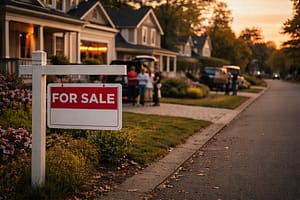 Instability rarely announces itself in a neighborhood. It doesn’t arrive with foreclosure signs or boarded windows. It shows up gradually. Conversations at the mailbox get shorter. Renovations are chosen for resale comparables rather than daily life. People speak about “the next move” before they’ve finished settling into the current one.
Communities depend on duration. Schools strengthen when families remain long enough to invest. Local businesses survive on repetition — the same customers returning week after week, year after year. Trust forms slowly, through the ordinary rhythm of shared presence.
When housing feels secure, people behave differently. They plant trees that won’t mature for years. They volunteer for committees that require patience. They build relationships assuming they will deepen rather than reset. When housing feels conditional, that posture shifts. Even homeowners who remain physically in place may begin to think strategically instead of relationally. They track timing. They consider exit points. They measure whether this season is optimal rather than whether it is meaningful.
None of this is immoral. It is adaptive. But adaptation, scaled across thousands of households, changes the texture of a place. A house becomes a waypoint. A street becomes a corridor. A neighborhood becomes a portfolio line item rather than a shared story. You can have appreciation without attachment. You can have growth without grounding. And eventually, you feel the difference.
The Work Beneath the Work
 I entered this profession believing I was helping people find stability. Not square footage. Not yield. Stability. At its best, real estate is stewardship. You guide someone toward a place where their life can unfold with fewer interruptions, fewer relocations, fewer fractures. That belief hasn’t disappeared. But the mechanics have grown louder.
The visible part of my work is negotiation — contracts, pricing strategies, contingencies, deadlines. The invisible part is absorption. I sit across from families who have done everything responsibly and still feel the margin tightening. I watch capable adults debate not whether they love a house, but whether they can survive being wrong about it.
Speed is rewarded in this market. Volume is celebrated. Success is often measured in velocity — days on market, number of offers, percentage over asking. It would be easy to let that define the work. What is harder is maintaining proportion. I don’t sell square footage anymore; I often feel like I’m selling the illusion of a solid floor. And the illusion only works if the client believes the floor will hold.
There are moments when I feel the pull of the system as strongly as anyone else — the pressure to accelerate, to frame opportunity as fleeting, to equate movement with progress. But acceleration is not the same thing as steadiness. If home is foundational to a family’s sense of security, then the responsibility extends beyond closing a deal. It includes advising patience when patience protects footing. It includes discouraging a purchase that stretches too thin. It includes refusing to manufacture urgency where none is necessary.
I cannot control inventory. I cannot control rates. I can control whether I contribute to panic — or to composure. And that distinction shapes the atmosphere in which families decide.
The Cost of Living Defensively
 Defensive living rarely looks dramatic. The bills get paid. The lawns are trimmed. Closings happen. From the outside, everything appears stable. But inside the decision-making process, something contracts. When housing is approached primarily as risk management, imagination narrows. Families ask how easily a home can be unwound before asking how fully it can be lived in. They measure liquidity before livability.
I see it in small ways. Buyers study resale timelines before they notice where morning light falls. Renovations are chosen for comparative value rather than comfort. Conversations revolve around “exit strategy” instead of “how we’ll grow here.” Again, none of this is irrational. It is prudent in a volatile environment.
But prudence, sustained long enough, becomes posture. And posture shapes experience. When you inhabit a place defensively, you never fully rest inside it. You monitor. You evaluate. You optimize. You brace. Home is supposed to be where bracing stops. If housing demands the same cognitive vigilance as portfolio management, something essential erodes. Not the structure. Not the equity. Ease.
Ease is not luxury. It is the quiet confidence that the ground beneath you will hold long enough for you to build upon it. We are wealthier in housing metrics than generations before us. Yet many feel less settled. The houses are stronger. The footing feels weaker.
What We Can Still Choose
 Markets move in cycles. Supply tightens and expands. Rates rise and fall. Incentives shift. None of us control those forces entirely. But we do control how we move inside them. A compressed market does not require compressed character. Scarcity does not require panic. Volatility does not demand that we redefine home as a position to defend rather than a place to inhabit.
In recent months, I’ve noticed something quieter than the headlines. Buyers who choose patience over urgency. Sellers who prioritize fairness over maximum extraction. Families who measure a house not only by appreciation potential, but by how it will hold their daily life. These decisions don’t trend. They don’t spike engagement metrics. They are small, often invisible.
But small decisions, repeated across thousands of households, shape culture. If enough people insist on proportion — if enough of us refuse to treat housing solely as leverage — the emotional architecture of home stabilizes even before the economic architecture does. That stabilization does not require perfection. It requires clarity.
Clarity that appreciation is valuable but not ultimate. Clarity that speed is sometimes useful but not inherently virtuous. Clarity that a closing date is not the same thing as security. I cannot guarantee what the market will do next year. But I can choose to treat each transaction as stewardship rather than acceleration. And families can choose to approach decisions not only from fear of loss, but from desire for footing. That choice still belongs to us.
The Illusion of Permanent Ground
 For decades, many families operated under a quiet assumption: once you crossed the threshold into ownership, the ground steadied. The house might need repairs. The market might fluctuate. But the structure symbolized arrival — a form of anchoring. You had landed. What this season has exposed is not that houses are weaker. It’s that permanence was never guaranteed.
Ownership now sits inside a system that constantly evaluates it — pricing it, ranking it, forecasting it in real time. Equity is tracked like a stock ticker. Homes are compared, revalued, optimized. The result is subtle but profound. Permanence feels conditional.
When permanence feels conditional, people live differently. They calculate more. They trust less easily. They plan cautiously. They hedge emotionally before they hedge financially. And yet the desire has not changed.
Every buyer I meet still wants the same thing: a place that holds. A place that does not require constant vigilance. A place where the future can be imagined without contingency clauses attached to it. The longing for stable ground has not diminished. The confidence in finding it has.
Perhaps that is the clearest way to describe this moment. Not crisis. Not collapse. Recalibration. We are being forced to reconsider what we believed ownership guaranteed — and what it never truly could. The ground was never permanent. We simply trusted it more.
What Still Holds
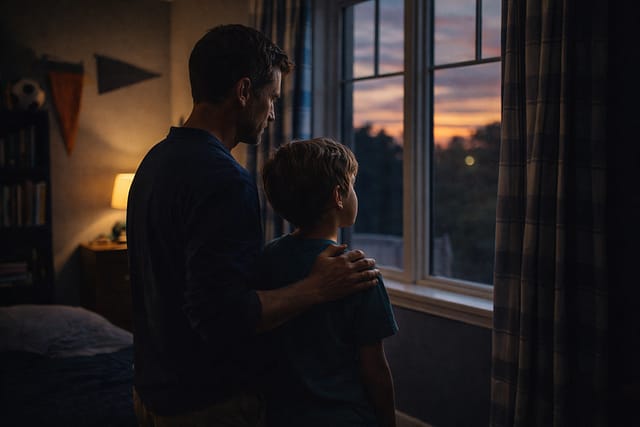
A few nights ago, one of my sons asked a simple question. “Are we staying?” He wasn’t thinking about inventory levels or interest rate spreads. He wasn’t evaluating appreciation curves. He wanted to know whether the room he sleeps in tonight will still be his next year. I told him yes. Not because I can control every market force. Not because permanence is guaranteed. But because stability is less about prediction than posture.
The longer I work in this industry, the more convinced I am that a house has never been able to promise certainty on its own. Markets change. Jobs shift. Families grow. Structures age. What made home feel solid was never perfect information. It was confidence. Confidence that the people inside the walls intended to remain. Confidence that decisions were being made with proportion rather than panic. Confidence that the house was serving the life inside it — not the other way around.
We may not be able to restore the illusion of permanent ground. But we can restore something quieter and more durable. We can choose steadiness over velocity. We can choose stewardship over optimization. We can choose to build before we brace. Homes are bigger, smarter, more valuable than ever.
Whether they feel like home depends on something less measurable. It depends on whether we stop defending long enough to inhabit. If you’ve felt that tension — if you’ve wondered whether this will hold — you’re not alone. More people feel it than admit it. And naming it is the first step toward building something that does.
Those are my thoughts. I’d genuinely like to know if this resonates with you.
