
Where Food Becomes Community — Gathering, Design, Ritual
A table is never just furniture.
It is architecture at human scale. A horizontal plane where land and fire meet, where nourishment becomes conversation, and where private lives briefly overlap. If land is origin and fire is transformation, the table is convergence.
This is where food becomes community.
Long before formal dining rooms and restaurant reservations, people gathered around surfaces to share meals. Stone slabs. Wooden planks. Woven mats. Even the ground itself. What mattered was not the material but the act: bodies arranged in proximity, sustenance divided, time shared.
The table organizes space.
In domestic architecture, it anchors the kitchen or dining room. In restaurants, it defines intimacy and hierarchy—two-top, communal bench, banquet length. In public life, long tables signal celebration; round tables suggest equality. The geometry of gathering shapes interaction.
Rectangular tables create direction. Round tables dissolve it. Communal tables invite strangers into shared experience. Private tables protect conversation. Design influences dialogue more than we often acknowledge.
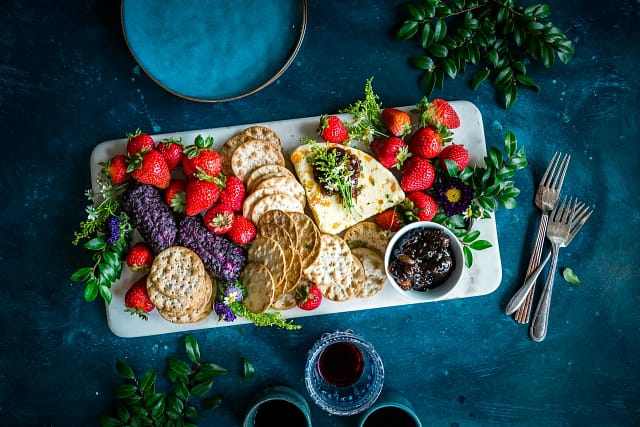
The table is a social instrument.
Across cultures, food rituals at the table encode values. In Mediterranean households, meals stretch into evening. In Japan, attention to plating honors seasonality and restraint. In many Middle Eastern traditions, hospitality is sacred, and abundance at the table signals respect. In Scandinavian settings, simplicity reflects balance and light.
Every table reflects geography and history.
Furniture design evolves with cultural rhythm. Farmhouse tables bear scars of use—knife marks, water rings, generational wear. Contemporary minimalist tables emphasize clean lines, curated space, intentional absence. Both tell stories. Both reveal how communities interpret togetherness.
But the table does more than host food. It structures time.
Breakfast anchors mornings. Dinner marks closure. Holiday tables become annual landmarks. Even in fast-paced societies, the idea of “sitting down together” retains symbolic weight. The act of pausing, pulling up a chair, and facing one another resists fragmentation.
At the table, hierarchy softens.
Colleagues become conversational partners. Children gain voice. Negotiations unfold. Apologies are offered. Celebrations begin. Meals mediate emotion in ways few other rituals can.
The design of the table affects the experience of food itself. Height influences posture. Lighting influences appetite. Distance influences volume and vulnerability. In fine dining, table spacing calibrates privacy. In family homes, proximity fosters familiarity.
Good tables invite lingering.
In an era defined by mobility and distraction, the table becomes countercultural. Phones compete for attention. Schedules fracture meals into convenience. Yet surveys repeatedly show that shared meals correlate with stronger family bonds, improved mental health, and higher life satisfaction.
The table is not nostalgic—it is neurological.
Humans are wired for communal eating. Mirror neurons activate during shared sensory experiences. Conversation enhances flavor perception. Laughter extends duration. Eating together reinforces belonging.
Even in public life, the metaphor persists. Diplomatic negotiations are “brought to the table.” Policy debates aim for “a seat at the table.” Inclusion is framed spatially. Exclusion feels architectural.
The table defines who belongs.
In real estate and development, this idea resonates. Housing design influences whether homes accommodate gathering. Open-plan kitchens reflect modern emphasis on shared cooking and conversation. Outdoor dining areas extend the table into landscape. Urban plazas become communal tables at city scale.
Every thriving neighborhood contains spaces that function like tables.
Farmers markets. Food halls. Long communal benches in parks. These are civic tables—horizontal surfaces that support interaction. Food becomes pretext for cohesion.
Restaurants understand this intuitively. The rise of communal dining experiences, chef’s tables, and open kitchens reflects desire for connection. Diners increasingly seek not only flavor but atmosphere—curated sound, lighting, materials, spatial rhythm.
The table becomes stage.
And yet, at its most powerful, the table is simple.
A loaf of bread broken. Soup ladled. Plates passed. Eye contact made. No design flourish can substitute for presence.
The future of the table may evolve, but its function endures. Technology reshapes how we eat—meal delivery, virtual gatherings, remote work lunches. But even video calls attempt to replicate table dynamics: shared screen, face-to-face framing, synchronized pauses.
We recreate the table even when apart.
Sustainability conversations also reach the table. Farm-to-table movements emphasize transparency between land and plate. Zero-waste kitchens reduce what leaves the table unused. Conscious consumption begins with awareness of origin and ends with gratitude.
The table is the final checkpoint before nourishment becomes memory.
Holiday meals illustrate this most vividly. Thanksgiving tables layered with tradition. Lunar New Year spreads rich with symbolism. Eid feasts marking completion of fasting. Weddings structured around banquets. Food binds milestone to moment.
Memory clings to table settings.
The chipped plate from childhood. The tablecloth unfolded annually. The chair always occupied by a particular voice. Objects become emotional anchors.
Designers understand that tables age visibly. Wood patinas. Edges soften. Surfaces accumulate narrative. Unlike digital spaces, tables retain physical history.
Perhaps this is why we return to them.
In uncertain times, the table offers structure. It requires presence. It rewards patience. It asks little but attention.
If land represents potential and fire represents change, the table represents meaning.
It is where nourishment becomes story.
Where strangers become neighbors.
Where family becomes history.
The table is not merely where we eat.
It is where we recognize one another.
And in that recognition, culture continues.
