
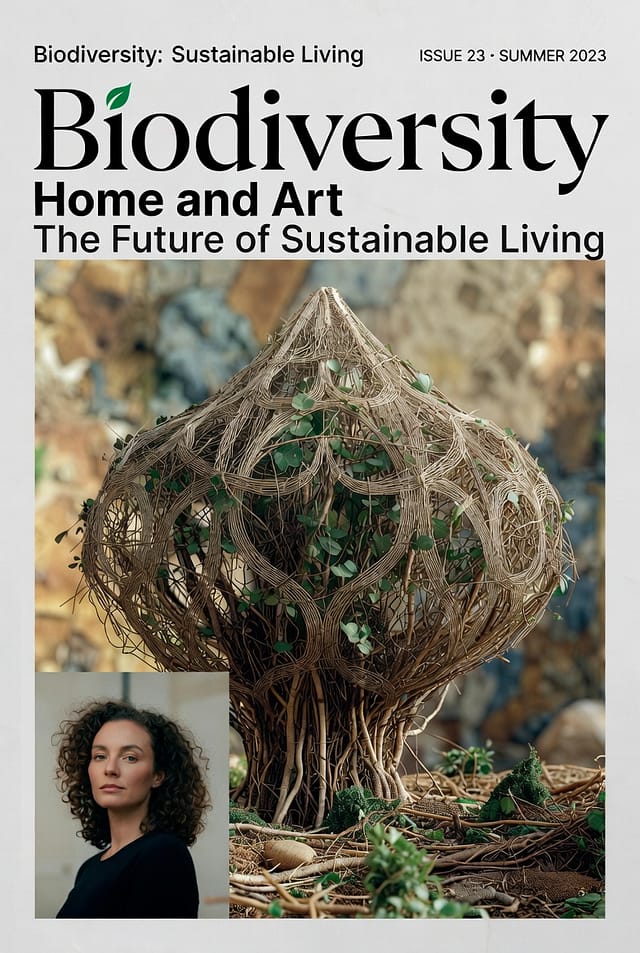
Biodiversity, Balance, and the Living Systems That Feed Us
Biodiversity is not decoration.
It is infrastructure.
Before agriculture, before cities, before roads and borders, there was an ecological web—complex, interdependent, resilient. Forest canopies layered light. Wetlands filtered water. Pollinators moved invisibly between blossoms. Microorganisms enriched soil unseen. Life supported life.
Food begins within that web.
If land is origin and sustain is responsibility, then eco world is context—the living system that makes nourishment possible at all. Biodiversity is the architecture beneath agriculture. Without it, crops fail, soils weaken, and resilience collapses.
The modern food system often narrows diversity for efficiency. Vast monocultures of corn, soy, or wheat stretch across landscapes. Uniform crops simplify harvest and distribution. But biological uniformity invites vulnerability. A single pest, pathogen, or climate shock can ripple across entire regions.
Diversity buffers risk.
In natural ecosystems, no single species dominates indefinitely. Polycultures—multiple crops grown together—mirror this resilience. When one plant struggles, others compensate. Roots vary in depth, stabilizing soil. Different species attract different pollinators. Pest populations remain balanced through predator presence.
Biodiversity is quiet insurance.
Soil biodiversity may be the most overlooked. Beneath every field lies a community of fungi, bacteria, insects, and worms. These organisms cycle nutrients, decompose organic matter, and build structure. Healthy soil teems with life; degraded soil resembles dust.
Industrial practices that strip soil of microbial diversity undermine long-term productivity. Regenerative agriculture restores it through cover cropping, composting, reduced tillage, and rotational grazing. These methods do not romanticize farming—they recalibrate it.
Climate change intensifies the need for biodiversity. As temperatures fluctuate and rainfall patterns shift, ecosystems that rely on narrow genetic pools struggle. Diverse systems adapt. Crops bred from varied seed stock resist disease. Native plant species withstand local stressors better than imported monocultures.
Biodiversity is adaptive memory.
Pollinators illustrate this vividly. Bees, butterflies, birds, and bats support the reproduction of many crops. Habitat loss, pesticide exposure, and climate disruption threaten these species. Without pollinators, yields decline. Entire food chains falter.
Protecting biodiversity protects dinner.
Oceans reveal similar patterns. Marine biodiversity underpins fisheries. Coral reefs shelter juvenile species. Mangroves buffer coastlines and provide breeding grounds. Overfishing and warming waters destabilize these systems, reducing both ecological richness and food supply.
Sustainability without biodiversity is illusion.
Urban environments increasingly recognize this. Green roofs planted with native species support pollinators. Community gardens incorporate heirloom varieties. Edible landscapes replace ornamental monotony. Cities that integrate biodiversity reduce heat islands and strengthen food resilience.
Development choices shape ecological futures.
Farmland preservation prevents habitat fragmentation. Zoning policies influence whether wetlands survive or disappear. Infrastructure can either sever migration corridors or accommodate them. Food systems do not exist apart from land-use planning—they are shaped by it.
Indigenous communities have long practiced biodiversity stewardship. Intercropping, seed saving, forest management, and rotational grazing were embedded in cultural knowledge systems. These practices valued balance over extraction.
Modern agriculture is rediscovering that wisdom.
Heirloom and heritage seeds preserve genetic diversity lost to industrial standardization. Seed banks safeguard varieties against extinction. Farmers markets showcase produce shaped by region, not uniformity. Biodiversity becomes visible again.
Consumer awareness plays a role. Choosing varied produce encourages diversified farming. Supporting local fisheries practicing sustainable harvest protects marine ecosystems. Dining seasonally reduces reliance on resource-intensive imports.
Small decisions accumulate.
Technology assists biodiversity protection through monitoring and forecasting. Satellite imagery tracks deforestation. AI models predict pest outbreaks. Data-driven agriculture reduces chemical overuse. But technology alone cannot restore balance.
Balance requires restraint.
Food companies increasingly invest in regenerative sourcing, carbon sequestration, and biodiversity protection initiatives. Certifications attempt to verify sustainable practices. Yet metrics must move beyond yield alone. Measuring soil health, species diversity, and ecosystem resilience becomes essential.
The economy must value life beyond commodity.
Biodiversity also shapes flavor. Diverse soil microbes influence terroir. Wild forage contributes complexity. Heritage grains offer textures industrial hybrids cannot replicate. Biological richness translates into sensory richness.
Monotony diminishes taste.
In restaurants, chefs embrace biodiversity by sourcing unique varieties, foraging responsibly, and highlighting seasonal variation. A menu that shifts with ecosystem rhythm reflects respect for living systems.
Food culture flourishes where biodiversity thrives.
The future of food cannot depend on narrowing life’s spectrum. Climate resilience, nutritional diversity, and ecological stability require broad genetic and species variety. From soil microbes to orchard trees, from grazing animals to coastal fisheries, biodiversity sustains the entire chain.
Land offers potential. Fire transforms it. Table gathers it. Memory preserves it. Ritual repeats it. Sustain protects it.
Eco world contextualizes it.
Everything we eat emerges from networks of life we barely see. The bee hovering between blossoms. The fungi threading through soil. The earthworm aerating ground. The predator balancing prey. The marsh filtering runoff before it reaches the sea.
These systems operate continuously, quietly, without applause.
When biodiversity declines, consequences cascade. Crop failures intensify. Water systems falter. Nutritional quality diminishes. Economic strain follows ecological strain.
Protecting biodiversity is not abstract environmentalism.
It is practical preservation.
It is ensuring that fields remain fertile, fisheries remain viable, and forests remain intact. It is designing development that accommodates life rather than displacing it. It is aligning capital with stewardship.
Food does not exist in isolation. It exists within eco world.
To protect biodiversity is to protect nourishment itself.
And in protecting nourishment, we protect the continuity of culture, community, and survival.
The web of life feeds us.
The question is whether we will sustain it in return.
