
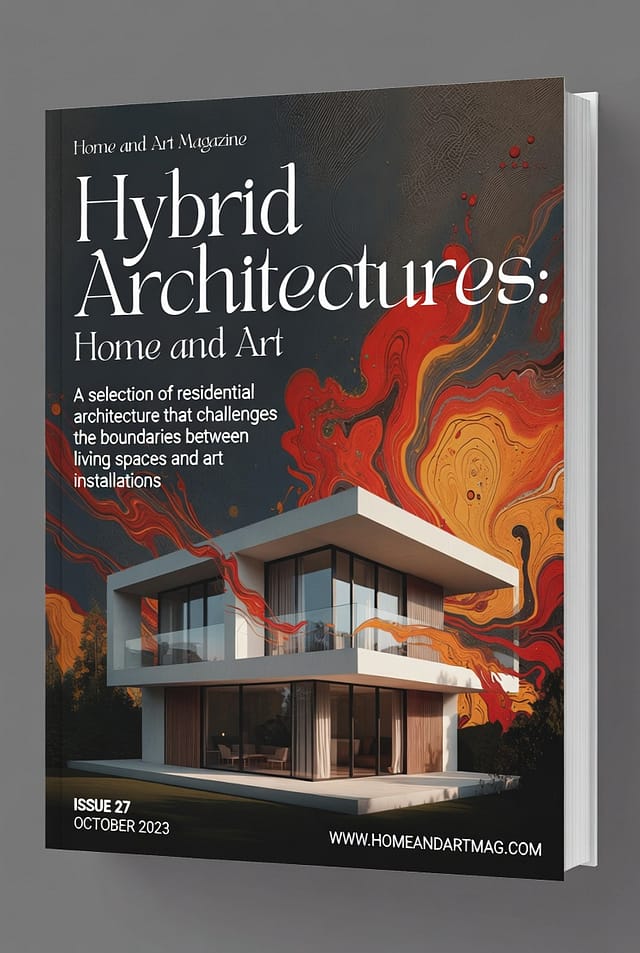
Home Art Stories: Fusion Frontiers – The Versatile Magic of Hybrid Architectures
Imagine crossing the threshold into a home that feels like a time-traveling conversation: a 19th-century brick wall glowing under LED cove lighting, a mid-century Eames lounge chair perched beside an antique Persian rug, and a kitchen island that morphs from breakfast bar to conference table with a single sliding panel. Sunlight pours through oversized steel-framed windows salvaged from an old factory, while a living moss wall whispers biophilic calm next to a floating walnut media console. This is hybrid architecture—not a single style, but a philosophy of thoughtful collision. It refuses to choose between heritage and horizon, comfort and capability, past and possibility. In 2026, hybrid homes have become the ultimate expression of how we actually live: fluidly, sustainably, and unapologetically ourselves.
Hybrid architecture emerged as a conscious movement in the late 20th century but exploded into everyday relevance in the 21st. Its intellectual roots lie in postmodernism—think Robert Venturi’s “Learning from Las Vegas” (1972) and the playful mixing of classical motifs with pop culture. By the 1990s, globalization and affordable travel introduced cultural cross-pollination: Japanese minimalism met Scandinavian hygge, Moroccan tile met industrial concrete. The real catalyst, however, arrived in 2020. The sudden shift to hybrid work blurred the lines between office and home, forcing designers to reimagine every square foot. What began as necessity evolved into aspiration. Today, hybrid design is the default for new builds, renovations, and adaptive-reuse projects worldwide—from Seattle container homes to Argentinian prefab infills to Connecticut colonials quietly upgraded with invisible smart systems.
At its heart, hybrid architecture is defined by deliberate juxtaposition. Styles collide productively: Modern Farmhouse marries white shiplap with blackened steel accents; Japandi fuses Japanese restraint with Nordic warmth through pale oak, linen, and stone; Scandi-Industrial layers raw concrete and exposed ductwork over soft boucle sofas and sheepskin throws. Transitional design—the most accessible hybrid—smooths the handoff between traditional and contemporary, using classic moldings in matte black or pairing Chippendale chairs with a glass dining table. Materials tell the richest stories: reclaimed barn wood beams span rooms with polished concrete floors; vintage subway tile meets quartzite countertops veined like ancient marble; steel window frames salvaged from warehouses frame views in new suburban builds. Textures layer for depth—rough linen against smooth leather, hand-knotted rugs over heated floors, living plants cascading beside digital art frames.
Function follows feeling. Hybrid homes prioritize adaptability. A “great room” might contain a sunken conversation pit that doubles as guest sleeping quarters, a hidden Murphy-bed wall, or motorized panels that reconfigure a home office into a yoga studio in seconds. Kitchens routinely serve as command centers, dining zones, and homework stations. Primary suites often incorporate “his and hers” closets that convert to nurseries or hobby rooms. Lighting systems shift from warm ambient to cool task with voice command or app. Storage is invisible yet ingenious—under-stair drawers, pocket doors, island charging hubs. The goal is never chaos but orchestrated flexibility: spaces that breathe with your life rather than dictate it.
Visionary practices have turned hybrid principles into signature aesthetics. Seattle’s Hybrid Architecture, founded by Robert Humble, pioneered container and modular homes that blend industrial DNA with residential warmth—think shipping-container skeletons wrapped in cedar cladding, interiors featuring exposed steel and custom millwork. Their Alki Apartments project overlooking Puget Sound exemplifies the approach: luxury units that feel both rugged and refined. In Argentina, La Base Studio’s Casa Elena demonstrates construction hybridity—prefabricated kitchen and bedroom modules craned into a tight urban lot, then finished with site-built living spaces using local brick and concrete. The result is a home that respects context while embracing speed and sustainability. European studios like Christensen & Co. have applied hybrid thinking to flexible workspaces that double as living environments, while U.S. firms such as Studio W Interiors and Allison Handler Design champion “livable luxury”—timeless bones with modern performance.
In residential practice, hybrid often shines brightest in adaptive reuse. Turning a 1920s textile mill into lofts means preserving soaring ceilings and original columns while inserting glass-enclosed mezzanines and spa-like bathrooms. A Victorian row house might keep its ornate staircase but gut the interior for an open-plan kitchen flowing into a rear garden pavilion. These projects honor memory while meeting 21st-century needs—net-zero energy upgrades, EV chargers hidden in carriage houses, whole-home water filtration disguised as sculpture.
Color and finish palettes in hybrid homes reject both sterile all-white minimalism and overwhelming maximalism. Instead, they embrace “warm minimalism” or “moody layers.” Deep forest greens, terracotta, and charcoal sit beside creamy neutrals and brass accents. Wood tones range from honey oak to charred shou sugi ban. Metallics appear sparingly—aged bronze, blackened steel, polished nickel—for subtle sparkle. Art and accessories become the ultimate hybrid glue: a contemporary abstract painting above a Georgian console, a collection of mid-century ceramics on open shelving made from reclaimed factory ladders, vintage textiles draped over modern sofas.
By 2026, hybrid architecture has matured into a sophisticated response to larger cultural shifts. Climate consciousness drives material hybrids—rammed-earth walls paired with cross-laminated timber, recycled steel beams supporting living green roofs. Post-pandemic lifestyles demand “flex rooms” that adapt hourly: morning meditation space becomes afternoon Zoom den becomes evening cocktail lounge. Technology disappears: motorized shades tucked into ceiling pockets, speakers embedded in plaster, climate systems that learn your patterns. Biophilic elements weave throughout—indoor trees under skylights, water features in entry courtyards, circadian lighting that mimics sunrise and sunset. Even small urban dwellings benefit: micro-apartments with murphy beds, fold-down desks, and vertical gardens that make 400 square feet feel abundant.
Bringing hybrid architecture into your own home is more accessible than ever. Begin with honest assessment: which elements of your existing space spark joy? A beautiful original fireplace? Keep it and surround it with clean-lined furniture. Awkward layout? Introduce zoning with area rugs, bookshelves used as room dividers, or hanging fabric panels. Mix eras deliberately—one hero vintage piece (an Art Deco sideboard, a 1970s Milo Baughman chair) can anchor an otherwise contemporary room. Layer textures: a nubby bouclé ottoman on a sleek concrete floor, linen curtains beside velvet pillows. Lighting should tell three stories—task, ambient, and accent—using a mix of sculptural pendants, picture lights on old artwork, and hidden LED strips.
Scale is crucial. In larger homes, create “hybrid zones” within open plans: a formal dining area that flows into a casual lounge via a long harvest table. In smaller footprints, verticality becomes your friend—floating shelves, tall cabinetry, lofted sleeping areas. Sustainability upgrades double as design statements: solar panels disguised as roof tiles, rainwater collection turned into courtyard fountains, vintage doors repurposed as headboards. Budget-conscious hybrids thrive on paint and fabric—updating millwork trim from glossy white to matte charcoal instantly modernizes traditional bones. Smart home integration can be invisible: wireless switches, under-cabinet sensors, app-controlled everything hidden behind beautiful facades.
Interior experts emphasize balance over bravado. Kerry Offsey of Hines Collective describes successful hybrids as “rooted yet restless—respecting history while embracing evolution.” Maria Vittoria of Casa Ornella Studio adds that the best examples feel “collected over time, never decorated in one go.” Avoid theme-park pastiche; let authentic materials and personal objects do the storytelling. Negative space remains essential—hybrid doesn’t mean cluttered. The most compelling rooms invite lingering because they feel both familiar and surprising.
Why does hybrid architecture resonate so deeply in 2026? Because it mirrors our lives. We are hybrid workers, hybrid parents, hybrid citizens—balancing screens and soil, global connections and local roots. It offers sustainability without sacrifice: reusing existing structures reduces carbon footprints while creating soulful spaces. It celebrates individuality in an age of algorithmic sameness—your home can quote your grandmother’s farmhouse, your favorite Kyoto ryokan, and the Berlin loft where you once lived, all under one roof. Collectors and designers alike prize hybrid homes for their longevity; unlike fleeting trends, thoughtful fusions age gracefully, gaining character rather than dating.
As you consider your own four walls, remember: hybrid isn’t about rules—it’s about permission. Permission to love both the old and the new. Permission to let spaces evolve as your life does. Permission to create beauty that works as hard as you do. Whether you’re restoring a 1920s bungalow in Connecticut or building a new passive house in the Pacific Northwest, the hybrid approach invites you to weave past, present, and future into a home that feels alive.
Tonight, look around your space. That empty corner could become a reading nook with a vintage library ladder and modern task lamp. That formal dining room might welcome a cozy banquette for hybrid work lunches. That blank wall could display a mix of family heirlooms and contemporary photography. The future of home isn’t a single perfect style. It’s the beautiful, imperfect, endlessly adaptable fusion of everything that matters to you.
In the grand narrative of home art, hybrid architectures remind us that the most enduring homes are never pure—they are alive with layers, stories, and the quiet genius of thoughtful combination. The frontier isn’t out there. It’s the threshold you cross every single day.
