
Imagine unlocking the door to your home after a long day and stepping into a capsule of pure possibility. The walls glow a pristine white, reflecting light like the surface of a lunar module. A spherical chair beckons from the corner, its glossy fiberglass shell promising weightless comfort. Overhead, a Sputnik-inspired chandelier spins metallic arms in every direction, scattering star-like glints across the room. Chrome accents catch the eye, bold orange and electric blue pops ignite the space, and every curve feels engineered for tomorrow. This is the magic of Space-Age interiors—a design movement that didn’t just decorate homes; it transported inhabitants to the final frontier.
Space-Age style emerged in the late 1950s and reached its zenith through the 1960s and early 1970s, fueled by the global frenzy of the Space Race. Sputnik’s launch in 1957, Yuri Gagarin’s orbit in 1961, and Neil Armstrong’s moonwalk in 1969 weren’t distant headlines—they were cultural earthquakes that reshaped everything from fashion to furniture. Designers, architects, and homeowners alike looked skyward for inspiration, blending the optimism of scientific progress with the playful escapism of sci-fi films like The Jetsons (1962) and Stanley Kubrick’s 2001: A Space Odyssey (1968). What began as Atomic Age echoes—those molecular motifs and “vital forms” born from nuclear fascination—evolved into full-blown cosmic reverie. On America’s West Coast, Googie architecture with its flying-saucer roofs and neon swoops spilled indoors, while European visionaries pushed plastics and fiberglass into revolutionary shapes. The result? Homes that rejected heavy wood and Victorian clutter for lightweight, imaginative, almost theatrical environments.
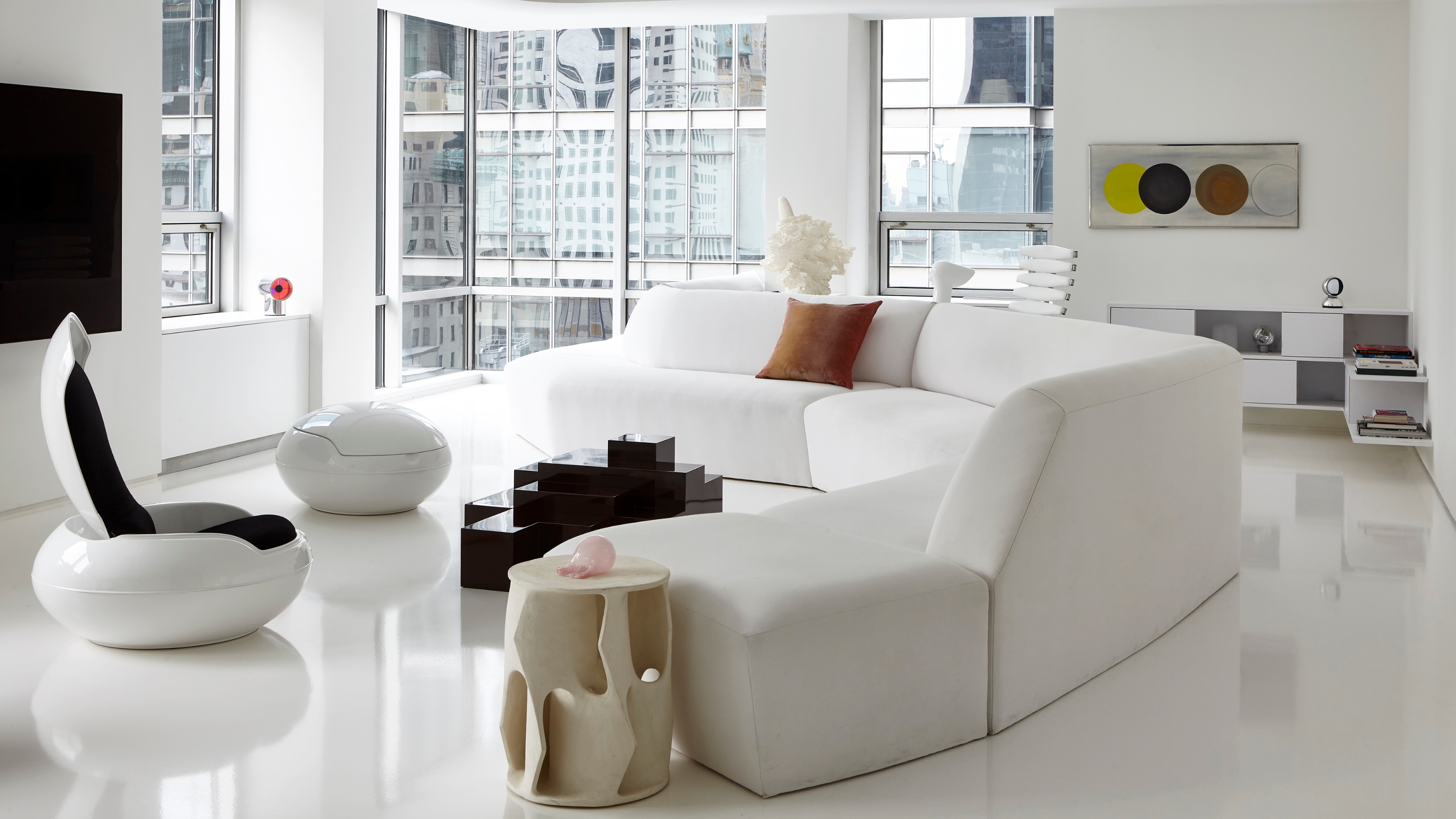
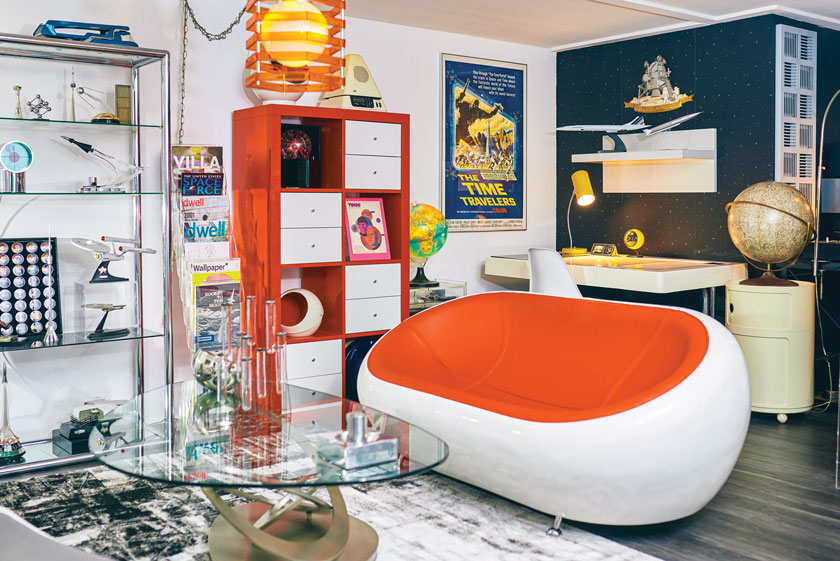
At its core, Space-Age interiors celebrated innovation, movement, and wonder. Materials were everything. Gone were the limitations of oak and walnut; in came injection-molded plastics, acrylic, fiberglass, polyurethane foam, and gleaming metals—chrome, stainless steel, and aluminum. These substances allowed single-piece construction and organic, gravity-defying forms impossible with traditional woodworking. Think of a chair that looks like it could float in zero gravity or a table base as slender as a rocket strut. Colors leaned into high-contrast drama: vast fields of crisp white for that clean, laboratory-bright backdrop, punctuated by saturated accents—vivid orange, lime green, hot pink, deep navy, and metallic silver. Surfaces shone with high-gloss finishes, mirrors, and reflective laminates that amplified light and created illusions of expanded space. Lighting fixtures became sculptural statements: bubble lamps, mushroom shades, and starburst chandeliers that mimicked planetary orbits or satellite arrays. Furniture favored fluidity—pod-like enclosures, cantilevered curves, and pedestal bases that eliminated “ugly” legs, evoking the seamless elegance of spacecraft. The overall vibe? Playful yet sophisticated, ephemeral yet iconic, blending futurism with everyday livability.
No discussion of Space-Age interiors is complete without its pantheon of visionary designers. Danish maestro Verner Panton led the charge with psychedelic, body-inspired forms. His 1960 Panton Chair— the first single-piece injection-molded plastic chair—remains a cantilevered S-curve masterpiece, stackable, vibrant, and utterly of its era. Panton’s interiors were total environments: flowing walls, heart-shaped sofas, and mirrored ceilings that turned living rooms into immersive dreamscapes. Finnish designer Eero Aarnio took spherical obsession to new heights with his 1963 Ball Chair (also called the Globe Chair). A hollow fiberglass orb upholstered in plush fabric, it offered cocoon-like privacy—an instant icon that appeared in films and became shorthand for retro-futurism. Pair it with Aarnio’s Bubble Chair, a transparent acrylic bubble suspended from the ceiling, and you have pure levitation.

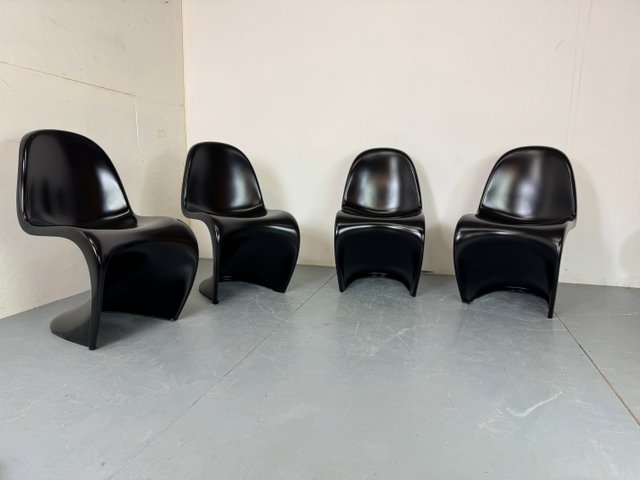
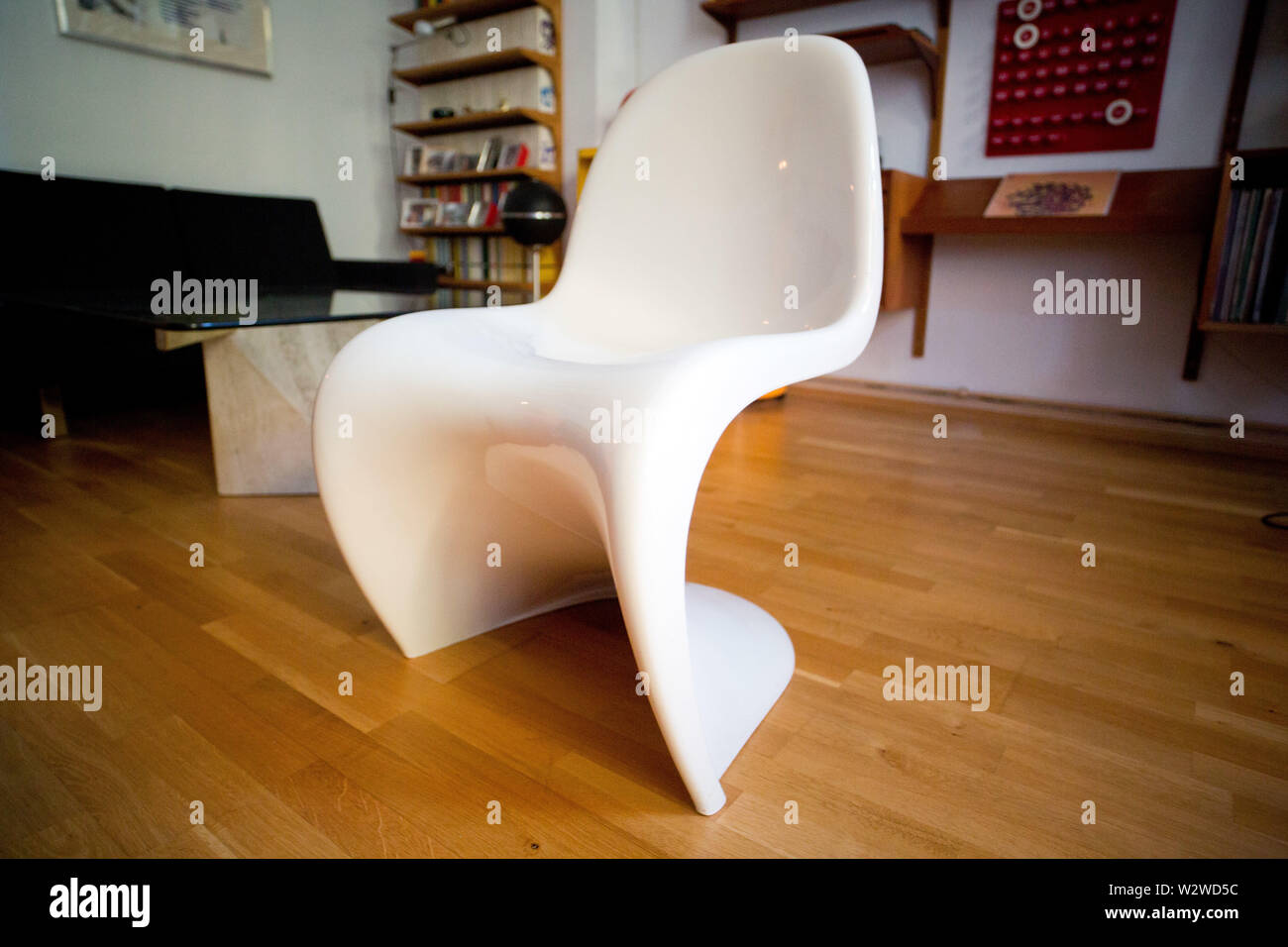
Eero Saarinen, another Finnish-American legend, contributed the graceful Tulip collection (1956–1957). Its pedestal bases—slender aluminum stems blooming into wide, organic seats or tabletops—eliminated visual clutter and embodied mid-century elegance with a Space-Age twist. Danish Arne Jacobsen’s Egg Chair (1958), originally for the SAS Royal Hotel, wrapped users in a protective, wing-like shell that feels both organic and engineered. Italian Joe Colombo brought modular flexibility with pieces like the Universale stacking chair and KD29 lamp, whose thin plastic band created a floating, zero-gravity illusion. Vico Magistretti’s Atollo lamp (1977) defied gravity with its UFO-like metallic cones. Lighting giants Gino Sarfatti and Gaetano Sciolari delivered Sputnik chandeliers—explosions of brass or chrome arms tipped with frosted globes—that remain the movement’s most recognizable signature. Other standouts include Olivier Mourgue’s Djinn seating (featured in 2001), Pierre Paulin’s Ribbon Chair, and collectives like Archizoom and Superstudio, whose radical sofas and visionary concepts pushed boundaries further.
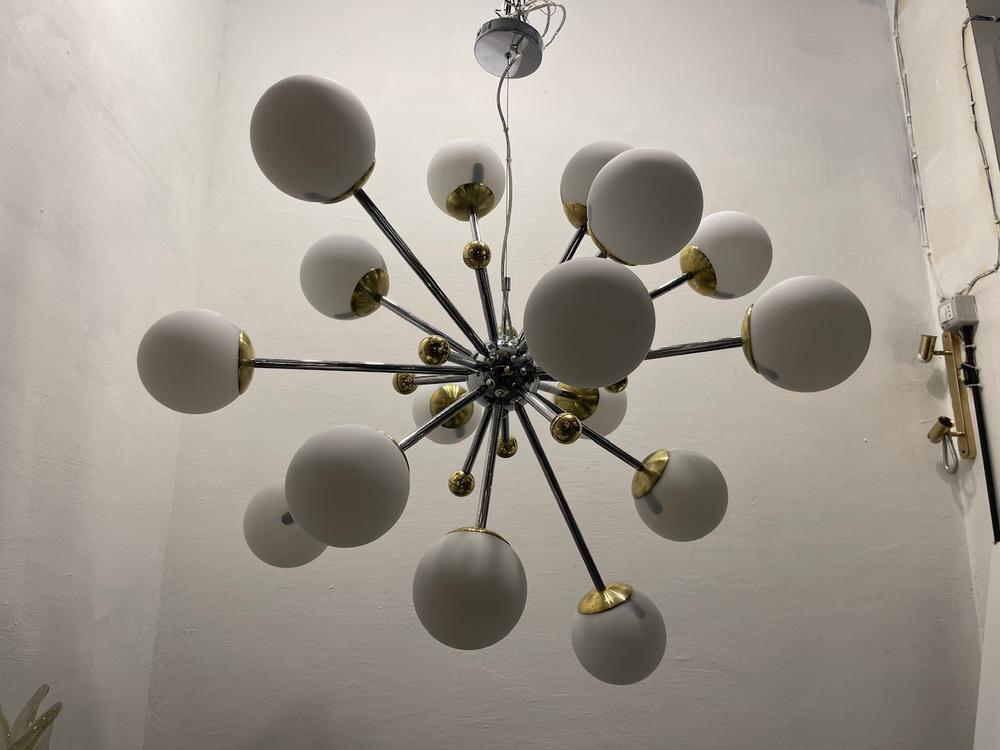
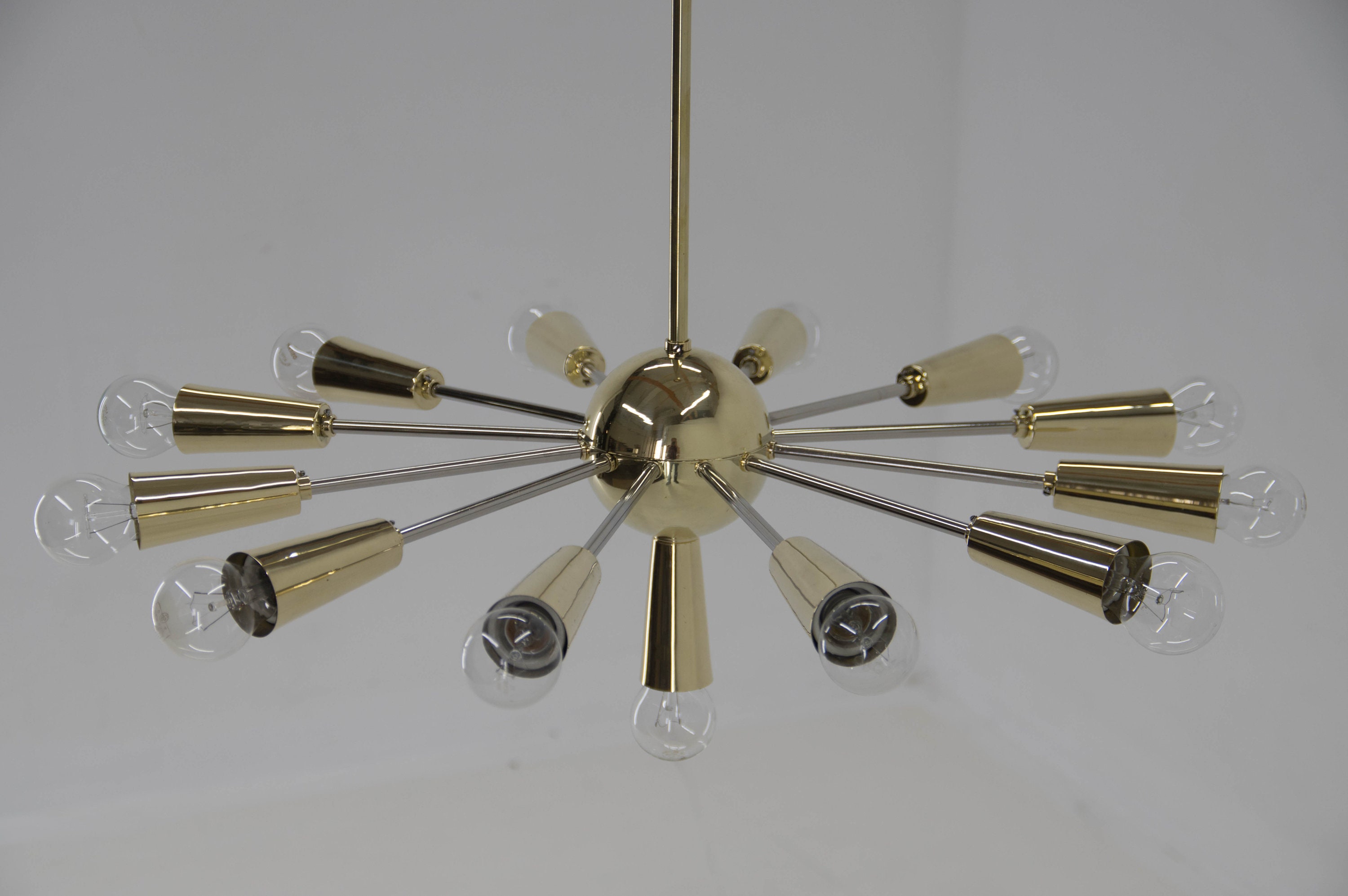
These pieces weren’t mere furniture; they told stories. In 1960s suburban America, a family might gather around a Tulip dining set, the pedestal base echoing rocket gantries outside Cape Canaveral. A teenager could retreat into a Ball Chair to dream of Mars while listening to The Beatles on a sleek stereo. Public spaces embraced the aesthetic too—airport terminals, motels, and diners with parabolic arches and starburst clocks promised tomorrow today. Pop culture amplified the dream: Lost in Space families lived aboard sleek vessels; Space 1999 moonbases featured Harvey Guzzini’s Sorella lamps. Even television sets like the JVC Videosphere mimicked astronaut helmets.
Fast-forward to 2026, and Space-Age interiors are enjoying a vibrant renaissance. Nostalgia meets cutting-edge relevance in an era of AI, space tourism (thanks to SpaceX and Blue Origin), and climate-conscious design. Modern interpretations soften the original high-shine drama without losing its soul. Designers layer glossy plastics and chrome with raw woods, boucle textiles, and matte stone for warmth and tactility. Monochromatic white or gray palettes still dominate, but they now welcome organic curves, strategic neon accents, and smart-home integration—voice-activated lighting that pulses like a control panel, or modular sofas that reconfigure like spacecraft components.
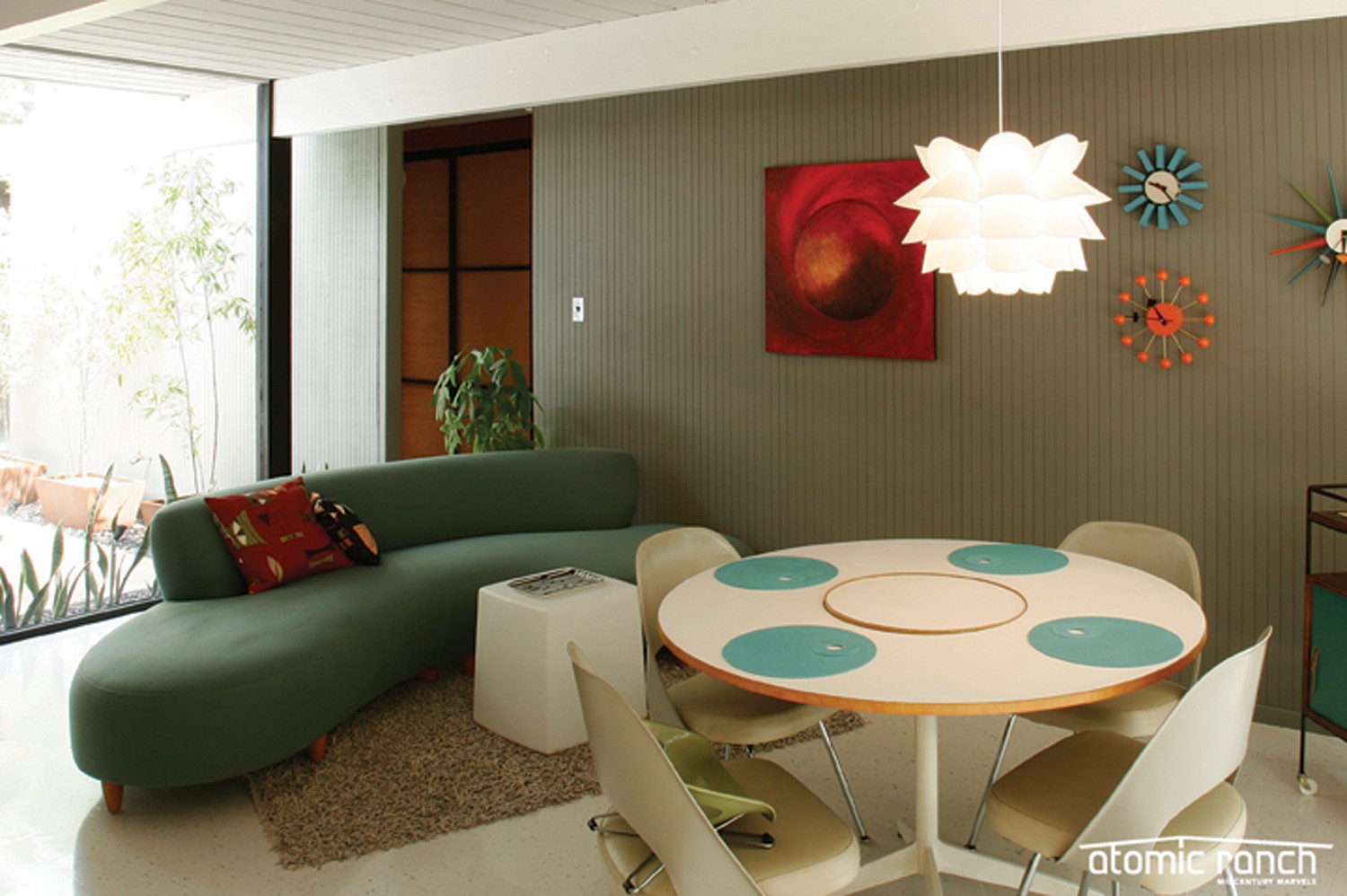
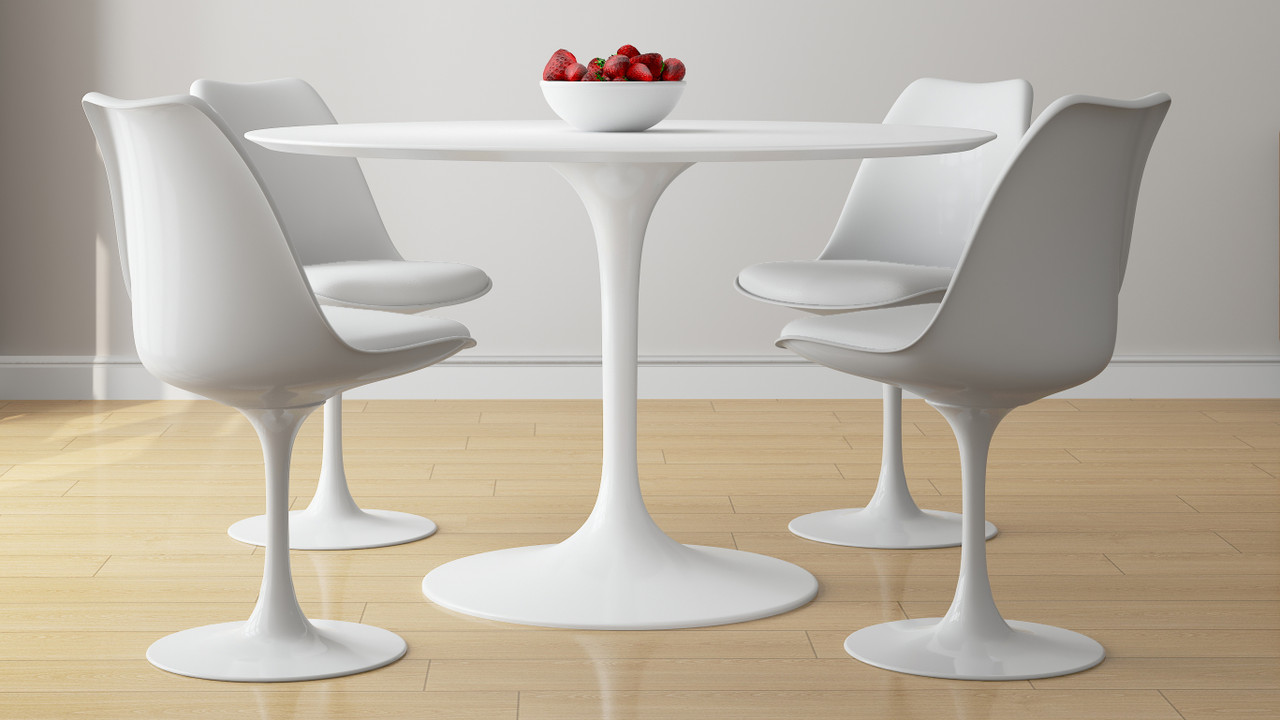

Bringing Space-Age flair into today’s home is delightfully accessible and endlessly customizable. Start small for maximum impact: one hero piece—an Egg Chair in a neutral living room or a Sputnik chandelier over a minimalist dining table—creates instant drama without overwhelming the space. Pair it with clean-lined sofas in crisp white or soft gray, then add metallic side tables, geometric rugs, and abstract art featuring orbital motifs. Walls stay light and reflective; consider a feature wall in silver wallpaper or a large round mirror that mimics a porthole. Lighting is non-negotiable: mix a vintage-style Sputnik with modern LED strips for ambient glow. In dining areas, a Tulip table surrounded by molded chairs feels fresh when upholstered in contemporary velvet. Bedrooms gain cosmic calm with a low platform bed, mushroom lamps, and floating nightstands. For bolder souls, embrace conversation pits—sunken seating areas straight out of 1970s lounges—or paint an accent wall in deep space black and dot it with star-like wall sconces.
Balance is key to avoiding retro kitsch. Interior designer Kerry Offsey of Hines Collective notes that while mid-century modern roots in practicality and organic materials, Space Age is “experimental, futuristic, and other-worldly… evoking excitement of what is to come.” Maria Vittoria of Casa Ornella Studio adds that today’s versions blend “past and future with contemporary irreverence,” turning a single exaggerated piece into a “visual manifesto of energy and dynamism.” Sustainability updates the story too: recycled plastics and eco-friendly fiberglass reinterpret originals responsibly. Scale matters—pair bold forms with negative space so the eye can breathe. Textures provide contrast: glossy against matte, hard against soft. The goal? A home that feels optimistic, playful, and forward-looking, whether you live in a sleek urban loft or a cozy Connecticut colonial.
Why does Space-Age design endure more than half a century later? In uncertain times, it offers escapism and hope. It reminds us that humanity once dreamed collectively of the stars and built beauty from that dream. Its emphasis on innovation mirrors today’s tech-infused lives, while its joyful colors and curves combat minimalism fatigue. Collectors prize originals for their rarity and cultural cachet; reproductions make the look affordable. More profoundly, these interiors celebrate imagination—the same spark that sent us to the moon now invites us to reimagine daily life at home.
As you sit in your favorite chair tonight, perhaps with a Sputnik chandelier twinkling above, let the Space-Age spirit lift you. Paint one wall silver. Hunt for a curvaceous lamp. Rearrange the living room into a conversation pod. Your home doesn’t need to launch into orbit to feel extraordinary—it simply needs to echo the wonder that once made the impossible seem inevitable. In the grand story of home art, Space-Age interiors remind us: the future isn’t out there. It’s right here, waiting to be designed.
