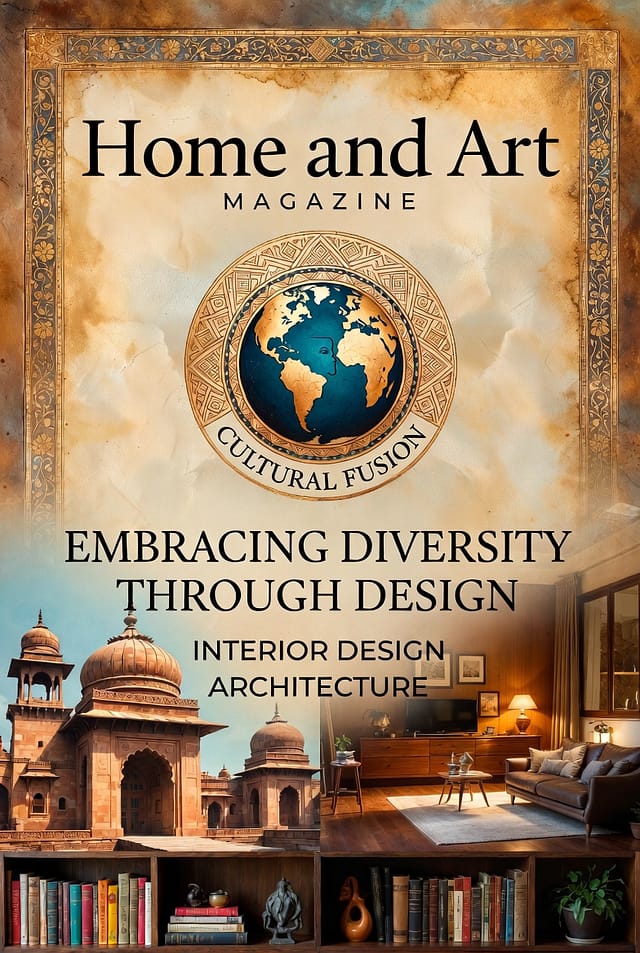
Home and Art Magazine: Cultural Fusion
In today’s interconnected world, culture no longer lives behind borders—it travels, blends, and reinvents itself inside our homes. Cultural fusion in home design and art is more than a trend; it’s a reflection of how we live now. Our spaces tell stories of who we are, where we’ve been, and what inspires us. From Moroccan tiles in a Brooklyn loft to Japanese minimalism meeting Scandinavian warmth, cultural fusion is shaping interiors that feel personal, layered, and alive.
At its core, cultural fusion is about dialogue. When different traditions, materials, and aesthetics meet, something new is created—something richer than any single influence alone. In home design, this might look like pairing mid-century modern furniture with African textiles, or placing contemporary art alongside antique architectural elements. These combinations don’t just look beautiful; they carry meaning. They speak of curiosity, respect, and a desire to live in spaces that reflect a global perspective.
One of the most exciting aspects of cultural fusion is how it breaks rigid design rules. Instead of sticking to one style—bohemian, modern, rustic, or traditional—fusion invites you to mix and match. A clean, modern kitchen might be warmed by hand-thrown pottery from Mexico. A minimalist living room can gain depth from a Persian rug or carved wooden stools from Southeast Asia. The result is not chaos, but character: rooms that feel curated rather than copied.
Art plays a central role in this movement. Wall art, sculpture, and decorative objects often become the bridge between cultures. A single piece—like a bold abstract painting inspired by Indigenous patterns or a textile wall hanging rooted in centuries-old techniques—can anchor a room and set the tone for the entire space. In many homes, art is no longer just decoration; it’s a conversation starter, a memory keeper, and a statement of identity.
Cultural fusion also reflects a growing appreciation for craftsmanship and heritage. As mass-produced décor becomes easier to find, many homeowners and designers are turning instead to handmade, ethically sourced, and culturally significant pieces. These items bring authenticity into a space. A handwoven basket, a ceramic bowl shaped by a local artisan, or a carved wooden screen tells a story that factory-made objects simply can’t replicate. When these pieces are combined across cultures, the home becomes a gallery of global craftsmanship.
Color and texture are where fusion truly shines. Think of the earthy tones of Mediterranean design meeting the rich jewel colors of South Asia, or the quiet neutrals of Japanese interiors layered with the bold patterns of Latin American textiles. Texture—linen, wood, clay, metal, wool—adds another dimension, creating spaces that feel as good as they look. The key is balance: allowing each element room to breathe while letting the contrasts do the storytelling.
Cultural fusion isn’t just about aesthetics; it’s also about values. It encourages openness, learning, and respect for different traditions. When we bring pieces of other cultures into our homes, we’re acknowledging their beauty and influence. The most thoughtful fusion designs avoid imitation and instead focus on appreciation—choosing pieces with care, understanding their origins, and honoring the hands that made them.
In a world that can often feel divided, our homes can become places of harmony. A dining room that blends Italian farmhouse warmth with modern African design elements becomes more than a place to eat—it becomes a space that celebrates connection. A bedroom that mixes Nordic simplicity with Asian-inspired calm becomes a sanctuary shaped by many philosophies of comfort and peace.
Home and Art Magazine celebrates cultural fusion because it represents the future of design: inclusive, expressive, and deeply human. Our homes are no longer just shelters; they are personal museums, travel journals, and creative studios rolled into one. Through cultural fusion, we don’t just decorate—we tell stories, honor traditions, and create spaces that reflect the beautifully blended world we live in.
