
Visions of Tomorrow: The Dawn of Future Living in a Changing World
In the dim glow of a desert dawn, where the horizon blurs between sand and sky, a cluster of modular homes rises like mirages made real. These aren’t the boxy prefabs of yesteryear; they’re sleek, adaptive structures, their walls embedded with solar skins that shimmer like abstract art, harvesting energy while mimicking the undulating dunes. Inside, a family stirs—air recycled from the night before, water drawn from morning dew, spaces shifting seamlessly from workspace to sanctuary. This is no sci-fi vignette; it’s a glimpse of 2026, where the boundaries of home stretch into frontiers once deemed uninhabitable. As climate pressures mount and urban sprawl gives way to resilient habitats, future living isn’t just about survival—it’s about reimagining humanity’s place in a fragile world.
The Imperative of Sustainability: From Philosophy to Survival
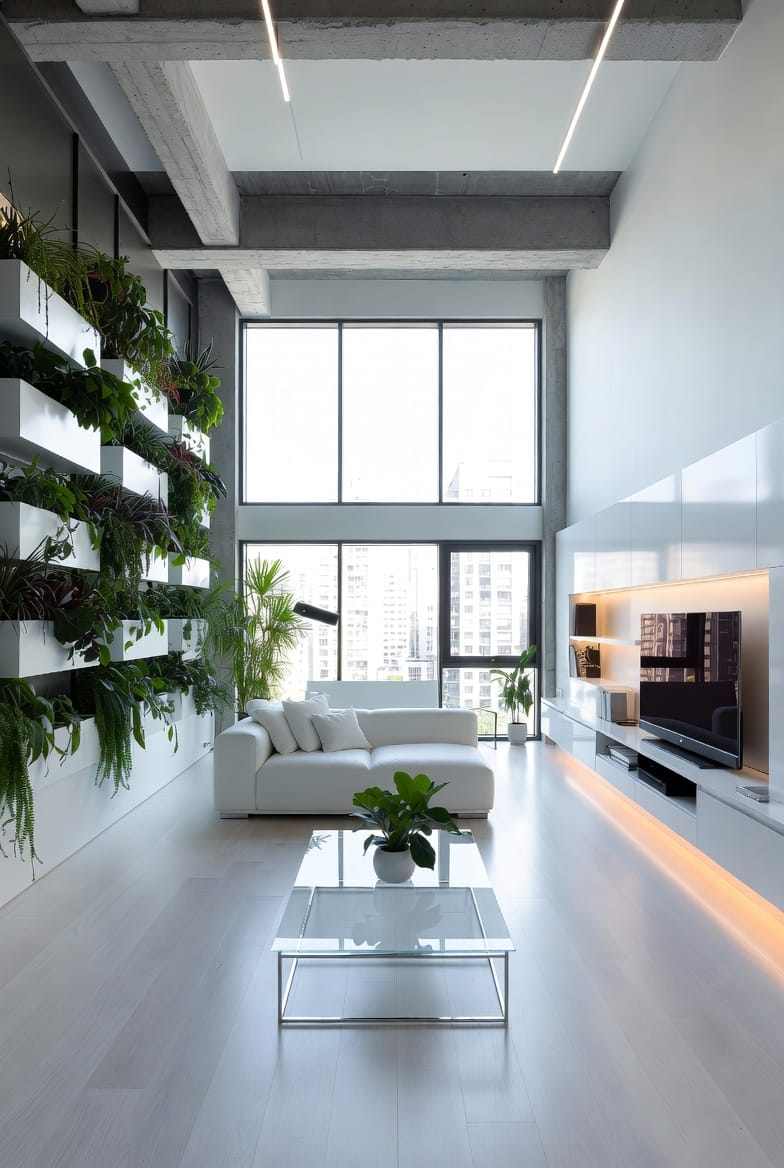
At the heart of this evolution lies sustainability, no longer a buzzword but a baseline for existence. By 2026, eco-friendly design has transcended trendiness, embedding itself in every blueprint. Homes now prioritize regenerative materials—carbon-negative bricks, reclaimed woods, and low-VOC finishes that minimize environmental harm while enhancing indoor health. Water systems, once wasteful, now incorporate rainwater harvesting and greywater recycling, turning scarcity into abundance even in drought-prone regions. In rural enclaves, “biophilic minimalism” reigns: living walls of greenery that purify air, reduce energy needs, and blur the line between indoors and out, fostering a “slow living” aesthetic that counters the chaos of modern life.
Consider the story of Elena Vasquez, a fictional composite drawn from the innovators reshaping Pacific Northwest mills into prefab powerhouses. Amid towering evergreens, she oversees walls that not only insulate but harvest rainwater, their surfaces evoking abstract expressionism—Rothko-like layers of texture and color. “We’re not building houses,” she says in interviews echoed across industry forums. “We’re crafting ecosystems.” This shift reflects a broader data point: Modular construction, with its off-site precision, slashes waste by up to 90% and halves build times, making high-performance homes accessible amid a housing crisis that sees demand for modular units surging 30% in recent years. Yet, it’s the human element that elevates these stats: Families in storm-vulnerable areas report not just lower bills, but a profound sense of security, as energy-positive designs generate surplus power to share with communities.
Modular Revolution: Building Blocks of the Future
The modular boom of 2026 isn’t mere efficiency; it’s a renaissance in form and function. Gone are the stigmas of bland uniformity—today’s prefab homes are customizable canvases, blending smart tech with artistic flair. Imagine units that arrive flat-packed, assembling like giant puzzles into net-zero abodes equipped with adaptive systems: Walls that adjust opacity for privacy, floors that harvest kinetic energy from footsteps. In Europe, turn-key modulars integrate sensory comforts—soft, organic shapes countering the hard edges of urban stress—while in the U.S., they’re democratizing luxury, with features like modular furniture and hybrid spaces for remote work and family life.
This modularity extends to finance and flexibility. As Furio Barzon notes in his forward-looking analysis, emerging trends include digital platforms for on-demand customization and new models that treat homes as upgradable assets, fostering circular economies where components are reused rather than discarded. In Sarasota, Florida, buyers are defining this era by demanding eco-savvy estates that adapt to life’s changes—spaces that morph from nurseries to offices, all while maintaining sustainable opulence. The result? A 10% annual growth in modular adoption, projected to redefine housing markets by 2030.
Frontier Habitats: Living on the Edge
Push further, and future living ventures into frontiers—deserts, polar expanses, undersea outposts, even orbital dreams. These habitats aren’t outliers; they’re prototypes for a planet in flux. In arid zones, homes mimic nature’s resilience: Compact, with closed-loop systems recycling waste into resources, energy localized via solar and wind. Polar designs incorporate passive heating and multifunctional spaces, turning isolation into innovation labs.
Tiny homes, once novelties, now symbolize this shift. Mobile and modular, they embody “tiny frontiers”—simple, functional abodes nestled in nature, reducing footprints while amplifying connection. Earthships and similar off-grid marvels compare favorably, using recycled materials for thermal mass that withstands extremes. As architect Teresa Sarmiento observes, this cross-disciplinary approach—blending context with reuse—heralds a future where overlooked sites become vibrant communities. In space-age interiors, biophilic elements like vertical gardens integrate with tech, creating wellness-driven sanctuaries that respond to human needs in unforgiving environments.
Cultural Fusion: Art as the Soul of Tomorrow’s Homes
Yet, future living isn’t sterile tech; it’s infused with art and culture. Indigenous designs inspire hybrid architectures—African motifs in solar facades, Asian minimalism in adaptive layouts—fostering a global diaspora of ideas. Homes become canvases: Public art integrated into structures, personal styles expressed through color, texture, and light. In 2026, this fusion elevates quiet wealth—stewardship over ostentation, with artisanal crafts and traceable materials telling stories of legacy.
Sami Reiss highlights modularity’s role here: Systems like USM Haller allow enduring design amid economic uncertainty, making beauty accessible. For Vasquez and her ilk, it’s poetic: “Our panels aren’t walls; they’re narratives.”
Horizons Ahead: A Catalyst for Change
As 2026 unfolds, future living demands more than adaptation—it calls for vision. Government incentives and consumer shifts make this pivotal: Homes that heal the planet while nurturing the soul. Challenges persist—cultural clashes, access inequities—but the trajectory is clear: From desert mirages to urban oases, we’re building bridges to tomorrow.
In this narrative, every home is a story unfinished, inviting us to co-author the next chapter. As one innovator puts it, “This isn’t just journalism; it’s a catalyst.” Together, let’s illuminate the path.
