
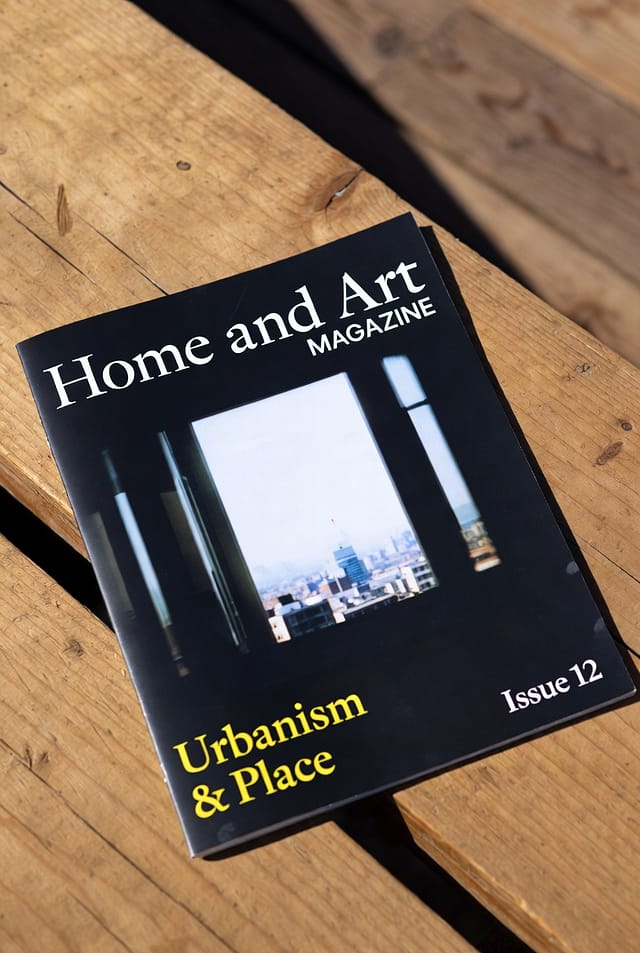
Urbanism & Place: The Architecture of Belonging
Cities are not simply settlements of buildings and infrastructure; they are records of how people learn to live together — or fail to. Urbanism is the study of shared life made visible.
The City as a Text
Urban environments are archives written in stone, asphalt, and memory. The pattern of a street reveals who was intended to move there and who was not. Zoning codes, infrastructure investments, and transit lines memorialize decisions about access, power, and distribution of resources.
Urban design is deeply political precisely because it shapes everyday experience: where people shop, work, learn, gather, rest, and dream.
Jane Jacobs, one of the most influential thinkers on cities, famously argued that sidewalks are the lifeblood of urban neighborhoods — that safety, vitality, and belonging emerge from informal interactions, not master plans alone
(Jane Jacobs). Jacobs’s insights remind us that urbanism is not primarily a technical problem, but a social one.
The design of shared space is how power expresses itself quietly and cumulatively. A neighborhood with benches and trees tells a different story than one designed only for throughput; a transit line that stops in underserved areas invests in future opportunity, while one that bypasses them reinforces marginality.
Infrastructure and Inequality
Infrastructure — the water systems, transit networks, roads, sidewalks, and public lighting — is the physical manifestation of public choice. Historic redlining, disinvestment in certain neighborhoods, and highway construction often followed social fault lines rather than topographic ones.
These decisions carry generational consequences.
For example, highways built through Black and low-income neighborhoods during mid-20th-century urban renewal projects routinely displaced communities and contributed to long-term economic segregation. These infrastructural legacies are not neutral; they are etched into the urban fabric and continue to influence access to opportunity.
The geography of disadvantage is measurable in commute times, access to fresh food, clean water, and parks. Understanding urbanism means accepting that infrastructure is not just engineering; it is an ethical question about who gets served and who gets sacrificed.
Affordability, Displacement, and Cultural Loss
Rising housing costs are often spoken of in economic terms, but the effects are social and cultural. Displacement breaks ties of community, tradition, and belonging. It is the erasure of history that cannot be captured in statistics alone.
Cities that lose long-standing communities often lose the practices that gave them texture — the small businesses, music venues, murals, and everyday rituals of life. Urbanism is not only about shelter; it is about continuity — linking past to present.
Some cities have experimented with policies that treat housing as a human right, not a speculative asset. Inclusionary zoning, rent stabilization, and community land trusts are approaches that seek to protect existing residents while allowing growth. But these strategies work only when there is political will and community participation.
Public Space and the Commons
Public space is the grammar of civic life. Plazas, squares, parks, waterfronts, and streets are where strangers become neighbors, where protests happen, where festivals unfold, where art animates surface and memory.
The reclaiming of streets for pedestrians and cyclists in cities like Copenhagen, Amsterdam, and Bogotá has demonstrated that human-centered design increases both safety and enjoyment. When people can meet without barriers, the city becomes a place of possibility rather than solely a machine of movement.
Public space is also where power is negotiated. Who gets access? Who feels welcome? Whose culture is visible? These are not aesthetic questions; they are civic ones.
Transit, Mobility, and Urban Justice
Transit systems do more than move people; they map opportunity. A well-connected city offers access to jobs, education, healthcare, and culture. When transit is inadequate, expensive, or unsafe, the effect is functionally similar to exclusion.
Cities that invest in transit, pedestrian infrastructure, and cycling networks signal a commitment to equitable access. These investments also connect to climate goals: fewer single-occupancy vehicles mean reduced emissions, healthier air, and safer streets for all residents.
The work of expanding transit equity involves policy, design, and community engagement — a holistic understanding of mobility as a right, not a luxury.
Informality, Innovation, and Urban Life
Some of the most vibrant expressions of urbanism arise outside formal planning systems. Informal markets, street vendors, community gardens, and neighbor-organized shared spaces prove that people constantly invent ways to claim, use, and reshape space.
In cities like Mexico City, Istanbul, or Mumbai, informality is not chaos but adaptation — a method for people to make economic and social life possible in the face of structural scarcity. These practices hold lessons for all cities: vitality is not centrally designed; it is lived where the rules bend to human action.
Recognizing informal urbanism does not mean leaving mistakes unaddressed, but it does require humility. A city’s complexity cannot be simplified into planning algorithms alone.
Culture, Memory, and Urban Identity
Urban spaces carry collective memory. Buildings, streets, landmarks, and public art anchor stories of culture, struggle, and belonging. When cities erase these markers — through redevelopment or unchecked gentrification — they erase shared identity.
Placemaking efforts that honor history and local narratives strengthen a city’s sense of self. Community murals, local museums, soundscapes, and oral histories become part of the urban archive — evidence of how people once lived, moved, and made life together.
This cultural dimension is not reducible to nostalgia. It is evidence. It is testimony. It is part of how cities teach us about continuity, change, loss, and resilience.
Final Questions for Urban Life
If urbanism is the architecture of belonging, then every decision about place is a question about who belongs. Who gets access to opportunity? Who shares space safely and fully? Who has voice and visibility in the public realm?
These questions do not belong only to planners, architects, or policymakers. They belong to citizens. Cities are not finished products; they are ongoing negotiations — between history and future, between infrastructure and life.
