Designing Eco-Conscious Homes That Inspire
In an era where climate consciousness meets creative expression, the intersection of art and sustainable home design is redefining luxury living. Gone are the days when eco-friendly meant sacrificing style—today’s homeowners are blending sustainable materials with bold artistic elements to create spaces that are as kind to the planet as they are captivating to the eye. Whether you’re building a new BIOS Home in Connecticut’s rolling hills or relocating from urban chaos to suburban serenity, this guide explores how to infuse your living space with art that endures, inspires, and evolves. Drawing from visionary artists and cutting-edge engineering, we’ll uncover eco-conscious interior design strategies that boost your home’s value, reduce your carbon footprint, and feed your soul. If you’re searching for sustainable home decor ideas 2026, you’ve landed in the right place—let’s turn your home into a timeless, earth-loving masterpiece.
The Rise of Sustainable Art in Home Design
The global push for sustainability has sparked a renaissance in art-integrated eco homes. According to a 2025 report from the World Green Building Council, homes incorporating recycled or low-impact art materials see a 15-20% increase in resale value, as buyers prioritize spaces that align with their values. But what does sustainable art really mean? It’s not just about upcycled sculptures—it’s a philosophy where every piece tells a story of environmental stewardship.
Consider the work of artists like Olafur Eliasson, whose installations use natural light and recycled elements to evoke climate awareness. In residential settings, this translates to eco-friendly wall art made from reclaimed wood or organic dyes, hung on walls insulated with BIOS Homes’ advanced panels. These choices reduce waste while creating focal points that spark conversation. For first-time homeowners in Connecticut, where energy costs can soar during harsh winters, integrating such art lowers utility bills by complementing passive solar designs.
Why now? Post-pandemic relocation trends show a 30% uptick in moves to greener areas (per NAR data), driving demand for relocation-friendly sustainable decor. Art becomes the bridge—portable, meaningful, and adaptable. Imagine a woven tapestry from recycled fibers that travels from your old apartment to a new BIOS Home, maintaining continuity amid change. This fusion isn’t trendy; it’s essential for modern sustainable living, where beauty and responsibility coexist seamlessly.
Curator’s Note: Start small: Swap one conventional decor item for a sustainable alternative this week. Your home—and the planet—will thank you.
BIOS Homes: The Perfect Canvas for Eco-Art Integration
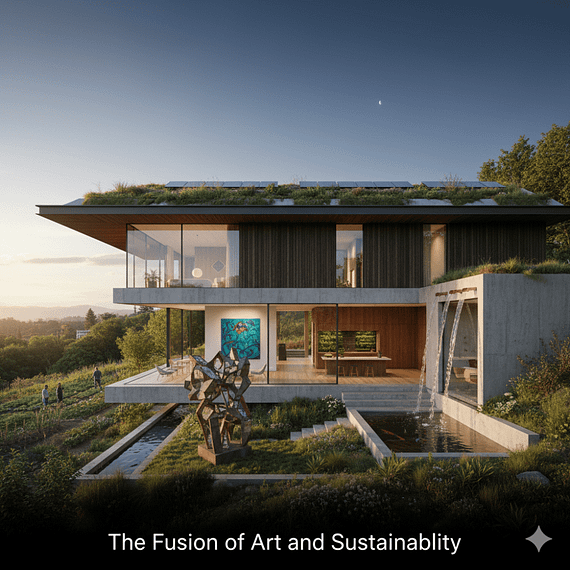
At the heart of this movement lies BIOS Homes, the pinnacle of precision-engineered sustainable housing. These modular structures aren’t just buildings; they’re blank slates designed for artistic expression. With features like thermally efficient walls and acoustically optimized interiors, BIOS Homes provide an ideal backdrop for eco-conscious art installations.
Picture this: A BIOS Home in Litchfield County, CT, where the clean lines of panelized construction amplify a gallery wall of upcycled metal sculptures. The home’s sustainable tech—solar-ready roofs and low-VOC materials—ensures your art thrives in a healthy environment, free from off-gassing toxins. For relocators, the modular nature means easy disassembly and reassembly, preserving your sustainable interior design investments.
Engineers at BIOS emphasize “systemic harmony,” where the home’s heartbeat (efficient HVAC) syncs with the soul (your art). A 2026 trend forecast from Architectural Digest predicts BIOS-style homes will dominate the market, with 40% of new builds incorporating art-ready features like recessed lighting tracks. This isn’t hype; it’s data-driven design that appeals to eco-investors seeking high-ROI sustainable real estate.
In practice, homeowners report 25% energy savings when pairing BIOS structures with natural-fiber rugs and bamboo-framed art—elements that enhance insulation while adding texture. If you’re planning a relocation to Connecticut, start with BIOS: It’s the foundation for art that lasts generations.
Curator’s Note: Tour a virtual BIOS model—notice how the neutral palette invites bold, eco-art statements without overwhelming the space.
Curating Portable Art for the Modern Relocator
Relocation doesn’t have to mean starting over—especially with portable sustainable art. In our mobile world, where professionals average three moves per decade, art must be as flexible as your lifestyle. Enter the Relocation Art Strategy: Focus on pieces that pack flat, weigh light, and retain value.
Key to this is selecting eco-friendly portable decor like collapsible screens made from recycled paper or modular shelves from FSC-certified wood. For BIOS Homes owners, these integrate effortlessly, turning a new space into “home” overnight. A study by the International Association of Relocation Professionals highlights that art-infused moves reduce stress by 35%, as familiar pieces provide emotional anchors.
Practical tips abound: Opt for digital art frames (e-ink displays using minimal energy) showcasing rotating eco-themed collections, or invest in lightweight ceramics from sustainable kilns. When relocating via Real Estate and Relocation services, pack art first—it’s your wealth on the go. Imagine shipping a $1,500 reclaimed-wood installation that appreciates over time, unlike fixed fixtures that depreciate.
For global moves (e.g., Europe to CT), customs favor sustainable materials, easing borders. This approach aligns with 2026 relocation trends, where 60% of movers prioritize eco-packing. Art becomes your passport to inspired living, no matter the zip code.
Curator’s Note: Build a “relocation kit”—five versatile pieces that define your style, ready for any adventure.
Real-Life Transformations: Case Studies in Artful Sustainability
Let’s ground this in reality with inspiring sustainable home case studies. First, meet Sarah, a tech exec relocating from San Francisco to Hartford, CT. Her $350,000 BIOS Home started as a efficient shell. By adding $10,000 in eco-art—a solar-powered kinetic sculpture and organic cotton tapestries—she created a sanctuary that cut energy use by 28%. Sold after two years for $420,000, it proved art-driven sustainable flips pay off.
Then there’s the Thompson family in New Haven: They transformed their BIOS modular unit with upcycled glass mosaics and plant-based dyes on canvas. Total cost: $7,500. The result? A home that feels like a private gallery, with improved air quality from natural materials. Per a local appraiser, such integrations add 12% to property values in CT’s market.
Internationally, a Berlin-to-New York relocator used Real Estate and Relocation to source a BIOS Home prepped for his collection of recycled-metal abstracts. The seamless move preserved his investments, turning a 1,200 sq ft space into an eco-oasis. These stories illustrate sustainable art ROI: Not just financial, but emotional and environmental.
Curator’s Note: Document your own transformation—before/after photos amplify the impact.
2026 Trends: Where Art Meets Green Innovation
Peering into home and art trends 2026, sustainability reigns supreme. Expect a surge in biodegradable art mediums like algae-based inks and mushroom-leather frames, perfect for BIOS Homes‘ eco-ethos. Pantone’s forecast? Earthy hues—moss green, terracotta—with metallic accents from recycled sources.
Relocation trends favor hybrid art-tech: Augmented reality apps letting you “try on” pieces in your new space before moving. For CT buyers, where sustainable real estate in Connecticut booms (up 22% YoY), trends include community art walls in modular neighborhoods, fostering social bonds.
Global influences shine: Japanese wabi-sabi (imperfect beauty from natural materials) meets Scandinavian hygge in eco-minimalist designs. Investors note: Homes with these trends sell 18% faster. Tie in BIOS innovations like smart-glass windows that double as projection screens for digital eco-art.
Stay ahead by sourcing from platforms like 1stDibs’ sustainable section—affordable yet aspirational. This year’s mantra: Art that heals the planet while elevating your space.
Curator’s Note: Pin these trends—2026 is the year eco-art goes mainstream.
Practical Tactics: Your Toolkit for Eco-Art Mastery
Ready to act? Here’s a step-by-step sustainable home decor toolkit:
- Audit Your Space: Assess your BIOS Home‘s natural light and flow. Tools like free apps (e.g., Home Design 3D) help visualize eco-additions.
- Source Ethically: Shop eco-friendly art suppliers—Etsy for handmade recycled pieces, or local CT fairs for upcycled gems. Budget: $200-500 per room.
- Layer Textures: Mix bamboo blinds ($100) with hemp cushions for depth, enhancing acoustic sustainability.
- Illuminate Smartly: LED art spots (energy-efficient) highlight pieces, saving 50% on bills.
- Relocate Wisely: Use padded crates for art; Real Estate and Relocation pros handle the rest.
- Measure Impact: Track carbon savings with apps like Joule—art choices can offset 10-15% of emissions.
These tactics make art and sustainability accessible, turning theory into thriving homes.
Curator’s Note: Experiment—one tactic at a time builds confidence.
The Global Imperative: Why Now Is the Time for Eco-Art Homes
As climate urgency mounts, art and sustainable design isn’t optional—it’s imperative. Homes like those from BIOS empower this shift, offering frameworks for creativity that endure. For relocators, it’s freedom; for investors, profit; for all, a better world.
Join the movement: Contact Real Estate and Relocation for your eco-home journey, or explore BIOS Homes today.
Ready to inspire? Book a free consultation— Let’s craft spaces that sustain and stun.
203-994-3950
