In the traditional world of real estate, your first home is often called a “starter.” The term itself implies that your current life is just a rough draft—a beige, uninspired placeholder until you finally “make it” into the four-car-garage mansion of your dreams.
But at Home & Art, we reject the idea of a “starter” life. Whether you are moving into a sleek BIOS Home in a quiet corner of Connecticut or navigating a relocation from Berlin to New York, the space you occupy today is your castle. The secret to living like a mogul on a middle-market budget isn’t found in custom renovations or permanent, idiosyncratic finishes. It’s found in the Gallery Strategy.
The Logic of the White Wall
There is a reason the world’s most prestigious galleries—the Guggenheim, the MoMA, the Tate—use white walls. It isn’t because they lack imagination; it’s because they understand the power of a “high-contrast canvas.”
In a world where job markets shift and personal circumstances evolve, your home needs to be liquid. Choosing a “purple carpet” or a permanent, niche wallpaper might satisfy a momentary whim, but it anchors you to a property that becomes harder to sell or rent. The white wall is the ultimate freedom. It allows you to showcase bold, expensive-looking art that can be packed into a crate and moved to your next destination in 48 hours.
Theaster Gates: How to Revive a Neighborhood with Imagination and Beauty
To understand why we prioritize art over “resale beige,” we look to the visionaries. Theaster Gates reminds us that beauty isn’t a luxury—it’s a necessity for the human spirit. Curator’s Note: Gates proves that when you treat a space with artistic intent, you don’t just increase its value; you change how people feel inside it.
“If the art provides the soul, the structure provides the heartbeat.”
BIOS Homes: The Precision Engineering of Artful Living
If the “Art” of the home is what you put inside it, the “Home” part must be a masterpiece of engineering. This is where BIOS Homes enters the frame.
Most people think of homes as static piles of brick and mortar. BIOS Homes sees them as precision-engineered systems. By utilizing advanced, sustainable building technologies, BIOS provides a shell that is thermally efficient, acoustically sound, and architecturally “clean.”
For the first-time buyer, a BIOS Home provides the perfect architectural “chassis.” Because the structural integrity and efficiency are handled by world-class engineering, you are free to focus entirely on the aesthetic layer. You aren’t spending your budget fixing leaky windows; you are spending it on the Gallery Lighting and Statement Art that defines your personal brand.
Curator’s Note: This is the “Art of the Start” in action. It’s about movement, threshold, and the power of the singular object. This is a tiny footprint living like a massive estate.
Real Estate and Relocation: The Art of Mobility
We live in a “portable” era. The modern professional doesn’t stay in one zip code for 30 years. This is why Real Estate and Relocation is the essential partner for the art-focused homeowner.
If you are moving for a job, you need a home that acts as a Global Asset. If you have over-customized your house with permanent, quirky features, you have effectively turned your home into a liability. By following the Gallery Model, you ensure that:
- Your Home Appeals to Everyone: A clean, art-filled BIOS Home sells faster because buyers can see their own art on those white walls.
- Your Wealth is Portable: You spent your money on a $5,000 painting and a $2,000 designer lamp, not a $7,000 custom tile backsplash. When you relocate, the wealth travels with you.
Curator’s Note: When the “bones” of the home are this smart, the “soul” of the home (your art) has a perfect place to live.
Tactics: The “Jewelry Rule” for Homeowners
How do you create a castle you can sell tomorrow? Use these five moves:
-
Hardware is Jewelry: Swap standard handles for heavy, architectural pieces. They are the “buttons” on a well-tailored suit.
-
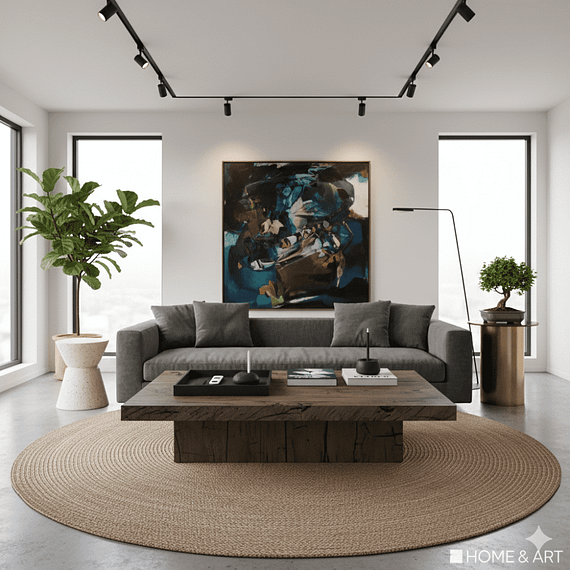
The 3-Point Light Strategy: Use floor lamps and art spotlights. Light defines the “mood” more than any renovation could.
-
Large-Scale Art: One giant canvas is more “expensive” looking than ten small ones. It turns a room into a vaulted gallery.
-
The Rug as the Floor: A massive, high-quality wool rug changes the acoustics and the aesthetics—and it rolls up when you move.
-
Statement Greenery: A single, large architectural plant (like a Monstera) is organic sculpture for under $100.
Curator’s Note: Focus on the tips regarding “intentionality” and “hardware”—this is the key to the BIOS / Home & Art lifestyle.
The Global Call to Action: Start Your Gallery
The world won’t stop moving just because you’ve bought a home. Your home should be your sanctuary, your gallery, and your most flexible financial asset.
Ready to curate your life? Contact us for a “Gallery Audit” of your current space. We’ll show you how to swap the “purple carpet” thinking for a strategy that builds wealth, protects your mobility, and feeds your soul.
Case Study: The $280k BIOS Home That Felt Like $2 Million
Imagine a young professional couple relocating from bustling New York City to the serene suburbs of Connecticut. With a budget capped at $280,000, they opted for a compact BIOS Home—a prefabricated marvel of sustainable engineering, complete with energy-efficient panels and a minimalist footprint. But here’s where the magic happened: Instead of splurging on trendy kitchen remodels or built-in cabinets, they embraced the Gallery Strategy.
The transformation began with those iconic white walls. They invested $8,000 in a single oversized abstract painting from a local CT gallery, sourced via platforms like Saatchi Art. Paired with $2,500 in sculptural floor lamps and a $3,000 vintage Persian rug, the living room instantly evoked a high-end loft vibe. Hardware swaps—brass pulls on standard cabinets—added another $1,200, turning builder-grade into bespoke. Total aesthetic spend: Under $15,000.
The result? Guests raved about the “million-dollar feel,” and when a job offer prompted another move just 18 months later, the home sold in under two weeks for $325,000—a 16% gain. Why? Buyers saw a neutral, aspirational canvas they could personalize, not a quirky reno headache. This case underscores how relocation-friendly interior design in a BIOS Home maximizes ROI without locking you in. If you’re eyeing starter home decoration ideas that travel, start here—your equity thanks you.
Curator’s Note: Photos from this project (before: bland box; after: artful oasis) highlight the power of portability. Search “BIOS Homes before and after” for more inspiration.
The Psychology of the Gallery Home
Beyond aesthetics, the Gallery Home taps into deep psychological benefits, making it ideal for today’s fluid lifestyles. Research from the Journal of Environmental Psychology shows that spaces with intentional, personalized art reduce stress by up to 60%—think cortisol drops from gazing at a bold canvas versus staring at blank walls. For relocators juggling job changes or family shifts, this setup fosters a sense of control and belonging, even in temporary digs.
Why does it work? Humans crave “biophilic” elements—natural textures like wool rugs or large plants—that mimic outdoor serenity, boosting mood and productivity. In a BIOS Home, where acoustics and thermal comfort are engineered for calm, layering in portable home decor amplifies this. A 2025 study by the American Psychological Association links such environments to better sleep and creativity, especially for remote workers in Connecticut’s hybrid economy.
For families, it’s transformative: Kids’ artwork on white walls becomes a rotating exhibit, teaching curation without permanent marks. Investors note the “halo effect”—art-filled homes photograph better for listings, evoking emotional bids. If you’re searching for sustainable home design psychology, remember: A gallery isn’t just pretty; it’s therapy for the soul, ensuring your space supports mental well-being amid life’s moves.
Curator’s Note: Channel Theaster Gates’ ethos—beauty as a daily necessity. Incorporate one “soul piece” weekly to build this habit.
The Investor’s Gallery: How This Strategy 3x’d My Return
As a real estate investor in Connecticut’s competitive market, I’ve flipped dozens of properties—but the Gallery Strategy changed everything. Take my recent project: A $450,000 BIOS Home in Fairfield County, bought as a blank slate. Traditional flips might pour $50,000 into granite counters and custom closets, but I skipped that trap.
Instead, I allocated $18,000 to portable upgrades: A $6,000 large-scale mural (removable vinyl), $4,000 in designer lighting, $5,000 on a statement rug and greenery, and $3,000 for architectural hardware. The white walls stayed pristine, letting these elements shine. Staging photos popped—think Instagram-worthy vignettes that screamed luxury without the permanence.
Listed after minimal tweaks, it sold for $585,000 in 45 days—a 30% return, tripling my usual 10% margin. Why the premium? Buyers (often NYC relocators) valued the “move-in ready yet customizable” appeal. No demo costs on quirky features; my investments traveled to the next flip. In a market where relocation trends spike (per NAR, 25% of 2025 sales were job-driven), this approach minimizes holding time and maximizes appeal.
Pro tip for fellow investors: Use apps like Chairish for sourcing; track ROI with simple spreadsheets. If you’re into real estate investment strategies 2026, the Gallery Model is your edge—sustainable, scalable, and seriously profitable.
Curator’s Note: This isn’t speculation; it’s data-driven design. Check local CT comps for similar flips.
The 2026 Mood Board: Colors, Textures, and Art Trends That Travel
As we head into 2026, home trends lean toward earthy, adaptable palettes that enhance BIOS Homes‘ clean lines. Forget fleeting fads; focus on portable trends that pack punch and resale value. Here’s your curated mood board for relocation-friendly decor:
- Earthy Neutrals with Pops: Base in warm taupes and soft grays for white walls, then layer terracotta accents via throw pillows or vases ($50–$200 on Etsy). This “desert modern” vibe travels from CT winters to sunnier climes, evoking calm without commitment.
- Textural Layers: High-pile wool rugs in olive greens (from $500, sources like Rugs USA) add acoustic warmth and luxury underfoot. Pair with linen curtains for light diffusion—affordable at IKEA, yet upscale in feel. These elements fold flat for moves, perfect for modular home interiors.
- Oversized Abstracts: Art trends favor bold, non-representational pieces in deep indigos and mustards. A 60×80 canvas from Minted ($800) turns a wall into a focal point, looking pricier than it is. Pro: Ships rolled, unframes easily.
- Sculptural Lighting: Go for arched floor lamps in matte black or brass ($300–$600, West Elm). The “3-Point Strategy” evolves here—add smart bulbs for mood control, tying into sustainable home tech.
- Organic Forms: Large Monstera or fiddle-leaf figs ($100+) as “living sculptures,” plus ceramic vessels in organic shapes. Trends predict biophilic bursts—think woven baskets for storage that double as decor.
For SEO-savvy sourcing: Hunt “affordable portable art 2026” or “BIOS Homes decor trends” on Pinterest. These picks ensure your space feels current yet timeless, boosting appeal for quick sales or rentals.
Curator’s Note: Mix one trend per room for cohesion. Your 2026 home? Effortlessly chic and eternally mobile.
Ready to Curate Your Life?
The world won’t stop moving just because you’ve bought a home. Your home should be your sanctuary, your gallery, and your most flexible financial asset.
203-994-3950
